How Smart Appliances Prevent Overcooking
• Updated
Smart appliances are transforming how we cook by using advanced sensors, AI, and real-time adjustments to ensure perfect results every time. Traditional ovens can fluctuate widely in temperature, making it hard to cook consistently. Smart ovens, cooktops, and even ventilation systems solve this problem with precise temperature control, food recognition, and automated adjustments. Here's what makes them stand out:
- Temperature Precision: Smart ovens maintain accuracy within ±0.5°F, using multi-point probes and AI to monitor both food and air temperatures.
- Real-Time Adjustments: Sensors detect heat loss, moisture levels, and even door openings, automatically tweaking settings to avoid overcooking.
- Food Recognition: In-oven cameras and AI identify dishes like pizza or brownies and select the best cooking mode.
- Convenience Features: Wi-Fi connectivity and apps send alerts, adjust settings, and suggest recipes for your appliances.
These tools not only save time but also reduce food waste by preventing overcooking. Paired with recipe apps like Honeydew, which syncs with smart appliances, they make meal prep easier and more accurate. With the smart appliance market projected to grow to $60.2 billion by 2030, this technology is reshaping home cooking.
How Smart Appliances Monitor Cooking in Real Time
Core Technologies in Smart Appliances
Smart appliances are packed with sensors and connectivity tools that help track and adjust cooking in real time. For instance, in-oven cameras equipped with HD imaging and machine learning can instantly identify foods like turkey, pizza, or cookies as soon as the oven door closes. Samsung's AI Pro Cooking technology takes this a step further, recognizing up to 80 different dishes and ingredients.
Humidity and steam sensors play a key role by detecting moisture levels during cooking. As water evaporates from meats or vegetables, these sensors pick up on changes in air composition and adjust power settings to ensure optimal cooking. Some advanced ovens even use lambda probes - borrowed from automotive technology - to measure oxygen levels. As baking progresses and moisture displaces oxygen, the appliance’s AI pinpoints the perfect time to finish the process.
Temperature probes add another layer of precision. Multi-point probes measure internal temperatures at several locations simultaneously, ensuring even the thickest cuts of meat are cooked perfectly. Environmental sensors also come into play, detecting heat loss when the oven door is opened or when cold ingredients are added. These sensors automatically adjust cooking times to account for these changes. Connectivity features like built-in Wi‑Fi and Bluetooth allow these sensors to sync data with mobile apps and other devices. Together, these technologies provide seamless, real-time monitoring for consistently great results.
How Real-Time Monitoring Works
Smart appliances analyze sensor data continuously to prevent overcooking and ensure meals are cooked to perfection. By measuring both dry and wet bulb temperatures, AI-controlled ovens maintain accuracy within an impressive ±0.5°F (0.3°C) range.
"The oven continuously monitors the food's progress and, by extension, the remaining baking time. This is important because every dish is unique."
- Hoang Richter, AI Project Manager, BSH
Predictive AI models further enhance cooking precision by updating cook times every 30 seconds based on real-time data. For example, in February 2024, GE Profile introduced its Cookcam AI software upgrade for select wall ovens. This system uses in-oven cameras to identify five initial food categories - turkey, cookies, pizza, cakes, and brownies - and automatically adjusts cooking settings. This level of automation is similar to how AI customizes recipes to meet specific dietary needs or preferences. Similarly, Bosch's Series 8 accent line sensor oven utilizes a lambda probe to continuously measure oxygen levels, allowing it to determine the exact moment dishes like lemon tarts or roasts are ready.
Smart Appliances That Prevent Overcooking
Smart Ovens with Probe Thermometers and Auto Shut-Off
Smart ovens take the guesswork out of cooking by closely monitoring food temperature and adjusting settings on the fly. Equipped with probe thermometers, these ovens measure the internal temperature of your food with impressive accuracy. Unlike traditional timers or relying on air temperature, these probes are inserted directly into the dish, ensuring a more reliable reading. Some models, like Siemens' roastingSensor Plus, use multi-point sensing with three sensors, while Typhur Sync steps it up with a five-point system to pinpoint the coldest spot in your food. The precision is no joke - Typhur Sync boasts NIST-certified accuracy of ±0.5°F, while the June Oven keeps it within ±1°C.
When the food reaches the desired temperature, these ovens take action: they shut off, switch to keep-warm modes, or even adjust cooking settings mid-cycle to ensure perfect results. Monica Petrucci, Kitchen Editor at Reviewed, highlights Bosch's AutoProbe, which:
"Detects the internal temperature of meat or fish as it's cooking, and automatically shuts off the oven when it reaches the appropriate temperature".
Many of these smart ovens also connect to your smartphone via Wi-Fi or Bluetooth, sending you real-time alerts when your meal is ready.
Induction Cooktops with Dynamic Heat Adjustment
Induction cooktops are all about precision, using advanced sensors to prevent overcooking. Embedded beneath the glass surface, these sensors continuously monitor pan temperatures and adjust heat levels automatically. Unlike traditional stoves, induction cooktops allow you to set exact temperatures - like JennAir's 2025 models, which offer settings between 120°F and 400°F.
Some models take it further by incorporating wireless Bluetooth probes. These attach directly to the pan or sit in liquids, communicating with the cooktop to regulate heat for precise temperature control. Chef Owen, Culinary Director at Hestan Smart Cooking, explained:
"With the Hestan Cue technology, we knew that we could make the first cooking probe that not only monitors temperature but communicates directly with the cooktop to actively control the temperature".
Other innovations include reflectivity sensors that measure a pan's thermal conductivity. For instance, Miele's TempControl technology can fry eggs for 12 minutes straight without burning them. Many high-end models also detect when cold ingredients are added, boosting power to quickly return to the desired temperature - an essential feature for tasks like deep frying or candy making.
Smart Stoves and Hoods with Heat and Odor Detection
Smart stoves and ventilation hoods take cooking precision to the next level by monitoring heat, odors, and steam. Cooktops equipped with advanced sensors can track pan temperature and adjust heat output based on the cookware's thermal properties. Technologies like Bosch's Perfect Fry and Siemens' fryingSensor help maintain the ideal oil temperature during frying, reducing the risk of burning.
Ventilation hoods also play a crucial role in maintaining a safe and comfortable cooking environment. Siemens' climateControl system uses sensors to measure steam and odors, automatically adjusting suction power to keep the air fresh. Some systems, like Thermador's Cooktop Hood Sync, go a step further by syncing with the cooktop to activate ventilation and lighting based on heat levels - no extra effort required.
For even more control, wireless sensors can attach to your pots, continuously communicating with the cooktop. Thermador's Heritage induction cooktops, offering 17 power levels, ensure consistent heat while preventing unattended burners from overheating. These features make it easier than ever to cook with confidence and precision.
Using Honeydew Recipe Manager for Better Cooking Control
Recipe Adjustments for Accurate Results
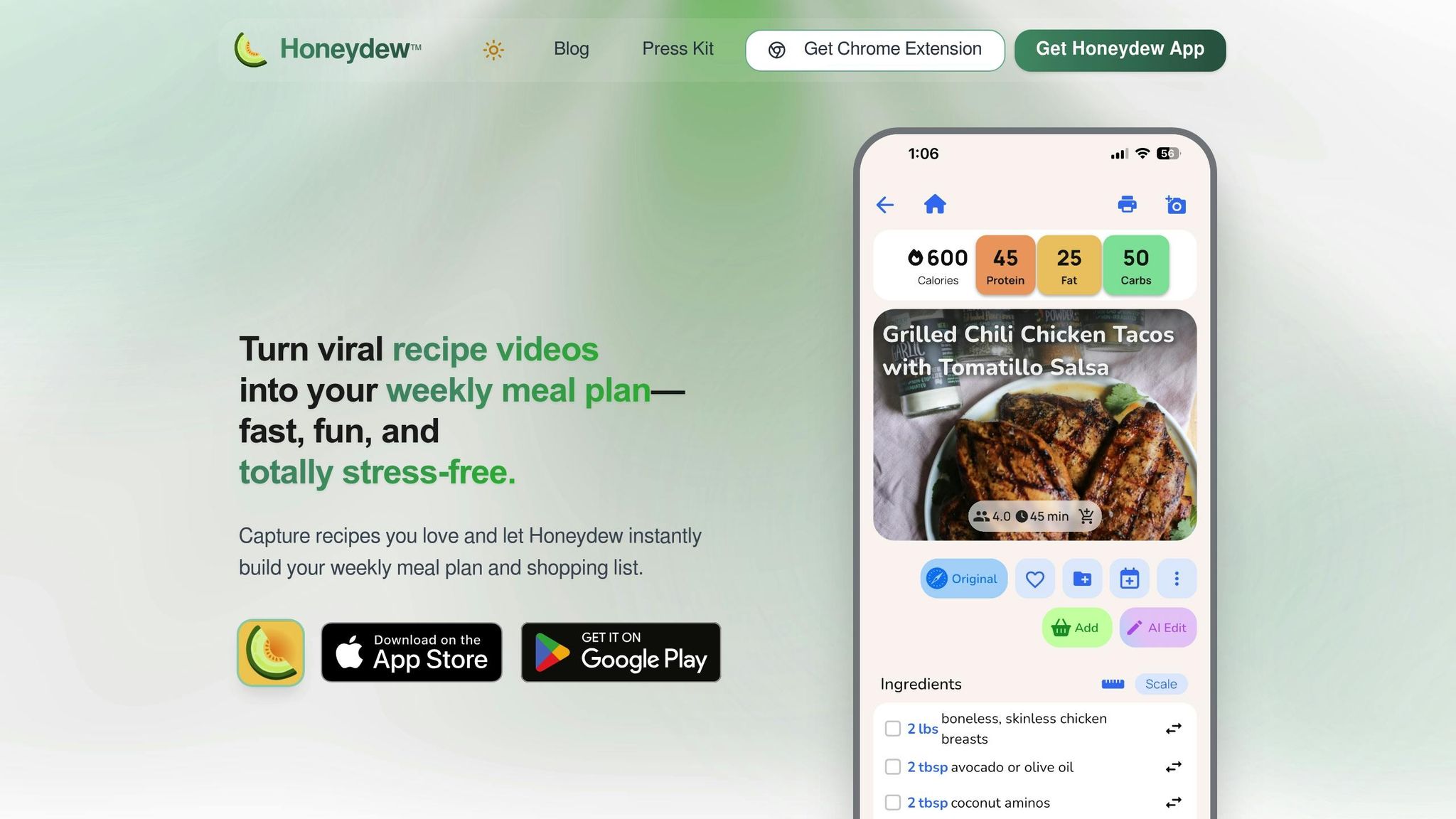
Combining smart appliances with the Honeydew Recipe Manager takes cooking precision to another level. The app imports recipes from popular platforms like TikTok, Instagram, and YouTube, transforming them into a format that works seamlessly with smart appliances. As Anova Culinary explains:
"Anova Intelligence will scan the instructions and convert them. Next, it will show you the recommended Oven cooking features, including the Cooking Mode (i.e. Air-fry), temperature, and time".
The "Ask Honey" AI assistant is there to help with ingredient substitutions, ensuring that any changes maintain the texture and moisture balance critical for sensor accuracy. For example, if you’re out of a key ingredient, the AI suggests alternatives that won’t disrupt the cooking process. The app also adjusts serving sizes and calculates precise ingredient amounts, ensuring the food volume matches your appliance’s capacity for even cooking. With 270,000 recipe saves processed each month, Honeydew has become a go-to tool for anyone who values precision and efficiency in the kitchen. This smooth integration of recipes with appliance settings naturally ties into Honeydew’s AI meal planning features.
Meal Planning and Ingredient Management
Honeydew simplifies grocery shopping and meal prep with its smart grocery lists. These lists are tailored to your chosen recipes and sync with a digital pantry, automatically removing items you already have. This ensures you only buy what’s needed, avoiding waste and keeping ingredient ratios spot on for consistent cooking results. As James L. shared:
"The smart grocery lists save me hundreds of dollars a month. I love how it suggests recipes based on what I already have!"
For added convenience, the app integrates with Instacart, so you can send your shopping list for delivery with just one click. When working with appliances capable of maintaining temperature accuracy within ±0.5°F, having the right ingredients in the correct proportions is crucial. Honeydew even uses OCR technology to grab text from screenshots or transcribe spoken instructions from videos, making it easy to capture recipes from fast-paced social media content. This ensures your smart oven can follow the recipe’s instructions without a hitch.
Typhur Sync Oven Review | This Finally Took the Guesswork Out of Cooking

Benefits of Using Smart Appliances to Prevent Overcooking
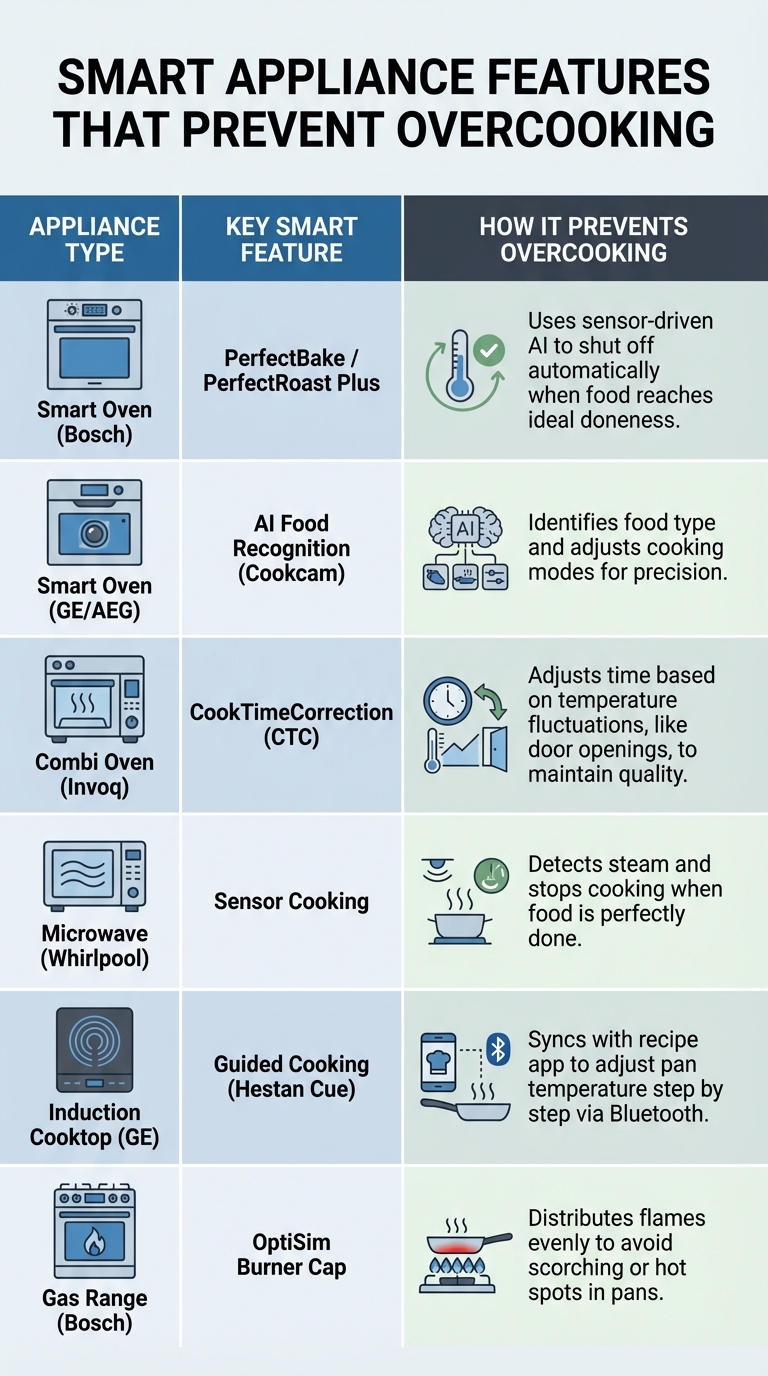
Smart Appliance Features That Prevent Overcooking Comparison Chart
Smart appliances bring together convenience, reduced food waste, and consistent results to make cooking easier and more reliable. By using real-time adjustments, these devices help you achieve perfect cooking results every time.
The convenience they offer is especially valuable for busy households. With smart ovens, there's no need to hover over your food. As Rachael Schwartz, Executive Director of Built-in Cooking at GE Appliances, puts it:
"By combining artificial intelligence and Precision Cooking Modes, we're automating cooking tasks for consistent, reliable results for every occasion".
You can even get phone alerts when your meal is ready or your oven needs attention, allowing you to focus on other tasks.
Smart appliances don't just save time - they also help cut down on waste. Reducing food waste is made possible through features like automatic shut-off and moisture sensing. For instance, Bosch ovens can detect when your roast reaches the perfect temperature and will power down automatically, avoiding overcooked or dried-out results. Erik Rise, Product Manager at Electrolux Group, highlights how AI TasteAssist recommends steam-based programs to maintain food quality while minimizing energy use and waste. It's no wonder the global smart appliance market is expected to grow from $15.6 billion in 2022 to $60.2 billion by 2030, with an annual growth rate of 18.4%.
These appliances also excel in delivering consistent results. By leveraging advanced sensors and real-time monitoring, they ensure even cooking, no matter the conditions. In professional kitchens, this precision eliminates poorly cooked batches, ensuring only high-quality dishes are served.
Smart Appliance Features Comparison
| Appliance Type | Key Smart Feature | How it Prevents Overcooking |
|---|---|---|
| Smart Oven (Bosch) | PerfectBake / PerfectRoast Plus | Uses sensor-driven AI to shut off automatically when food reaches the ideal doneness. |
| Smart Oven (GE/AEG) | AI Food Recognition (Cookcam) | Identifies food type and adjusts cooking modes for precision. |
| Combi Oven (Invoq) | CookTimeCorrection (CTC) | Adjusts time based on temperature fluctuations, like door openings, to maintain quality. |
| Microwave (Whirlpool) | Sensor Cooking | Detects steam and stops cooking when food is perfectly done. |
| Induction Cooktop (GE) | Guided Cooking (Hestan Cue) | Syncs with a recipe app to adjust pan temperature step by step via Bluetooth. |
| Gas Range (Bosch) | OptiSim Burner Cap | Distributes flames evenly to avoid scorching or hot spots in pans. |
These smart features highlight how technology can simplify cooking, reduce waste, and ensure consistently great results every time you cook.
Conclusion
Smart appliances are changing the game in home cooking by using real-time sensors and AI automation to take the guesswork out of meal prep. These devices rely on advanced technology to ensure consistent, high-quality results - bringing a touch of restaurant-level precision to your kitchen. It's no longer just about getting food on the table; it's about achieving accuracy and making every dish shine with the help of these tools.
Paired with these appliances, tools like Honeydew Recipe Manager make the cooking process even smoother. Honeydew simplifies meal planning by importing recipes directly from social media, organizing your pantry digitally, and generating grocery lists that integrate seamlessly with services like Instacart. With around 270,000 recipe saves processed every month, Honeydew ensures your smart oven has everything it needs to nail each recipe with precision.
Together, smart appliances and meal-planning tools help cut down on food waste, save time, and deliver the kind of consistency that was once exclusive to professional kitchens. Whether you're working with a $1,299 Anova Precision Oven or a GE Profile featuring Cookcam AI (available as a free software update), these technologies work hand-in-hand to simplify cooking while ensuring reliable results.
FAQs
Do smart ovens work without Wi‑Fi?
Yes, smart ovens can work without Wi-Fi by relying on their manual controls for basic functions like setting temperatures and timers. However, advanced features such as remote operation, in-oven cameras, and automatic software updates depend on a Wi-Fi connection to function.
How do food sensors know when meat is done?
Food sensors work by checking the internal temperature of meat to determine when it's done. These sensors measure the current temperature and compare it to the target temperature you've set on a smart device or app. This process helps ensure your meat is cooked to perfection every time.
Can Honeydew Recipe Manager send settings to my smart oven?
Honeydew Recipe Manager doesn't have the capability to send settings directly to your smart oven. However, it integrates effortlessly with smart appliances that utilize real-time feedback and automation. This includes devices like AI-powered steam ovens and guided cooking systems, ensuring precision and ease in your cooking experience.