How Smart Sensors Improve Cooking Precision
• Updated
Smart sensors are transforming how we cook by replacing fixed timers with real-time data, ensuring precise and consistent results. These sensors track factors like temperature, humidity, and even cooking sounds to adjust settings automatically. From ovens maintaining ±0.5°F accuracy to fryers regulating oil temperature, the technology simplifies cooking while improving outcomes.
Key Takeaways:
- Accuracy: Devices like AI-driven appliances manage temperature with unmatched precision.
- Automation: Sensors eliminate constant monitoring by adjusting heat and stopping when food is done.
- Efficiency: Reduced energy use and food waste by preventing overcooking or burning.
Whether you're roasting chicken, baking bread, or steaming vegetables, smart sensors deliver professional-level results with less effort. These tools are reshaping the kitchen experience, making cooking easier, faster, and more reliable.
This Smart Oven Knows Exactly When Your Food Is Done
How Smart Sensors Work in Cooking Devices
How Smart Cooking Sensors Work: From Data Collection to Automatic Adjustments
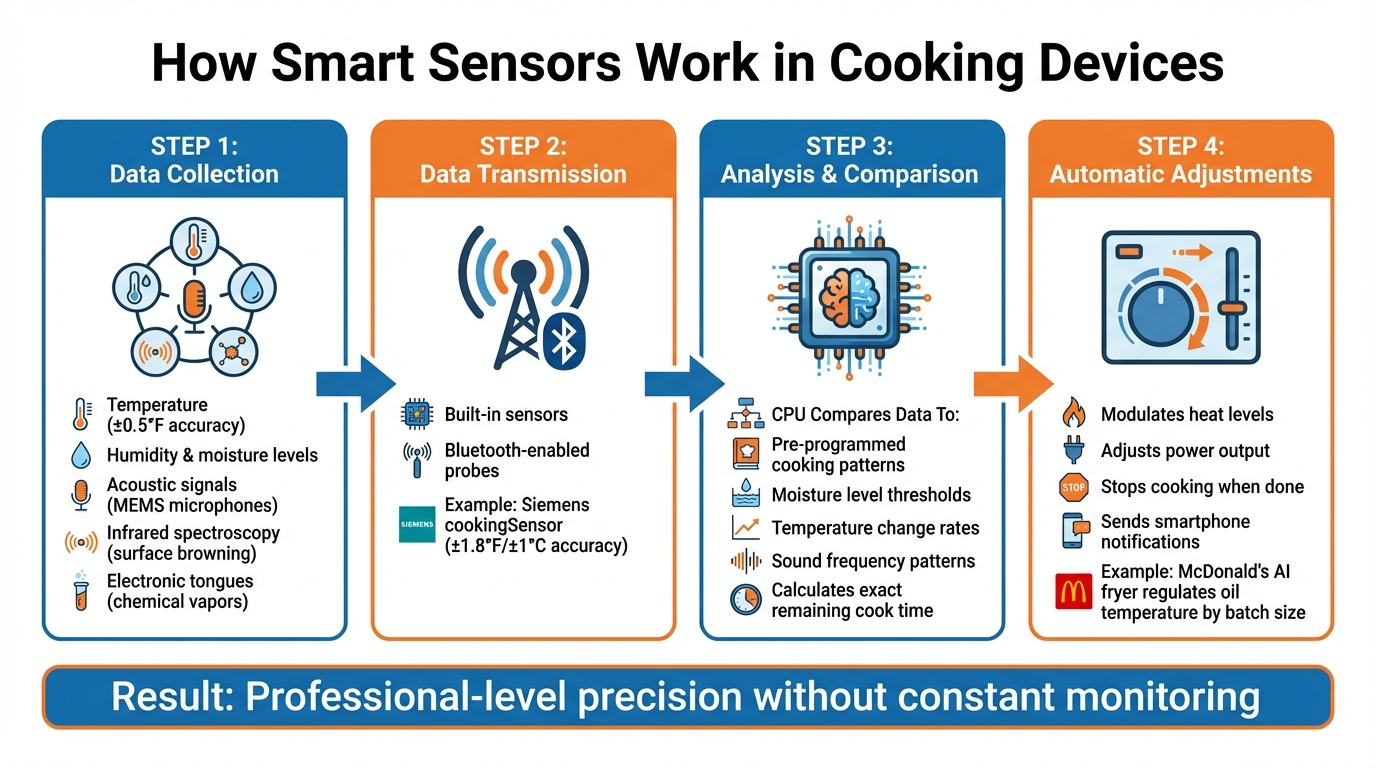
Smart sensors function like the "senses" of modern kitchen appliances, gathering environmental data such as steam, humidity, temperature, and even cooking sounds. This steady flow of information takes the uncertainty out of cooking, replacing fixed timers and manual adjustments with precise, real-time controls. Let’s dive into the different types of sensors and how they make cooking more accurate.
Core Sensor Technologies Explained
Today’s appliances rely on a variety of sensors to ensure precision. Temperature sensors monitor both the internal temperature of your food and the surrounding heat. Some advanced probes even measure at multiple points to improve accuracy. Moisture and humidity sensors detect when water in food turns into steam, identifying specific patterns - like the difference between steaming broccoli and roasting chicken. Acoustic sensors use MEMS microphones and machine learning to interpret cooking sounds, distinguishing between a gentle simmer and a pot boiling over.
Emerging technologies are also making waves. Infrared spectroscopy uses infrared light to assess surface browning and texture changes, while experimental "electronic tongues" analyze chemical vapors during cooking. Together, these sensors provide a detailed picture of what’s happening inside your cookware.
These sensors are often built directly into appliances or connect wirelessly via Bluetooth. For instance, the Siemens cookingSensor clips onto cookware and sends real-time data to compatible stovetops. It can maintain temperature accuracy within ±1.8°F (±1°C), making it ideal for precision techniques like sous vide.
Real-Time Monitoring and Automatic Adjustments
Once the sensors collect data, the appliance’s CPU compares it to pre-programmed cooking patterns for various foods. This means it can interpret moisture levels, temperature changes, and even sound frequencies to calculate the exact remaining cook time. By continuously monitoring these factors, the system ensures perfect results.
Based on the data, the appliance can automatically adjust settings - modulating heat, tweaking power levels, or even stopping the cooking process when it detects the food is perfectly done. For example, in 2025, McDonald’s Japan tested an AI-powered fryer that used sensors to regulate oil temperature depending on batch size, ensuring consistent results without human input. Similarly, Philips Kitchen AI introduced a cooking system that uses infrared spectroscopy to monitor moisture and texture in real-time, delivering restaurant-quality searing by fine-tuning heat output.
These advancements mean you can achieve precision cooking without constantly checking on your food, letting the appliance handle the hard work while delivering professional-level results.
Benefits of Smart Sensors for Cooking Precision
Smart sensors bring practical solutions to everyday kitchen challenges, offering more than just added convenience. From avoiding cooking mishaps to saving energy, these technologies are transforming how we prepare meals.
Consistent and Accurate Cooking Results
Traditional cooking often involves a lot of guesswork, but smart sensors take precision to a whole new level. For example, AI-driven steam ovens can maintain temperature accuracy within ±0.5°F (0.3°C). That means no more overcooked chicken or undercooked casseroles - just perfectly cooked meals every time.
Take the Anova Precision Oven 2.0 as an example. Its built-in temperature probe stops cooking proteins exactly 5°F before reaching the target temperature, accounting for the carryover heat during resting. Similarly, Miele's TempControl induction system, showcased at IFA Berlin in 2015, used surface sensors to fry eggs for 12 minutes without burning them. These aren’t just theoretical claims; they’re real, measurable improvements over manual cooking methods.
By maintaining such precise control, these appliances cut down on the need for constant attention, making cooking more hands-off and stress-free.
Less Time Watching Your Food
With sensor-equipped appliances, you can say goodbye to standing over the stove. These devices send push notifications to your smartphone when your food reaches the perfect doneness [14, 11]. High-tech features like moisture monitoring, internal temperature tracking, and even high-definition cameras (up to 1080×1920 resolution) handle the oversight for you.
This level of automation frees you up to focus on other tasks. Whether it’s preparing side dishes, setting the table, or simply relaxing, you can trust your meal to cook perfectly without constant monitoring. The growing popularity of such technology is evident, with the global AI-powered cooking machine market expected to grow from $59.2 million in 2024 to $101 million by 2031.
Lower Energy Use and Less Food Waste
Smart sensors don’t just make cooking easier; they also make it more efficient. These systems stop cooking as soon as your food reaches the optimal state, cutting down on wasted energy and food [6, 2]. By dynamically adjusting power levels based on real-time data like humidity and air density, they avoid running at high power unnecessarily.
Here’s a quick comparison:
| Feature | Traditional Appliances | Smart Sensor Appliances |
|---|---|---|
| Cooking Logic | Fixed duration, manual power | Adjusts dynamically to conditions |
| Energy Use | Higher consumption | Stops when food is perfectly cooked |
| Food Quality | Risk of overcooking or cold spots | Consistently even and well-cooked |
This precision helps reduce food waste too. By preventing burning, boiling over, or uneven heating, fewer meals end up in the trash. Some appliances even use acoustic sensors to detect cooking stages by sound, like boiling water, and automatically reduce heat to save energy.
With fewer errors in the kitchen, you’re not just saving time - you’re saving resources and money as well.
Common Smart Sensor Technologies in Kitchen Appliances
Modern kitchens are filled with appliances that use advanced sensors to tackle everyday cooking challenges. Knowing how these sensors work can help you get the most out of your appliances.
Microwave Moisture Sensors
Microwave moisture sensors are designed to detect steam and water vapor as food heats up. These sensors use capacitive technology to measure changes in electrical charge caused by humidity shifts inside the microwave cavity. Many microwaves with this feature allow you to select a food type, after which the system monitors steam release to automatically adjust cooking time and power levels. This can cut cooking times by up to 30% compared to traditional timer-based microwaves. To ensure accurate performance, always use a vented microwave-safe lid and keep the sensor lens clean.
Oven Temperature and Humidity Sensors
Ovens take sensor technology up a notch by incorporating temperature probes and humidity sensors for precise cooking. Temperature probes measure the internal heat of food at multiple points. For instance, Siemens' roastingSensor Plus checks three different points to ensure dishes like lamb or fish reach their ideal temperature.
Humidity sensors, often called baking sensors, continuously track moisture levels in the oven. Siemens describes their bakingSensor as follows:
"The bakingSensor constantly measures the moisture content of dough in the oven and can therefore tell you precisely when your recipe it is ready." - Siemens Home Appliances
Studies show that meals cooked with temperature sensors score 30% higher in taste tests compared to manually prepared dishes. Additionally, these sensors can cut cooking times for meats by around 20%.
Stovetop and Smart Cookware Sensors
Stovetops now come with frying sensors that maintain consistent pan temperatures, preventing overheating or burning during tasks like sautéing, reducing sauces, or using an ingredient substitution finder for delicate recipes. Some systems even feature Bluetooth-enabled sensors that attach to pots, syncing with the cooktop to precisely control liquid temperatures for simmering or boiling. High-end models may also include infrared (IR) sensors for non-contact temperature monitoring, which is especially useful for delicate tasks like melting chocolate or defrosting meat without cooking the edges.
These sensor advancements highlight how modern kitchen appliances use real-time data to deliver consistent results while saving time and energy.
Step-by-Step Guide to Using Smart Sensors for Precise Cooking
Get the most out of your smart sensors by setting up your appliance properly, whether you're using a microwave or an oven.
Using Smart Sensors in Microwaves
First things first: make sure the inside of your microwave and the container you're using are completely dry. Any leftover moisture can throw off the sensor readings. Also, let your microwave reach room temperature before starting.
Choose the "Sensor Cook" or "Auto Cook" setting and select the type of food you're preparing - like vegetables, fish, or casseroles. These foods release a lot of steam, which is key for the sensors to work. Cover your dish with a vented microwave-safe lid or loosely placed plastic wrap to allow steam to escape. Avoid tightly sealed containers, as they can interfere with the process. Once you press start, resist the urge to open the microwave door during the detection phase - this can let out steam and mess up the cooking time [2, 19].
Keep in mind that most microwave sensors need at least 4 ounces of food to detect enough steam. If the results aren’t quite right, you can tweak the cooking time by 10–20% using the "More/Less" function on your microwave.
For baking or roasting, you’ll want to follow specific steps to get the best results from your oven's sensors.
Using Oven Sensors for Better Results
Oven sensors are designed to monitor both the oven temperature and the internal temperature of your food. Start by setting the oven temperature and the target core temperature for your dish. Then, insert the probe into the thickest part of your food, following these guidelines:
| Food Type | Insertion Method | Key Precaution |
|---|---|---|
| Steaks & Chops | Insert horizontally; make sure the notch is covered | - |
| Whole Poultry | Insert diagonally into the thickest part of the breast | Avoid touching bones |
| Whole Fish | Insert horizontally into the thickest part | Avoid the spine and bones |
| Bread/Cakes | Insert into the center; ensure the tip doesn’t touch the pan if using a silicone holder [4, 11] | - |
If you're using a Bluetooth-enabled probe like the GE Precision Probe, connect it through your oven's settings or the SmartHQ app [4, 21]. Many modern smart ovens let you monitor your food remotely through connected apps, and some even include live camera feeds for real-time updates.
Integrating Sensors with Honeydew Recipe Manager
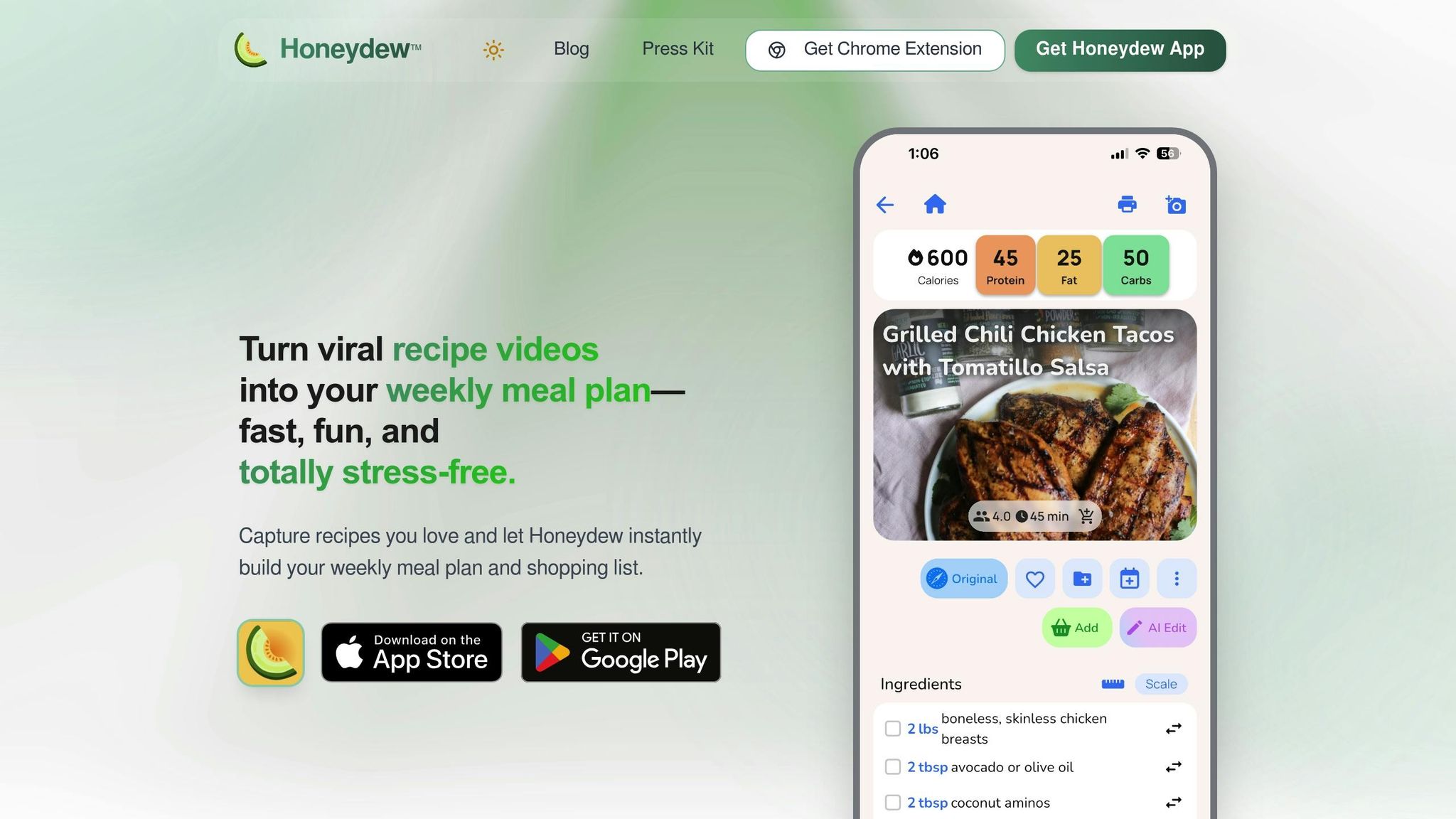
Take your sensor-guided cooking to the next level by syncing it with the Honeydew Recipe Manager. This app lets you import recipes from TikTok, Instagram, YouTube, or even photos of handwritten notes. Honeydew's AI organizes the ingredients and steps into a clear, structured recipe [23, 25]. Fun fact: the app handles around 270,000 recipe saves every month.
Need to make adjustments for dietary preferences? The "Ask Honey" AI assistant can modify recipes for gluten-free or dairy-free needs while ensuring accurate sensor settings. The app also automatically scales portions and adjusts ingredient quantities, helping you place probes correctly and maintain ideal humidity levels for sensor cooking.
Before heading to the store, try Pantry Mode to scan your fridge. Honeydew will suggest recipes based on what you already have, making it easier to execute sensor-based cooking without extra trips. Plus, the app syncs with Instacart for quick ingredient ordering, so you’ll have everything you need for precise cooking [25, 26]. By using this feature, households can cut food waste by up to 40% and save about $125 a month.
Achieving Precision Across Different Dishes
Modern sensors in cooking appliances don't just regulate general conditions - they fine-tune their performance to meet the specific needs of each dish. Whether you're baking, roasting, or steaming, these smart systems ensure consistent and precise results, making your kitchen a hub of accuracy with helpful cooking tips. You can also use a smart meal planner to organize your recipes.
Baking with Humidity Control
Humidity plays a key role in baking, turning dry, cracked cakes into perfectly moist creations. Smart ovens equipped with humidity sensors monitor moisture levels and adjust steam and heat in real time, creating the ideal environment for baking. For instance, Bosch's Series 8 accent line uses a lambda probe - originally developed for automotive catalytic converters - to measure oxygen levels inside the oven. As moisture evaporates from a dish like a lemon tart, the probe detects changes in oxygen levels. The oven's AI then predicts the exact moment the tart is ready to come out.
In a practical example, Bühler implemented Vaisala's DMP6 dew point and temperature probes in its Meincke Turbu ovens in mid-2023. This upgrade reduced natural gas usage by 20%, cutting one customer's annual costs from €10 million to €8 million. The probes precisely regulated humidity and minimized unnecessary air exchange during baking.
"By measuring the humidity levels inside the oven, you can control the process to maintain a consistent baking profile, even with fluctuations in other factors like ambient conditions or ingredient quality."
– Morten Bøgild, Senior R&D Engineer, Bühler
These ovens also track both the dry bulb temperature (air temperature) and the wet bulb temperature (surface temperature influenced by evaporation), making micro-adjustments to heat and steam levels as often as every 30 seconds.
Roasting with Core Temperature Monitoring
Roasting meat to perfection has never been easier, thanks to core temperature sensors. These tools provide real-time data on a food's internal temperature, removing the guesswork from cooking. In a February 2026 study of 48 heritage-breed chicken roasts, AI systems adjusted power every 8–12 seconds. The result? A 1.7% reduction in moisture loss compared to manual methods.
Advanced systems also factor in carryover heat, stopping the cooking process 5°F before the target temperature to prevent overcooking. Testing has shown that sensor-driven roasting can reduce temperature fluctuations to as little as ±0.8°F, compared to the ±4.3°F variance often seen with manual cooking during ambient temperature changes.
For even better results, some home cooks combine sensor precision with a manual touch. In one example, a cook brushed a chicken with ghee and finished it with a 90-second broil, reducing moisture loss from 23.1% to 19.8%. Meanwhile, the sensor maintained a thigh temperature variance of just ±0.5°F. This approach highlights the accuracy and versatility these sensors bring to roasting.
Steaming with Moisture Adjustments
Steaming delicate foods like fish and vegetables requires careful control. Traditional stovetop steaming operates at a fixed 212°F (100°C), but smart sensors allow for adjustable, low-temperature steaming with controlled humidity levels. For example, settings of 60% or 80% humidity can ensure proteins stay tender and vegetables retain their vibrant color.
Using a core temperature probe for fish fillets can further enhance precision. Insert the probe horizontally into the thickest part, ensuring the reference notch is fully covered for an accurate reading. To maximize results, cut ingredients evenly and avoid overcrowding, allowing sensors to circulate steam effectively. By fine-tuning moisture levels, sensor-driven steaming ensures dishes are cooked gently and retain their natural flavors and nutrients.
Conclusion
With the integration of advanced sensor technology and intelligent meal planning, home cooking is becoming more precise and efficient than ever. Smart sensors now track real-time factors like temperature, humidity, and moisture, automatically adjusting for consistent results. These features not only improve cooking outcomes but also help reduce food waste and enhance safety with tools like automatic shut-off systems that detect overheating or gas leaks.
But it’s not just about precision - it’s about convenience. These sensors take over the constant monitoring, allowing you to focus on other tasks and reclaim valuable time in your day.
"Home cooking is no longer focused on just getting dinner on the table. It is about precision, cultural connection, and smart tools that help every cook achieve professional-quality results without wasted time or an extra mess."
– Stephen Svajian, Co-Founder, Anova Culinary
Tools like Honeydew Recipe Manager add another layer of innovation by simplifying meal planning. With features like AI-driven recipe imports, ingredient substitutions, and grocery lists synced with Instacart, it works hand-in-hand with sensor technology to redefine the cooking experience. Together, they let you focus on creativity and enjoyment while the tech handles the details.
FAQs
Do smart cooking sensors work with any cookware?
Smart cooking sensors usually need specific cookware to work effectively. This often includes pots with sealed lids that have built-in sensors or designs that make it easy to position the sensor correctly. Because of this, these sensors don’t work with just any type of cookware.
How accurate are smart sensors compared to a regular thermometer?
Smart sensors provide a level of accuracy that regular thermometers just can't match, offering precision down to 0.125°F. This means you can maintain exact temperature control, ensuring consistent results every time you cook, no matter the dish.
What can cause sensor cooking to give wrong results?
Sensor cooking can sometimes give off-target results if the sensors misread factors like steam or humidity. This might happen because of faulty calibration, differences in the type of food being cooked, or external conditions that throw off the sensor's precision. To get better outcomes, make sure your device is properly calibrated and be aware of what it can and can't do.