Tahini Substitutes for Middle Eastern Dishes
• Updated
Tahini is a key ingredient in Middle Eastern cooking, but sometimes you need an alternative - whether due to allergies, availability, or preference. Using pantry tracking can help you identify these alternatives before you start cooking. Here’s a quick guide to the best substitutes:
- Seed-Based Options: Sunflower seed butter (closest match), pumpkin seed butter (earthier flavor), and black sesame paste (bolder, more bitter taste).
- Nut Butters: Almond butter (mildly sweet), cashew butter (creamy and neutral), and macadamia butter (rich and buttery).
- Allergy-Friendly Choices: Greek yogurt (thick and tangy), soy butter (nut- and seed-free), and chickpea flour paste (simple and nut-free).
Each option works differently depending on the dish - hummus, baba ganoush, or dressings. Adjust texture, flavor, and seasoning to suit your recipe, or use smart ingredient prep tools to optimize your substitutions. For a sesame-like flavor, add a small amount of toasted sesame oil to your substitute.
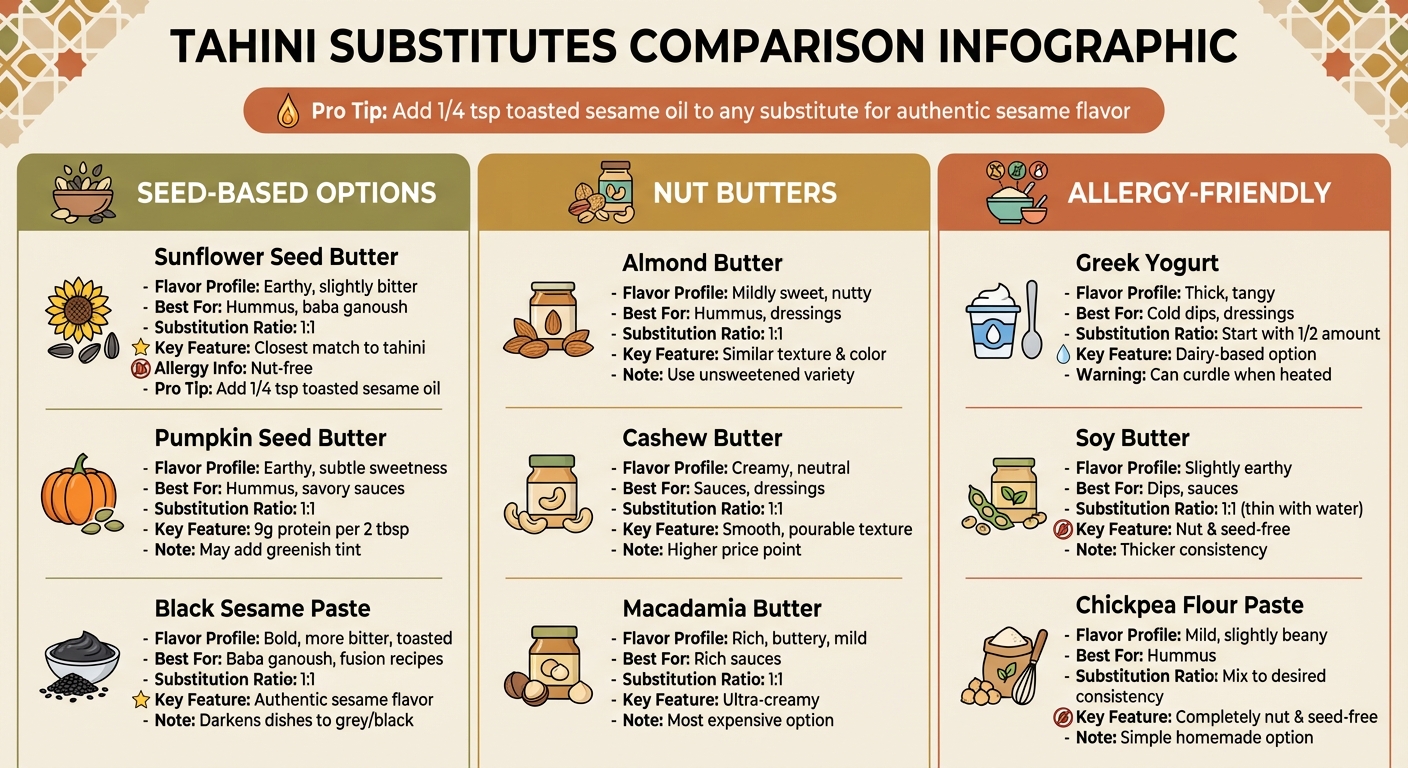
Best Tahini Substitutes for Middle Eastern Dishes Comparison Chart
DIY Sunflower Seed Tahini: A Game-Changer for Common Food Allergies!
What Is Tahini and How Is It Used?
Tahini is a creamy paste made from roasted, hulled sesame seeds. Its flavor is rich and nutty, with earthy undertones and a slight bitterness that lingers. The texture is thick yet pourable, making it a versatile ingredient in both sweet and savory dishes.
"In a recipe, it provides creamy texture, nutty flavor, and emulsification." - Silas, Founder, Flavor365
Tahini isn’t just about flavor - it also serves a functional purpose in cooking. Its natural oils help bind ingredients together, which is why tahini-based dressings stay smooth and stable, even when mixed with acidic components like lemon juice. This dual role of adding flavor and functionality makes tahini a go-to ingredient in countless recipes.
Tahini's Place in Middle Eastern Cooking
Tahini has been a staple in Middle Eastern kitchens for centuries, reflecting its deep roots in the region's culinary traditions. Sesame cultivation in Mesopotamia dates back thousands of years, and tahini has evolved from being a simple condiment to an essential ingredient in many iconic dishes.
In Iraq, for example, tahini - known locally as rashi - is often paired with date syrup for breakfast, creating a sweet and nutty spread. In Gaza, a version called "red tahina" is made by roasting sesame seeds for longer, resulting in a more intense, smoky flavor. Tahini also serves as a key ingredient in savory classics like hummus and baba ganoush, as well as in desserts like halva, a dense, sweet confection. Beyond these traditional uses, it’s frequently drizzled over roasted vegetables, mixed into marinades, or whisked into salad dressings across the Middle East and Mediterranean.
Main Qualities of Tahini
Understanding tahini's unique qualities can help when choosing substitutes or experimenting with recipes. The flavor intensity, for instance, depends on how deeply the sesame seeds are toasted before grinding. Lightly toasted seeds produce a milder taste, while darker roasting enhances the bitterness and nuttiness.
"Tahini has a rich, nutty flavor with a hint of bitterness. The flavor can vary slightly depending on the type of sesame seeds used and how they are processed." - Amira Ibrahim, Founder, Amira's Pantry
Tahini’s high fat content is another defining characteristic, contributing to its rich texture and smooth mouthfeel. It’s made up of approximately 53% fat, 22% carbohydrates, and 17% protein. A 100g serving delivers 133% of the Daily Value for thiamine and 63% for phosphorus. Though the oil may naturally separate over time, a quick stir brings back its glossy, creamy consistency.
| Quality | Description | Impact on Recipes |
|---|---|---|
| Flavor | Nutty, earthy, slightly bitter | Balances acidity and sweetness; adds depth |
| Texture | Smooth, creamy, silky | Creates a rich, velvety texture |
| Consistency | Pourable yet thick | Helps bind ingredients and prevents separation |
| Fat Content | High (monounsaturated/polyunsaturated) | Adds richness and smoothness |
When looking for an ingredient substitute, focus on replicating tahini’s key attributes - whether it’s the nutty-bitter flavor, creamy texture, or emulsifying properties - to keep your recipes balanced and cohesive.
Seed-Based Tahini Substitutes
Seed-based alternatives can replicate tahini's creamy texture and rich flavor while adding their own unique twist. These substitutes share similar fat content but bring distinct tastes and characteristics to the table.
Sunflower Seed Butter
Sunflower seed butter is often considered the closest match to tahini, working well as a 1:1 replacement. Its earthy and slightly bitter flavor mimics sesame, making it ideal for dishes like hummus or baba ganoush. You can even use a smart meal planning tool to organize these recipes. Plus, it's naturally nut-free, making it a great choice for households with nut allergies.
To enhance its flavor, you can stir in 1/4 to 1 teaspoon of toasted sesame oil. However, sunflower seed butter is thicker than tahini, with about 170 calories and 14 grams of fat per 2-tablespoon serving. If the consistency feels too dense, thin it out with warm water or olive oil. While it shines in savory recipes, some testers found its grassy aftertaste unsuitable for sweets like halva, with 68% rejecting sunflower-based halva in a professional test.
"Sunflower seed butter's neutral profile outperforms almond butter's sweetness for authentic baba ghanoush." – Sophie Dubois, French-trained Chef
For a richer and slightly sweeter alternative, pumpkin seed butter is worth exploring.
Pumpkin Seed Butter
Pumpkin seed butter delivers a heartier, more robust flavor with a subtle sweetness. It's a great fit for hummus and savory sauces when you're looking for a deeper, earthier taste. As an added bonus, it offers about 9 grams of protein and 15% of your daily iron needs per 2-tablespoon serving.
Keep in mind that pumpkin seed butter can give dishes a greenish tint, which works beautifully for fall-themed recipes but might feel less traditional for dishes like baba ganoush. Its texture tends to be thicker and slightly grainy, so adding a splash of lemon juice or water can help smooth it out. For freshness, store it in the refrigerator to prevent the oils from turning rancid.
Black Sesame Paste
For those wanting an authentic sesame flavor with a bold twist, black sesame paste is a standout choice. Made from unhulled black sesame seeds, it has a deeper, more intense flavor with pronounced bitterness and toasted notes. This makes it perfect for adventurous cooks looking to elevate their dishes.
"Black sesame paste is the same as tahini, but made with black, unhulled sesame seeds... It has a similarly rich, nutty taste with slightly more bitterness." – Pantry & Larder
Black sesame paste adds a striking visual element, turning dishes a deep grey or black. This makes it ideal for fusion recipes or eye-catching dipping sauces. If the bitterness feels overwhelming, a touch of honey or maple syrup can help balance it out. Like other substitutes, it’s denser than tahini, so thinning it with warm water or olive oil is often necessary before use.
Nut Butter Tahini Alternatives
Nut butters offer a creamy alternative to tahini in Middle Eastern recipes, though they bring a sweeter flavor and lack the slight bitterness of sesame paste. To keep the dish balanced, opt for unsweetened nut butters and tweak the salt or acidity to offset their natural sweetness. With small adjustments, these substitutes can work beautifully in maintaining the essence of Middle Eastern cuisine.
Almond Butter
Almond butter stands out as a popular substitute for tahini, especially in hummus, because its texture and color closely resemble sesame paste. It has a rich, nutty flavor with a touch of sweetness, making it a great choice for dips and dressings. Use it as a direct 1:1 replacement, and fine-tune the seasoning to suit your taste.
"When I'm making hummus and realize we are out of tahini, I replace it with an equal amount of almond butter." – Sage Scott, Sage Alpha Gal
Almond butter is lower in sodium and saturated fat compared to tahini, while also offering more fiber per tablespoon. If the consistency feels too thick, you can thin it with warm water or olive oil. For a hint of sesame flavor, try mixing in 1/4 teaspoon of toasted sesame oil.
Cashew Butter
Cashew butter is another excellent option, prized for its mild flavor and smooth texture. Its high fat content gives it a creamy quality that mirrors tahini without overpowering other ingredients. However, cashew butter tends to be pricier than almond butter or tahini. Its natural sweetness may require balancing with additional salt or acidity, but its pourable consistency often means less thinning is necessary.
Macadamia Nut Butter
Macadamia nut butter brings an ultra-creamy texture, thanks to its high fat content, and has a mild, buttery flavor. This makes it a luxurious choice for rich sauces or recipes that call for a decadent touch. That said, it is the most expensive option among these substitutes, so it’s best reserved for dishes where its richness can shine.
Allergy-Friendly Tahini Substitutes
If you're dealing with nut and seed allergies, don't worry - there are practical alternatives to tahini that can still bring creaminess and depth to your dishes. Since sesame is one of the top food allergens in both adults and children, finding safe substitutes is key to enjoying Middle Eastern cuisine without compromising on texture or flavor. Here are three allergy-friendly options to consider:
Greek Yogurt
Greek yogurt is a go-to option for those who can tolerate dairy. Its thick, creamy texture makes it a great choice for dips and dressings, though it introduces a tangy flavor instead of tahini's earthy nuttiness. To replicate tahini's richness, stick to full-fat Greek yogurt - leaner versions may lack the same luxurious consistency. For context, one tablespoon of tahini contains 8.07 grams of fat.
"Greek yogurt works best due to its thickness. It's fantastic in dips and sauces, adding a tangy twist." – Savory Suitcase
When substituting, start with half the amount of tahini your recipe calls for, then adjust to reach your desired texture. Keep in mind, Greek yogurt can curdle when heated, so it's best suited for cold or room-temperature dishes like hummus, baba ganoush, or salad dressings. To counter its tanginess, you might want to add a touch more lemon juice or salt. If you're following a vegan diet, soy or coconut yogurt can work as plant-based alternatives.
Soy Butter
Soy butter offers another allergy-friendly option, providing a nut- and seed-free alternative with a slightly earthy flavor. Its protein and fat content is similar to tahini, making it a good match for Middle Eastern recipes. However, soy butter tends to be thicker and sometimes sweeter, so you'll want to thin it out with a tablespoon of warm water or olive oil before using it. This ensures a smoother texture, ideal for blending into dips or sauces. For a balanced flavor, you can add a little extra lemon juice or salt as needed.
Chickpea Flour Paste
A paste made from chickpea flour and water is a simple, completely nut- and seed-free alternative. To create it, mix chickpea flour with warm water until you achieve a smooth, pourable consistency that mimics tahini. You can also blend chickpea flour or pureed white beans with water to get a similar texture, though the flavor may lean slightly "beany". This substitute works particularly well in hummus, as it complements the dish's natural chickpea base while maintaining an authentic flavor profile.
Best Substitutes by Recipe Type
Not all tahini substitutes perform equally well in every Middle Eastern dish. The best choice depends on what you're making and which qualities - like creaminess, flavor, or texture - are most important. Here's a breakdown of how to choose the right substitute for specific recipes.
Hummus
Cashew butter works wonderfully in hummus due to its creamy texture and mild flavor that pairs seamlessly with chickpeas and garlic. If you're looking for a nut-free option, sunflower seed butter is a strong contender, offering an earthy, slightly bitter taste that closely resembles tahini. Almond butter is another reliable alternative, delivering a similar texture and richness, though it leans slightly sweeter.
"Almond butter is my number one alternative to hummus because it's very similar in texture, colour and flavour." – Jules Clancy, Food Scientist and Cooking Coach, Stonesoup
To get the consistency just right, thin thicker substitutes with a tablespoon of warm water or olive oil. For added authenticity, mix in 1/4 teaspoon of toasted sesame oil and a pinch of salt or lemon juice.
Baba Ganoush
If you're aiming for a flavor profile close to traditional tahini, black sesame paste is an excellent choice. It offers a deep, roasted taste, though it will darken the dish to a gray or black hue. Almond butter is another solid option, delivering the richness needed without overshadowing the smoky eggplant. Cashew butter, with its neutral flavor and creamy texture, also works well.
For a smoother consistency, add a tablespoon of warm water or olive oil. If your eggplant wasn't roasted over an open flame, a few drops of liquid smoke can help recreate that signature smokiness.
Tahini Sauce and Dressings
When it comes to sauces and dressings, cashew butter is a top pick. Its high fat content and neutral flavor create a balanced base that complements lemon and garlic. Full-fat Greek yogurt is another great option, offering a creamy texture with a tangy twist. Sunflower seed butter, with its earthy and slightly bitter notes, is also a close match to tahini.
"Sunflower seed butter... will give the closest flavour to tahini but can be a bit thicker, so you might need to add a splash of milk or water." – Sophie MacKenzie, Wholehearted Eats
To achieve the right consistency and flavor, blend substitutes with a tablespoon of warm water, olive oil, or lemon juice. Adding 1/4 teaspoon of toasted sesame oil can help replicate tahini's signature taste. If you're using almond butter, opt for the natural, unsweetened variety, as grittier versions won't emulsify properly.
How to Make Tahini Substitutes at Home
Making your own tahini substitutes lets you fine-tune both flavor and texture. Whether you're working with sesame seeds, sunflower seeds, or other alternatives, the process is straightforward. You’ll need 1 cup of seeds and 2 to 4 tablespoons of a neutral oil like grapeseed or canola. Follow these steps to create a smooth, homemade paste that can stand in for store-bought tahini.
Grinding Seeds into Paste
Start by toasting the seeds. Place them in a dry skillet or bake them in the oven at 350°F for about 5 minutes until they’re fragrant and lightly golden, but not browned. Let them cool completely to prevent unwanted moisture. Once cooled, transfer the seeds to a food processor and grind for 2–3 minutes until the mixture looks crumbly.
"I have found that grinding the seeds before adding the oil produces a smoother result." – Emily Han, Recipe Developer, The Kitchn
After achieving a crumbly texture, add 2 tablespoons of oil and continue processing for another 1–2 minutes. Scrape down the sides as needed. If the mixture is too thick, add more oil - one tablespoon at a time - until it’s smooth and pourable.
Adjusting Flavor
For added nuttiness, mix in 1/4 teaspoon of toasted sesame oil. If you're substituting with sweeter nut butters like almond or cashew, a pinch of salt can balance the flavor, especially for savory dishes like Middle Eastern recipes. The level of toasting plays a big role in flavor - more toasting brings out a deeper, nuttier, and slightly bitter taste.
Storage Tips
Keep seed pastes in an airtight container in the refrigerator for up to one month. If you’ve added ingredients like lemon juice or garlic, use the mixture within 5 to 7 days. It’s normal for the oil to separate over time - just stir it well before each use. If the paste hardens, let it sit at room temperature or whisk in a small amount of warm water to restore its creamy texture.
Conclusion
Selecting the right tahini substitute depends on its role in your dish. If you need a neutral, creamy base that blends seamlessly with other flavors - like in hummus or dressings - cashew butter is an excellent choice. For nut-free alternatives, sunflower seed butter offers an earthy, nutty profile that closely mimics traditional tahini. And for recipes like baba ganoush or creamy sauces, a mix of Greek yogurt with a touch of toasted sesame oil adds tang and a subtle sesame aroma.
Think about what tahini brings to the recipe. For texture and emulsification, most nut or seed butters can work as a 1:1 substitute. If it’s the distinct bitter-nutty flavor you’re after, sunflower seed butter is a great option, or you can boost cashew butter with a splash of sesame oil. Adjust seasonings like salt or lemon juice to balance any added sweetness and refine the overall taste.
"The best substitute depends entirely on the role tahini plays in your specific recipe - texture, flavor, or fat." – Silas, Founder of Flavor365
Feel free to experiment. Middle Eastern cooking thrives on adaptability, allowing you to tailor recipes to your pantry and dietary preferences. Whether you're managing allergies, working with what you have, or trying new flavors, these substitutes can keep your favorite recipes just as satisfying. By tweaking consistency and seasoning, you can maintain the essence of Middle Eastern dishes without traditional tahini.
For more tips on ingredient swaps and meal planning, visit Honeydew Recipe Manager (https://honeydewcook.com) to simplify your cooking with tools for substitutions and recipe organization.
FAQs
What’s the best tahini substitute if I’m allergic to sesame?
For a sesame-free alternative to tahini, consider using cashew butter or sunflower seed butter. Both provide a similar creamy texture and nutty flavor. If you have other allergies, steer clear of options like peanut butter. Always double-check ingredient labels to ensure they align with your dietary requirements.
How do I keep a tahini-free sauce from separating?
To keep a sauce without tahini from separating, try adding a bit of oil. Using a good amount of liquid, such as oil or water, helps create a smooth and stable texture. This prevents the oil from floating to the top or the paste from clumping. Adding oil works particularly well to ensure the sauce stays evenly mixed and cohesive.
Can I use tahini substitutes in cooked dishes without curdling?
Greek yogurt can serve as a substitute for tahini in cooked dishes, but there’s a trick to using it without curdling. Make sure to add it when it's at room temperature or chilled, and avoid introducing it directly to hot dishes. High heat can cause Greek yogurt to curdle, so it’s best to temper it or stir it in gradually for a smoother result.