Tamarind Paste Substitutes: Reduce Food Waste with Smart Swaps
• Updated
Tamarind paste is often tricky to find and rarely used up before it spoils. Luckily, you can recreate its sweet-tangy flavor with common pantry items. Mix acids like lime juice or vinegar with sweeteners like brown sugar to match its taste. For thicker substitutes, use dried fruits like dates or prunes blended with a splash of lemon juice. Ready-made condiments like ketchup, Worcestershire sauce, or steak sauce also work in a pinch. Specialty ingredients like amchur powder or pomegranate molasses offer even more options, especially for Indian or Middle Eastern dishes. These swaps not only save you a trip to the store but also help reduce food waste. Here's how to match the right substitute to your recipe:
- Lime Juice + Brown Sugar: Great for Thai dishes like Pad Thai or stir-fries.
- Dried Fruit Paste: Ideal for marinades, glazes, or chutneys.
- Ketchup + Vinegar: Quick fix for soups, noodles, or casual recipes.
- Amchur Powder: Perfect for Indian curries needing a tart kick.
- Pomegranate Molasses: Adds depth to Middle Eastern recipes or glazes.
Choose substitutes based on the dish's flavor and texture needs. Test and adjust sweetness or acidity to get the balance just right.
Tamarind substitutes if Tamarind is a IBS trigger | Vijimoo 🐮

Mixing Acids and Sweeteners
If you’re looking to replicate tamarind paste’s signature sweet-and-tangy flavor, the trick lies in combining an acid with a sweetener. Tamarind paste has a unique balance of tartness and caramel-like sweetness that makes it stand out in dishes . In this substitute, the acid brings the tang, while the sweetener adds a rich, complementary depth.
Brown sugar is an excellent choice for the sweetener. Its molasses content gives it a deep color and a rich, complex flavor that closely mirrors tamarind’s profile . You can also experiment with alternatives like honey, maple syrup, or coconut sugar, each bringing its own twist to the mix.
For the acidic element, you can use everyday kitchen staples. Lime or lemon juice adds bright citrusy notes, while vinegars like white, rice, or apple cider provide a mild or slightly fruity tang . Lime juice is particularly fitting for Southeast Asian dishes like Pad Thai or stir-fries, while lemon juice works well in lighter sauces.
Recommended Acid and Sweetener Pairings
The combination of acid and sweetener you choose can depend on the dish you’re preparing. Here are a few ideas to get you started:
- Lime juice and brown sugar (equal parts): Perfect for Pad Thai, Thai curries, and marinades, offering an authentic Southeast Asian tang.
- Lemon juice and brown sugar (1:1 ratio): Great for soups, chutneys, and dipping sauces where a cleaner citrus flavor is ideal.
- Rice vinegar and brown sugar: Blends seamlessly into Asian dressings and stir-fry sauces without overpowering other flavors .
For a quick and easy alternative, food writer Javaria Akbar suggests this shortcut:
"The simple ratio of 5 parts ketchup to one part vinegar makes a fast tamarind paste substitute that has a complex character and interesting depth of flavor."
This ketchup-vinegar mix is especially handy for quick noodle dishes and casual recipes.
Measurements and Mixing Instructions
To replace tamarind paste, start with a 1:1 ratio of your chosen acid and sweetener. For instance, if a recipe calls for 1 tablespoon of tamarind paste, mix ½ tablespoon of lime juice with ½ tablespoon of brown sugar. Keep in mind that citrus juices are more acidic (pH ~2.0) than tamarind (pH ~2.8–3.0), so begin with about ¾ of the suggested juice amount and adjust to taste.
Make sure the sugar is fully dissolved, especially in cold dressings, to avoid any grittiness. Since the intensity of vinegars and citrus juices can vary between brands, taste as you go. Add more acid for extra tang or more sweetener for balance . If your substitute feels too thin for glazes or thick sauces, cook it down for a minute or two, or stir in a small amount of tomato paste to get the right consistency.
Using Dried Fruits as Substitutes
Dried fruits like dates, prunes, apricots, or raisins can replicate tamarind's sticky texture and deep sweetness, though they lack its natural tartness. To balance the flavor, simply add a splash of lemon juice or vinegar. This approach not only captures a similar flavor profile but also gives you a chance to use up dried fruits lingering in your pantry, reducing food waste in the process.
Even older dried fruits can work well after a good soak.
How to Prepare Dried Fruits
Turning dried fruits into a tamarind substitute is straightforward:
- Start by chopping the dried fruits into small pieces. For a more complex flavor, try mixing equal parts of dates, prunes, and apricots.
- Soak the chopped fruits in hot water (or hot water mixed with lemon juice) for 20–30 minutes, until they soften.
- Once softened, drain the fruits and blend them until you achieve a smooth, thick consistency similar to ketchup.
- Stir in about 2 teaspoons of lemon juice for every tablespoon of fruit paste, adjusting the acidity to your liking.
This fruit paste can replace tamarind paste in a 1:1 ratio. For lighter dishes like dressings or cocktails, you can thin the paste with water or a bit more citrus juice. Store the paste in a glass jar in the refrigerator for several weeks, or freeze it in ice cube trays for longer storage.
Flavor Differences and Recipe Matches
Each dried fruit brings its own unique flavor, making some better suited for certain recipes than others.
- Prunes have a deep, earthy flavor, making them perfect for savory curries, meat-based stews, and rich sauces.
- Dates provide an intense caramel sweetness, ideal for sweet sauces, chutneys, and desserts.
- Apricots deliver a tangy, fruity brightness, which works beautifully in glazes, fish dishes, and light stir-fries.
- Raisins offer a milder sweetness, acting as a versatile option when other dried fruits aren't available. However, they don't provide the same depth as prunes or dates.
| Dried Fruit | Flavor Profile | Best Recipe Matches |
|---|---|---|
| Prunes | Deep, rich, slightly earthy | Savory curries, beef dishes, heavy sauces |
| Dates | Intense caramel sweetness | Sweet sauces, chutneys, desserts |
| Apricots | Tangy, bright, fruity | Glazes, dressings, light sauces, fish |
| Raisins | Mild, balanced sweetness | General purpose, stir-fries |
Since dried fruits are naturally sweeter than tamarind, you may need to adjust the acidity to achieve the right balance. This method gives you the flexibility to fine-tune the flavor, ensuring it complements your dish perfectly.
Ready-Made Condiments and Sauces
If you're out of tamarind paste, chances are you already have some great substitutes sitting in your pantry. Everyday condiments like ketchup, tomato paste, Worcestershire sauce, and steak sauces (such as A1 or HP) can deliver that sweet-tart balance tamarind is known for. Plus, using these alternatives can help cut down on food waste while keeping your dishes flavorful.
These substitutes work because they share key flavor elements with tamarind: tartness from vinegar or tomatoes and sweetness from sugar. Worcestershire sauce is especially effective since many brands actually include tamarind extract as a primary ingredient. The main difference? Texture. Most of these condiments are thinner than tamarind’s thick paste, so they’re best suited for soups, marinades, and sauces where consistency isn’t as critical. Let’s dive into how you can combine these condiments to recreate tamarind’s signature taste.
Combining Condiments for Tamarind Flavor
Looking for a quick fix? Start with a simple mix of ketchup and vinegar. Combine 5 parts ketchup with 1 part vinegar to mimic tamarind’s tangy complexity. For added depth, mix 1 teaspoon of ketchup, 1 teaspoon of vinegar, and ¼ teaspoon of soy sauce.
Want something closer to tamarind’s rich, caramel-like notes? Blend 1 teaspoon of tomato paste with ½ teaspoon of brown sugar and 1–1½ teaspoons of lemon juice. The brown sugar helps replicate tamarind’s darker flavor profile.
For meat dishes, steak sauces like A1 or HP provide a more balanced flavor than Worcestershire. Combine 1 teaspoon of steak sauce with ¼ teaspoon of brown sugar and ¼ teaspoon of lemon juice. These sauces have a fruity, tangy base that’s closer to tamarind’s texture compared to thinner condiments.
If you’re working with thicker options like mango chutney or orange marmalade, a quick pulse in the blender can help smooth out the consistency. For cold dishes like salad dressings, make sure any added sugar dissolves completely to avoid a gritty texture.
| Condiment Base | Mixing Ratio | Best Used For |
|---|---|---|
| Ketchup | 5 parts ketchup to 1 part vinegar | Pad Thai, dipping sauces, cocktails |
| Tomato Paste | 1 tsp tomato paste + ½ tsp brown sugar + 1–1½ tsp lemon juice | Indian dals, curries, tomato-based stews |
| Worcestershire | 1 tsp sauce + ½ tsp brown sugar + ¼ tsp lemon juice | Marinades, bold meat dishes, savory sauces |
| Steak Sauce | 1 tsp A1/HP sauce + ¼ tsp brown sugar + ¼ tsp lemon juice | Meat curries, glazes, hearty savory recipes |
Best Dishes for Condiment-Based Substitutes
Each of these blends works best in specific types of dishes. For example, marinades and glazes benefit from the higher sugar content in ketchup or marmalade, which creates a glossy, caramelized finish on grilled meats. Think barbecue ribs, chicken wings, or roasted veggies - it’s all about that rich, sticky glaze.
Soups and curries are a perfect match for thinner substitutes like Worcestershire sauce or a vinegar-based blend. These mix seamlessly into liquid bases, adding a tangy kick without altering the texture. Tomato paste mixtures, on the other hand, shine in Indian dals and tomato-based stews, where their natural tomato flavor enhances the dish.
For dips and dressings, mango chutney provides the right balance of body and tang, making it a standout for dipping sauces. A spiced-up ketchup, meanwhile, can double as a quick cocktail sauce. These substitutes are ideal when you need bold flavors paired with the right consistency.
That said, there are limits to these swaps. Avoid using condiment substitutes in dishes where tamarind is the star ingredient, like Tamarind Rice or Imli Chutney. These recipes rely on tamarind’s unique complexity, which is hard to replicate. Similarly, Worcestershire sauce can overpower delicate Indian dishes with its bold, fermented flavor. By using everyday ingredients thoughtfully, you can minimize waste while still keeping your recipes delicious and satisfying.
Specialty Spices and Ingredients
Once you've worked through the usual pantry staples, it's worth exploring specialty ingredients that can mimic tamarind's distinctive sweet-and-sour flavor. Two excellent options are amchur powder (mango powder) and pomegranate molasses. While these might not be everyday items in most kitchens, they’re fantastic additions, especially for Indian or Middle Eastern recipes.
Amchur powder, made from dried unripe mangoes, delivers a sharp, fruity tartness similar to tamarind's acidity. It’s particularly popular in Northern Indian dishes, whereas tamarind is more common in Southern Indian cooking. Pomegranate molasses, a thick syrup made by reducing sour pomegranate juice, is a staple in Lebanese and Persian cuisines. It contains about 35% sugar, giving it a natural sweetness alongside its tangy bite. Both of these ingredients can replace tamarind paste in a 1:1 ratio - use 1 teaspoon of either for every teaspoon of tamarind paste. They’re not just substitutes; they’re tools to expand your flavor repertoire.
Working with Amchur Powder and Pomegranate Molasses
To use amchur powder, mix it with an equal amount of water to create a paste before adding it to your dish. This method works especially well in Northern Indian curries or dry spice blends, where you want to add tartness without extra liquid. As Rachna Cooks explains:
"¼ to ½ tsp. is enough in a recipe. It has a complex taste with tartness as a pronounced taste".
Pomegranate molasses, on the other hand, can be used directly from the bottle. Its thick, syrupy texture makes it perfect for glazes, marinades, or even dal recipes where you need both acidity and richness. Cooking coach Jules Clancy highlights its versatility:
"It's a thick honey-like syrup made by boiling to concentrate the juice of sour (not sweet) pomegranates... A little goes a long way!".
One thing to note: pomegranate molasses is naturally sweeter than tamarind, so you may need to reduce other sugars in your recipe to balance the flavors.
You can find amchur powder at Indian grocery stores, while pomegranate molasses is typically available in Middle Eastern or Mediterranean markets. Beyond substitutions, amchur shines in dry vegetable dishes where moisture isn’t desired, and pomegranate molasses is a great addition to cocktails and salad dressings.
Proper Storage Methods
Storing these ingredients correctly ensures they last longer and stay fresh. Pomegranate molasses is particularly shelf-stable - it can last for years in a cool, dry pantry without refrigeration. Just make sure the bottle is tightly sealed.
Amchur powder, like other ground spices, is more sensitive to air and light, which can cause it to lose its potency over time. To maintain its vibrant flavor, keep it in an airtight container in a cool, dark place. For even longer storage, you can freeze portions in ice cube trays for convenience.
Selecting the Right Substitute
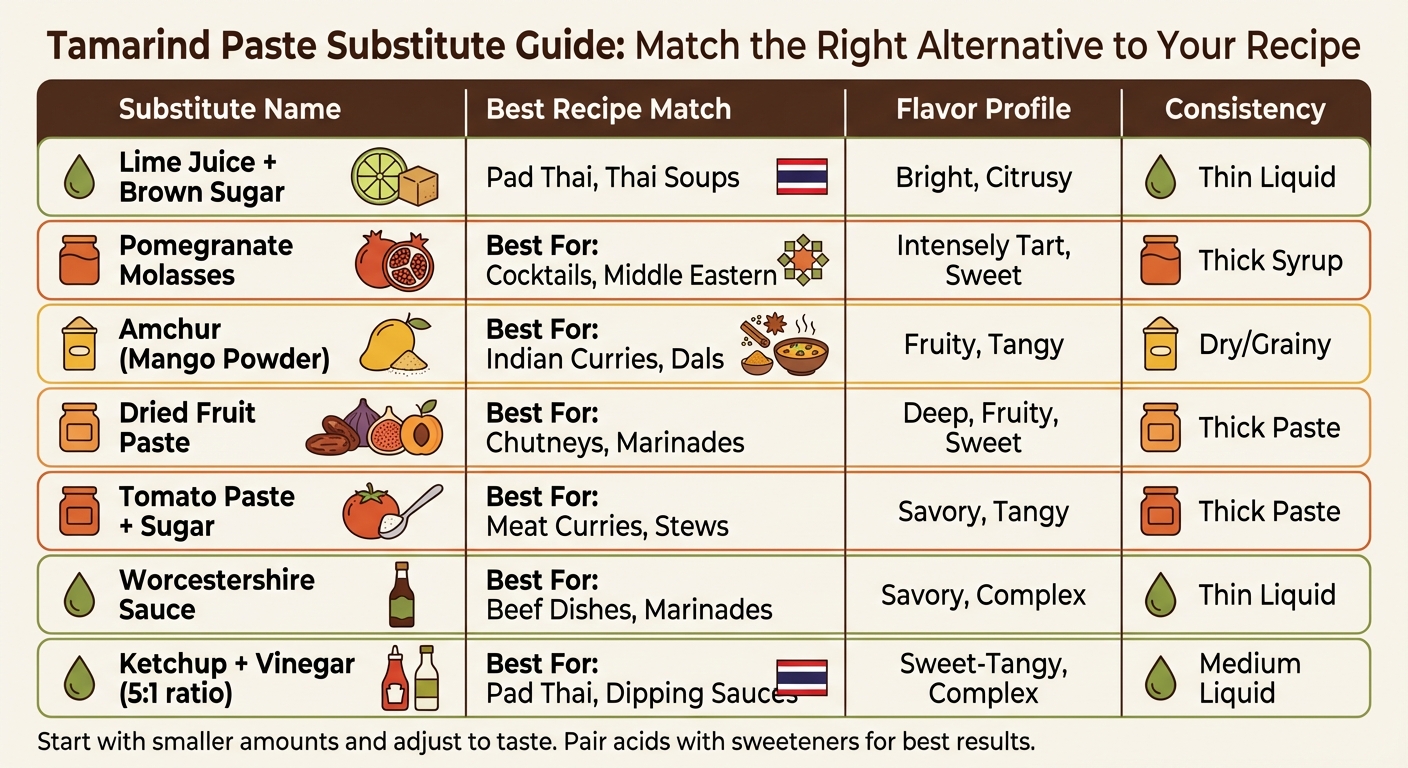
Tamarind Paste Substitute Comparison Chart: Best Alternatives by Recipe Type
Finding the right tamarind substitute depends on how it functions in your recipe. Think about its role - whether it’s adding flavor, providing texture, or both. Also, consider the amount needed and the cuisine you’re preparing. Recipes that only call for a small amount of tamarind are generally easier to adapt than those where it plays a starring role.
Does tamarind in your dish add tanginess, thickness, or both? Your substitute should match that purpose. For instance, liquid acids like lime juice work well in soups and noodle dishes, while fruit-based pastes, such as those made from dates or prunes, are better suited for marinades and glazes. The cuisine also matters - amchur powder is a natural fit for Indian curries, while a mix of lime juice and brown sugar complements Thai dishes like Pad Thai beautifully.
When choosing a substitute, keep in mind the demands of your recipe and the texture you want to achieve.
Substitute Comparison Chart
| Substitute | Best Recipe Match | Flavor Profile | Consistency |
|---|---|---|---|
| Lime Juice + Brown Sugar | Pad Thai, Thai Soups | Bright, Citrusy | Thin Liquid |
| Pomegranate Molasses | Cocktails, Middle Eastern | Intensely Tart, Sweet | Thick Syrup |
| Amchur (Mango Powder) | Indian Curries, Dals | Fruity, Tangy | Dry/Grainy |
| Dried Fruit Paste | Chutneys, Marinades | Deep, Fruity, Sweet | Thick Paste |
| Tomato Paste + Sugar | Meat Curries, Stews | Savory, Tangy | Thick Paste |
| Worcestershire Sauce | Beef Dishes, Marinades | Savory, Complex | Thin Liquid |
After selecting a substitute, adjust the balance of acidity and sweetness to suit your dish.
Testing and Adjusting Flavors
Start by testing substitutes in small amounts. For acidic options, begin with a smaller quantity and add more gradually. Taste frequently as you go, especially with strong substitutes like vinegar or amchur, to avoid overpowering the dish.
Pair acidic ingredients with a sweetener to mimic tamarind’s distinct balance. For liquid substitutes used in glazes or sauces, you might need to thicken them - try reducing the liquid with applesauce or swapping regular sugar for molasses to achieve the desired body. If you prefer a milder tang, lemon juice can be a gentler alternative. The goal is to maintain the dish's original flavor while minimizing waste.
Using Apps for Ingredient Substitutions
Imagine skipping that last-minute trip to the store just because you're out of tamarind paste. Apps now make that possible by tracking your pantry and suggesting substitutes based on what you already have. These tools not only save time but also help reduce waste by offering creative alternatives for ingredients.
How Honeydew Recipe Manager Suggests Substitutes

The Honeydew Recipe Manager takes a smart approach to ingredient substitutions. It scans your digital pantry and recommends replacements that mimic tamarind's signature sweet-and-sour flavor. For example, it might suggest combining lime juice with brown sugar for a similar taste. But it doesn’t stop there - it also considers texture.
For dishes like soups, where liquids dominate, the app might propose a light citrus-sugar mixture. On the other hand, for thicker recipes like sauces or glazes, it could recommend blending dried fruits such as prunes or apricots with lemon juice to replicate tamarind's paste-like consistency.
Another handy feature? The app can identify when a pantry staple - like Worcestershire sauce - already contains tamarind. By cross-referencing your available ingredients with recipe requirements, it eliminates the guesswork and simplifies your cooking process.
Meal Planning to Minimize Waste
Honeydew Recipe Manager goes beyond substitutions by helping you plan meals that make the most of what you already have. When you import recipes from websites or social media, the app automatically checks your pantry to avoid unnecessary purchases. This is especially helpful for specialty ingredients like tamarind paste, which might otherwise be bought for a single recipe and then forgotten.
The app’s AI meal planner also suggests recipes designed to use up items like lime juice or brown sugar, cutting down on waste. Plus, it allows up to six family members to collaborate on grocery lists, ensuring everyone stays updated on what’s available. This "pantry-first" approach promotes intentional cooking, reduces food waste, and keeps your kitchen running efficiently.
Conclusion
Running out of tamarind paste doesn't have to derail your cooking plans. The alternatives outlined here - like a quick mix of lime juice and brown sugar or a blend of dried fruits - offer simple ways to keep your recipes on track without an extra trip to the store. Plus, these options often use ingredients you already have, helping to cut down on waste.
As culinary expert Ashlen Wilder puts it:
"One important skill to learn as a chef is knowing how to substitute ingredients. It takes knowledge and experience to know what flavors, textures, and functions work in place of another." - Ashlen Wilder, Writer, Chowhound
The secret to a good substitute is understanding tamarind's role in a dish: a balance of sourness and sweetness. Once you grasp that, you can recreate its flavor profile with pantry staples like vinegar, citrus, brown sugar, or even Worcestershire sauce. For recipes where texture is key - like marinades or glazes - combining dried fruits with lemon juice can achieve that sticky consistency without needing to stock up on tamarind paste that might go unused.
Trying out substitutes not only saves you a trip to the store but also helps you refine your cooking skills. You'll discover how acids and sweeteners interact, how to tweak flavors on the spot, and how to make the most of what’s already in your kitchen. Tools like Honeydew Recipe Manager can make this even easier, helping you track your pantry items, suggest ingredient swaps, and plan meals to reduce waste.
Start small when testing substitutes and adjust as needed. With practice, you'll find the combinations that work best for your go-to dishes. These clever swaps let you cook creatively and resourcefully - without sacrificing flavor.
FAQs
What are some good substitutes for tamarind paste in Thai recipes?
If you find yourself without tamarind paste, don't worry - you can still achieve that tangy, slightly sweet flavor with ingredients you probably already have at home. One easy alternative is mixing lime or lemon juice with brown sugar to create the perfect balance of tartness and sweetness. Another option is combining rice vinegar or white wine with brown sugar, which also delivers a similar flavor profile. These handy swaps are perfect for Thai recipes like pad Thai or curries, letting you enjoy the authentic taste without the need for a special trip to the store - and without letting anything go to waste!
How can I balance the tartness and sweetness when using dried fruit as a tamarind paste substitute?
To recreate the tangy-sweet flavor of tamarind paste, try blending dried fruits like apricots, raisins, or prunes with a bit of lemon or lime juice for that acidic kick. For a touch of sweetness, you can mix in a small amount of honey or maple syrup. Adjust the ingredients as needed to match your recipe and personal taste.
Can I use store-bought condiments as a substitute for tamarind paste?
If you're out of tamarind paste, you can easily use common condiments like ketchup and vinegar as a quick alternative. To replicate the sweet and tangy profile, combine 5 parts ketchup with 1 part vinegar. This mix is a handy option for recipes where tamarind paste brings a rich, balanced flavor to the dish.