Tomato Sauce Substitutes for Italian Recipes
• Updated
When you're out of tomato sauce or need an alternative for dietary reasons, there are plenty of substitutes that can bring flavor to your Italian dishes. Each option offers a unique taste and texture, with some requiring minimal prep while others involve more effort. Here’s a quick guide to help you choose the best replacement:
- Roasted Red Pepper Sauce: Sweet and smoky. Great for pasta, pizza, and lasagna. Use jarred peppers for convenience.
- Fresh Tomatoes: Bright and tangy. Perfect for lighter pasta dishes or pizza. Quick to prepare, but best when tomatoes are in season.
- Pizza Sauce: Bold and herbaceous. A ready-to-use option for pizza, pasta, and lasagna.
- Tomato Paste: Rich and concentrated. Mix with water for a quick sauce or use to enhance stews and ragù.
- Tomato Juice: Thin and tangy. Best for soups and stews. Simmer to thicken for heartier dishes.
- Ketchup: Sweet and tangy. Not ideal for pasta but works in casseroles or marinades.
- Pureed Tomatoes (Passata): Smooth and mildly sweet. A versatile choice for pasta, lasagna, and pizza.
- Tomato Soup: Sweet and creamy. Works in casseroles or as a base for quick sauces.
- Sun-Dried Tomato Pesto: Intense and savory. Ideal for pasta or as a pizza topping.
- Nomato Sauce (Beet and Carrot Base): Nightshade-free with earthy sweetness. Great for those with tomato allergies.
- Caponata: Chunky and sweet-sour. Use as a pasta topping or spread.
- Romesco Sauce: Smoky and nutty. Pairs well with roasted vegetables or pasta.
- Crema di Zucchine: Mild and creamy. A zucchini-based option for pasta and pizza.
Each substitute brings its own flair to Italian recipes, whether you're cooking pasta, pizza, or lasagna. Choose based on the ingredients you have, the flavor profile you prefer, and the time you can dedicate to preparation.
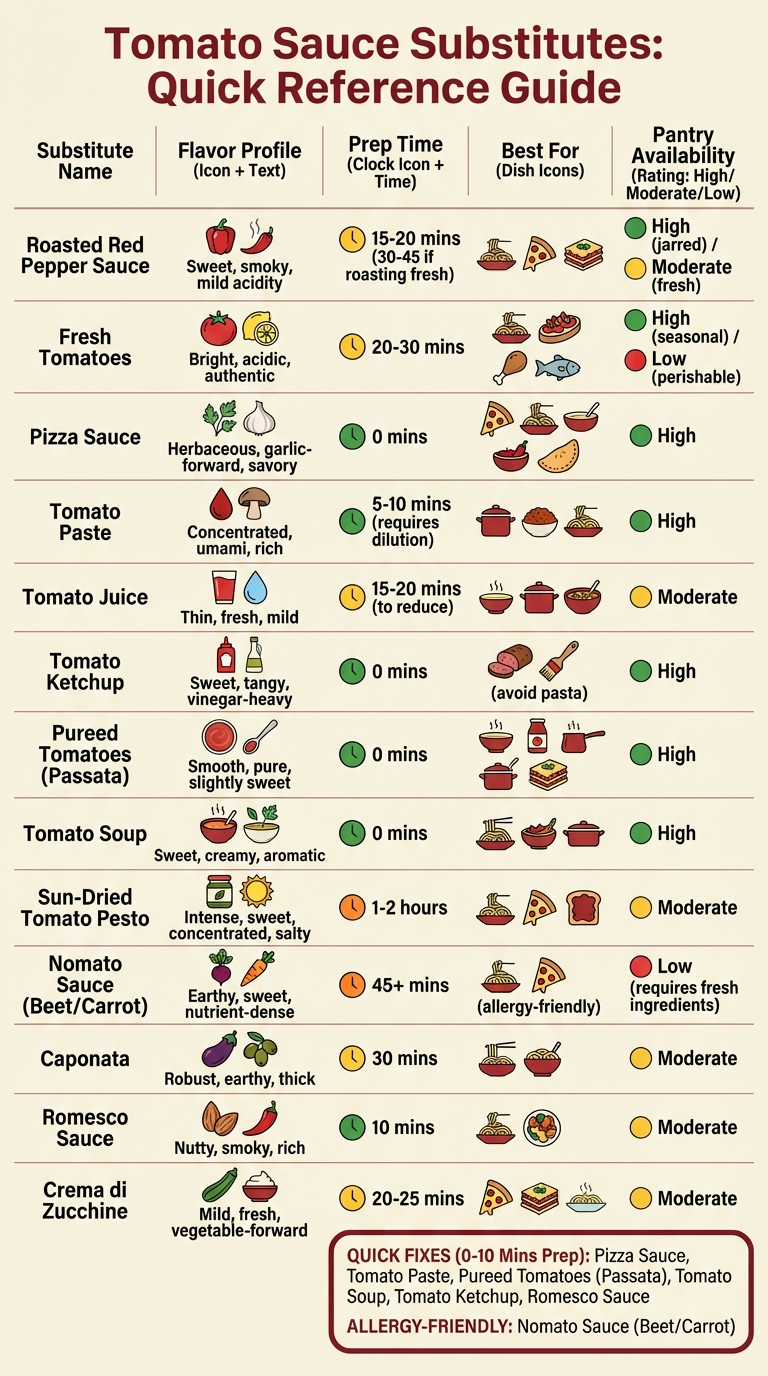
Tomato Sauce Substitutes Comparison Chart for Italian Cooking
1. Roasted Red Pepper Sauce
Flavor Profile
Roasted red pepper sauce offers a natural sweetness paired with a smoky depth, making it a close cousin to tomato sauce - but without the tang. To add that missing balance, you can mix in a splash of balsamic vinegar, lemon juice, or white wine for a touch of acidity. As Tasting Table puts it:
The taste is fresh and sweet like any other tomato sauce, except without the actual tomato flavor.
Preparation Time
If you're starting with fresh bell peppers, roasting them will take around 2.5 to 3 hours. For a faster option, jarred roasted peppers are a lifesaver, perfect for busy weeknights. Another shortcut? Try Ajvar, a Balkan roasted pepper spread. Thin it out with water or broth, and you've got a time-saving sauce with its own unique twist.
Best Italian Dishes
This sauce is a fantastic substitute for tomato sauce in a variety of Italian favorites. Think linguine, spaghetti, pizza, lasagna, or even chicken and eggplant parmesan. Natasha Bull, the creator of Salt & Lavender, sums it up perfectly:
a versatile sauce that is simple to make, super flavorful, and can be used on pasta, pizza, or anywhere a tomato-based sauce is needed.
Pantry Availability
Whether you prefer fresh bell peppers or the convenience of jarred roasted ones, both are easy to find at most grocery stores. To get the consistency just right, thin the sauce with pasta water or chicken broth.
2. Fresh Tomatoes
Flavor Profile
Fresh tomatoes bring a naturally sweet and slightly tangy flavor with a bright, straight-from-the-garden vibe. Unlike slow-cooked sauces that develop deep and layered flavors, a quick fresh tomato sauce keeps that lively, just-picked character. Chef Scott Cavagnaro describes it as having "a vibrant red color and fairly thin consistency". If the acidity feels a bit sharp, a small pinch of sugar can help balance it out. Toss in some fresh basil to give it that classic Italian flair. This flavor is delicate and transforms quickly during cooking, as you'll see in the preparation steps below.
Preparation Time
Cooking fresh tomatoes is quick - usually between 10 and 25 minutes. For a smooth sauce, grate halved tomatoes to separate the pulp from the skins. If you prefer a chunkier texture, sauté chopped Roma or plum tomatoes with garlic until softened. Want something even simpler? Cook whole cherry tomatoes until they burst, creating a rustic, chunky sauce.
Best Italian Dishes
Fresh tomato sauce adds a light, refreshing touch to dishes like pasta, pizza, and other summer-inspired recipes. It's perfect for spaghetti and linguine, where its brightness can shine. If you're making lasagna, you might want to simmer the sauce a little longer to thicken it up for those hearty layers.
Pantry Availability
Fresh tomatoes are a summertime staple, especially when they're at their peak ripeness. Unlike canned options, they’re more perishable, so aim to use them within a week. Varieties like Roma or plum tomatoes are best for sauces because they’re meaty and have less water content. If you make extra sauce, it freezes well for up to three months. Just remember to add fresh herbs like basil after reheating to keep the flavors vibrant.
3. Pizza Sauce
Flavor Profile
Pizza sauce is all about bold, fresh tomato flavor with a thicker texture that stands out. Unlike traditional sauces, it’s either uncooked or cooked just enough to let the tomatoes soak up the flavors of oregano, garlic, and Italian seasoning. Culinary expert Sarah Fritsche explains:
Typically, pizza sauce is uncooked or heated only long enough for the tomatoes to be gently infused with the aromatics, producing a bold, brightly flavored sauce
. The addition of tomato paste gives it a thicker consistency, making it perfect for spreading evenly without turning your dish into a soggy mess.
Preparation Time
If you’re short on time, pizza sauce is a lifesaver. A no-cook version takes just 5 minutes - simply mix tomato paste, canned tomato sauce, and dried spices. For a slightly more involved approach, a simmered version with fresh garlic and onion takes about 25 minutes total: 5 minutes for prep and 20 minutes of cooking.
Best Italian Dishes
Pizza sauce is, of course, perfect for pizza - use about 1/4 cup for a 10-inch pie to keep the crust crisp. But don’t stop there. It’s a fantastic option for quick pasta dishes, lasagna, eggplant parmesan, and chicken parmesan. It also makes a great dipping sauce for garlic bread and mozzarella sticks. If it feels too thick for pasta, just thin it out with a little water or pasta cooking liquid.
Pantry Availability
Pizza sauce is one of those pantry essentials you can always count on. Most recipes use simple ingredients like canned crushed tomatoes (San Marzano tomatoes are a top choice), tomato paste, olive oil, and dried herbs. If the sauce tastes a bit too tangy, a pinch of sugar can balance it out. You can easily find store-bought versions, but making a batch at home is quick and simple. Either way, it’s a handy staple to have ready for your next Italian-inspired meal.
4. Tomato Paste
Flavor Profile
Tomato paste is a powerhouse of flavor, delivering a concentrated, savory punch with a hint of sweetness. As Food52 explains:
Tomato paste is absolutely packed with umami. Just a tablespoon can transform a braise, stew, or soup, imbuing it with an unplaceable but vibrant richness.
Its bold, condensed flavor makes it an excellent base or enhancer for sauces, stews, and soups. This versatility lets it shine in a wide variety of recipes, whether you're looking to create a rich foundation or add depth to an existing dish.
Preparation Time
Need a quick sauce? Combine 1/2 cup of tomato paste with 1/2 cup of water, and you’ll have a ready-to-use sauce in less than two minutes. If you’re after a more robust flavor, simmer the mixture for 10 to 15 minutes. For an even richer taste, sauté the paste in olive oil with minced garlic and onion before adding water. Erin Huffstetler from The Spruce Eats suggests:
For the most authentic tomato sauce taste, cook some garlic and onion in oil until they're soft, then add the tomato paste and water mixture, and heat through.
Best Italian Dishes
Tomato paste is a star ingredient in Italian classics like marinara, ragù, and vodka sauce, as well as pizza bases, lasagna, and hearty stews. To elevate these dishes, season with dried oregano, basil, salt, and pepper. If your recipe calls for a thicker consistency, stir in an extra tablespoon of tomato paste. For a quick "mock" sauce that thickens as it cooks, mix 4 tablespoons of tomato paste with 1 1/2 cups of water and 1 1/2 tablespoons of all-purpose flour.
Pantry Availability
A staple in most kitchens, tomato paste is easy to find at nearly any grocery store. It’s typically sold in small 6-ounce cans or convenient squeeze tubes. The tubes are especially practical, allowing you to use just what you need without waste. Carissa Chesanek from Tasting Table highlights its versatility:
always great to have for converting any simple sauce into something spectacular.
5. Tomato Juice
Flavor Profile
Tomato juice brings a bright, tangy, and slightly sweet flavor, making it a great choice for lighter sauces. Unlike the concentrated depth of traditional tomato sauce, it has a more fluid taste, perfect for recipes that call for a less dense base. Its flavor remains undeniably tomato-forward but with a refreshing acidic kick. Julia from Sauce Chick shares:
The best [sauces] had a unique twist – the inclusion of tomato juice
. While slow-cooked sauces develop rich, deep umami flavors, tomato juice offers a fresher, more straightforward tomato essence for many dishes.
Preparation Time
Tomato juice can be used right away in soups or dishes with thinner bases. But if you're aiming for a heartier sauce, simmer it for about 90 minutes until it reduces to a medium-thick consistency. Need something faster? Whip up a roux using 2 tablespoons each of butter (or oil) and flour, then stir in a cup of tomato juice and let it simmer until it thickens. For added depth, sauté onions and garlic in olive oil before incorporating the juice.
Best Italian Dishes
Tomato juice shines in classic Italian dishes like spaghetti, lasagna, meatballs, chicken parmesan, eggplant parmigiana, and gnocchi. It’s also a fantastic base for Italian soups and stews where a thinner consistency works best. If you're using it for pizza, make sure to thicken the juice first to avoid a soggy crust. To capture traditional Italian flavors, mix in dried oregano, basil, and a pinch of ground allspice or cloves. You can also balance its natural tanginess with a touch of sugar, honey, or agave.
Pantry Availability
Tomato juice is a common pantry item, easy to find in cans or bottles at most grocery stores. Many U.S. brands are made from reconstituted tomato paste, which pairs naturally with Italian recipes. Keep in mind, store-bought options often have high sodium levels and may include added onion or garlic powder, so adjust your seasoning as needed. Stick around to discover the next substitute for tomato sauce and broaden your kitchen options!
This Delicious Pasta Sauce Has No Tomato But You Won’t Know The Difference.
6. Tomato Ketchup
Ketchup might seem like a convenient alternative to tomato sauce, but it comes with its own set of challenges, especially when adapting it for Italian recipes.
Flavor Profile
Ketchup brings a bold, sweet, and tangy flavor that’s far from the balanced taste of traditional Italian tomato sauce. Its base of vinegar and sugar makes it noticeably sweeter and sharper. As Phoebe Fry from Real Simple points out:
With a sweet and sour flavor profile and an almost gel-like consistency, ketchup is decidedly not tomato sauce. Please do not use ketchup as a sauce for pasta!
This sweetness and its distinct texture make ketchup tricky to use in classic Italian dishes without some serious adjustments.
Preparation Time
One thing ketchup has going for it is convenience - it’s ready to use straight from the bottle. However, to tone down its sweetness and make it more savory, mix 1–2 tablespoons of ketchup with 1 tablespoon of olive oil, a pinch of dried oregano, and black pepper for a quick pizza sauce. For recipes that call for tomato sauce, try using half the amount of ketchup and add fresh herbs like basil or oregano to better match the flavors.
Best Italian Dishes
Ketchup is not suited for iconic Italian dishes like spaghetti, lasagna, or pizza. Emma Singer from PureWow advises:
Ketchup is best used as a swap in recipes that already feature a degree of sweetness... it can throw off the flavor of dishes that have a more savory profile (i.e., don't try this with lasagna).
Instead, ketchup works better in recipes like casseroles, crockpot meals, or meatloaf, where its sweetness can complement other bold ingredients.
Pantry Availability
Ketchup is a household staple in most U.S. kitchens, making it a convenient last-minute substitute. However, many store-bought varieties include high-fructose corn syrup and distilled vinegar, which can throw off the balance of your dish. To counteract this, skip adding extra sugar and incorporate savory elements like garlic or sautéed onions to even out the flavor.
7. Pureed Tomatoes
Pureed tomatoes, also known as passata, are a fantastic alternative to traditional tomato sauce. Made from tomatoes and salt, with the seeds and skins removed, they offer a smooth and velvety texture.
Flavor Profile
Pureed tomatoes deliver a bright, fresh, and slightly sweet flavor that captures the essence of ripe tomatoes. Unlike a traditional tomato sauce, they lack the deep, cooked-down complexity, making them a lighter option. As The Kitchn describes:
Tomato passata is basically puréed tomatoes with the seeds and skins removed.
Since they are unseasoned, you have the freedom to create your own flavor profile. Start by sautéing finely chopped onion and garlic in olive oil, then stir in the purée to enhance the taste. This flexibility lets you customize the sauce to suit any dish.
Preparation Time
Pureed tomatoes are incredibly versatile and require minimal effort to prepare. You can use them straight from the jar for a fresh, light taste or simmer them for 15–30 minutes to develop a richer flavor. For a thicker consistency - perfect for lasagna or pizza - reduce the purée over medium-low heat for about an hour. Daniel Gritzer, Editorial Director at Serious Eats, compares it to a culinary staple:
Think of a tomato coulis or passata as you would a meat stock: Once you have a good basic method for making it, it becomes the base for many other dishes and sauces down the line.
This adaptability makes pureed tomatoes a go-to choice for Italian cooking.
Best Italian Dishes
Pureed tomatoes shine in a variety of Italian recipes. They are perfect for pasta dishes, pizza sauce, lasagna, and baked classics like chicken parmesan. Celebrity chef Giada De Laurentiis often incorporates tomato purée into her recipes for a smooth and bold result. Plus, its 1:1 substitution ratio makes it a seamless replacement for tomato sauce in most dishes.
Pantry Availability
Passata and tomato purée are easy to find in U.S. grocery stores, where they are considered essential staples for Italian-inspired cooking.
8. Tomato Soup
Tomato soup is a convenient alternative when you're out of traditional tomato sauce, often found as a pantry staple in many homes.
Flavor Profile
Tomato soup shares similarities with tomato sauce but has a sweeter and thinner consistency. While tomato sauce is known for its rich, savory taste with a balance of acidity and umami, canned tomato soup is usually simpler, seasoned with just salt and pepper, and often includes a broth or milk base. To cut through its sweetness and enhance its flavor, try adding ingredients like minced garlic, onion, basil, oregano, and a pinch of salt before using it in your dish.
Preparation Time
You can use tomato soup straight from the can or simmer it with aromatics to deepen its flavor. If you're using it in recipes, reduce other liquids by 1/4 cup to maintain the right consistency.
Best Italian Dishes
Because of its thinner texture, tomato soup works well in casseroles, lasagna, or slow-cooker dishes. However, its consistency might not be ideal for pasta or pizza sauces. Its creamy quality can serve as a versatile base for quick meals, especially when seasoned generously with Italian herbs.
Pantry Availability
Tomato soup is widely available in U.S. grocery stores and is a go-to pantry item for many. To substitute it for tomato sauce, use one 10.75-ounce can of condensed tomato soup for every cup of sauce needed. If a thinner consistency is preferred, mix in 1/4 cup of water.
9. Sun-Dried Tomato Pesto
Sun-dried tomato pesto offers a bold, tomato-packed flavor that works as a quick alternative to traditional tomato sauce. With just a food processor and about 10–15 minutes, you can transform jarred sun-dried tomatoes into a rich and flavorful sauce.
Flavor Profile
This pesto delivers a deep, savory taste with a touch of sweetness, making it richer and more robust than regular tomato sauce. According to Kathryne Taylor, cookbook author and founder of Cookie and Kate:
Sun-dried tomatoes are super rich in umami flavor, so they easily fill the place of Parmesan
. Blended with garlic, fresh basil, olive oil, and nuts like almonds or pine nuts, the result is a complex and savory sauce that stands out from the usual tomato-based options.
Preparation Time
Unlike tomato sauce, which can take 25 minutes or more to simmer, sun-dried tomato pesto skips the cooking altogether. Just blend oil-packed sun-dried tomatoes with garlic, herbs, and nuts in a food processor. If the mixture is too thick, you can adjust the consistency with reserved pasta water, extra olive oil, or even the oil from the tomato jar.
Best Italian Dishes
This pesto shines in a variety of dishes, from pasta and pizza to lasagna and even sandwiches. Enza Whiting of Enza's Quail Hollow Kitchen highlights its versatility:
In minutes, it elevates a simple dish to a restaurant-quality meal
.
Pantry Availability
Sun-dried tomatoes are a common find in U.S. grocery stores, available either dry-packed or oil-packed. The oil-packed version is particularly handy for making pesto, as it skips the rehydration step. With staples like garlic, olive oil, and dried herbs often already in your kitchen, this pesto is a quick and convenient option you can whip up with ease.
10. Nomato Sauce (Beet and Carrot Base)
Nomato sauce offers a nightshade-free twist on traditional tomato sauce by using root vegetables like carrots, beets, and butternut squash. It's perfect for those following the Autoimmune Protocol (AIP) diet or dealing with nightshade sensitivities. With a glowing 4.9/5 rating from 94 reviewers, this sauce has earned its place as a favorite. Nicole, the creator of Heal Me Delicious, shares:
This nomato sauce is so similar in taste and looks to tomato sauce, you might even fool your tomato-eating friends and family members.
This creative take on a classic sauce expands your Italian cooking options in a delicious way.
Flavor Profile
To mimic the tangy acidity of tomatoes, this sauce incorporates red wine vinegar, apple cider vinegar, or lemon juice. Carrots and butternut squash provide a natural sweetness, while beets contribute a deep red hue and a subtle earthy flavor. If the flavor feels a bit dull, a squeeze of fresh lemon juice at the end can brighten it up and make it even more tomato-like.
Preparation Time
Making nomato sauce takes about 50 minutes from start to finish - 10 minutes for prep and 30 to 40 minutes for cooking. Start by sautéing onions, garlic, carrots, celery, and squash in olive oil. Then, add beets, herbs, and vinegar, and let the mixture simmer, covered, until the vegetables are soft. Blend everything into a smooth, velvety sauce using a high-speed or immersion blender. The result is a rich, adaptable sauce that fits seamlessly into a variety of Italian dishes.
Best Italian Dishes
This 1:1 substitute for tomato sauce works beautifully in pasta, pizza, lasagna, meatballs, or chicken parmesan. One reviewer shared their experience:
I am shocked that this recipe worked... My husband suffers from acid reflux and is a picky eater. He does not like beets but never knew they were in it.
Pantry Availability
While the recipe calls for common ingredients like onions and garlic, it does rely on fresh beets and butternut squash, which might not always be readily available. For convenience, you can use canned or frozen options, though canned beets may result in a lighter, more orange or pink color instead of the vibrant red from fresh beets. The sauce stores well in the fridge for up to a week and freezes wonderfully for several months.
For streamlined recipe organization and meal planning, you can save this recipe to your Honeydew Recipe Manager account (https://honeydewcook.com).
11. Caponata
Looking for a bold and unexpected alternative to tomato sauce? Caponata brings a Sicilian twist with its unique agrodolce (sweet and sour) flavor profile. This hearty dish is built around eggplant, combined with celery, capers, olives, and raisins for a flavor-packed experience. Kathryne Taylor from Cookie and Kate describes it best:
"Caponata's flavors are even deeper and more complex largely due to the intense agrodolce factor, or the interplay between sweet (honey and raisins) and sour (vinegar and capers)."
Flavor Profile
Caponata’s taste is all about balance. The tang of vinegar and the sweetness of honey or sugar meet the salty punch of capers and briny olives, creating a rich and layered flavor. Its chunky texture - thanks to tender eggplant and crisp celery - adds a satisfying bite. This complexity does take time to develop, but the effort is well worth it.
Preparation Time
Making caponata isn’t a quick fix but more of a culinary adventure. Set aside about an hour: 20 minutes for prep and 40 minutes for cooking. The process includes roasting or frying the eggplant (about 30 minutes), sautéing aromatics, and simmering everything together for 10–20 minutes. For the best flavor, let it rest at room temperature for an hour or refrigerate it overnight. It stores well, lasting up to 5 days in the fridge or several months in the freezer.
Versatile Pairings
Traditionally served as an antipasto, caponata is incredibly versatile. Use it as a pasta topping - think sturdy shapes like penne - or spread it on crostini for bruschetta. It’s also fantastic in sandwiches or panini. Chef Patricia Rose suggests pairing it with fish, seafood, or polenta. Want a smoother texture for dishes like lasagna? A quick pulse in a blender turns it into a rich vegetable puree.
Pantry Considerations
Caponata isn’t your everyday pantry recipe, but you may already have key ingredients like vinegar and capers on hand. Fresh eggplant and celery are essential, though, so plan ahead. To cut back on oil, try roasting the eggplant with a drizzle of olive oil instead of frying. For easy meal planning, you can save this recipe to your Honeydew Recipe Manager account (https://honeydewcook.com) and organize your ingredients effortlessly.
12. Romesco Sauce
If you're looking for a bold alternative to traditional tomato sauce, Romesco sauce is a standout choice. This Catalan classic combines roasted red peppers and almonds, creating a smoky, nutty flavor that adds a rich, creamy twist to Italian dishes. Jeanine Donofrio from Love and Lemons captures its essence perfectly:
Its bold sweet and smoky flavor instantly reminds me of Spain... It transforms grilled veggies into a delicious dinner, makes plain pasta lively and exciting.
Flavor Profile
Romesco sauce is all about layers of flavor. It blends roasted red peppers with a hint of tomato paste or sun-dried tomatoes for a subtle acidic edge. The result? A sauce that's smoky, tangy, and nutty, with a depth that’s both earthy and vibrant. Unlike the balanced sweetness and umami of tomato-based sauces, Romesco leans into its roasted and nutty notes. The addition of almonds or hazelnuts gives it a creamy texture with just a touch of graininess, making it cling beautifully to pasta or roasted vegetables.
Preparation Time
Pressed for time? Romesco comes together in just 5 minutes with a blender. Toss in jarred roasted red peppers, nuts, garlic, olive oil, and vinegar, then blend until smooth. It’s a lifesaver for weeknight meals when you want something quick yet flavorful. Plus, it stores well - keep it in the fridge for up to 7 to 10 days.
Best Italian Dishes
Romesco sauce is incredibly versatile. Use it in place of tomato sauce for pasta, pizza, or lasagna. It also pairs beautifully with roasted Mediterranean vegetables like eggplant and zucchini. If you prefer a silky texture, blend it until completely smooth. For a more rustic feel, pulse the ingredients briefly for a chunkier consistency.
Pantry Availability
The ingredients for Romesco are likely already in your kitchen: jarred roasted red peppers, almonds, garlic, olive oil, and vinegar. If you don’t have jarred peppers, fresh ones can work too, though they’ll need roasting first. Keep in mind that this sauce contains nuts, so it’s not suitable for those with nut allergies. To stay organized, you can save this recipe to your Honeydew Recipe Manager account (https://honeydewcook.com) for meal planning and instant grocery lists.
13. Crema di Zucchine
Crema di Zucchine is a creamy and satisfying alternative to traditional tomato-based sauces, perfect for a variety of Italian dishes.
Flavor Profile
This sauce offers a mild, earthy flavor with a touch of natural sweetness - quite different from the tangy kick of tomato sauce. Its thick, velvety texture clings beautifully to pasta. To add a bit of brightness, you can mix in garlic, salt, and a splash of vinegar or lemon juice. These tweaks help mimic the tanginess of tomatoes while enhancing the savory depth that pairs so well with classic Italian recipes.
Preparation Time
You can whip up Crema di Zucchine in about 25 minutes - 10 minutes to prep and 15 minutes to cook. Start by sautéing zucchini chunks in butter or oil, along with broth and seasonings, until they’re soft. Then, blend everything into a smooth, creamy sauce using an immersion blender or a standard blender. Many home cooks rave about its ease and texture, as shown by its 4.9/5 rating on Allrecipes from 81 reviews. If you're short on time, store-bought zucchini spreads can work too - just thin them out with water or broth to get the right consistency.
Best Italian Dishes
Crema di Zucchine is a versatile option that can replace tomato sauce in a 1:1 ratio for dishes like pasta, pizza, lasagna, or even chicken and veal parmesan. Its creamy texture adds moisture and helps bind ingredients in baked dishes, making it a great choice for hearty meals.
Pantry Availability
Zucchini is easy to find at most grocery stores, and you probably already have staples like butter (or oil) and broth in your kitchen. The sauce can be stored in the fridge for up to five days or frozen for as long as three months. If you’re looking for a ready-made version, zucchini-based spreads like Ajvar can be found in the international or Balkan sections of some stores. For seamless meal planning, you can save this recipe to your Honeydew Recipe Manager account (https://honeydewcook.com).
Comparison Table
Choose the best tomato sauce substitute based on what you have on hand, how much time you can spare, and the type of dish you're preparing. Here's a handy table to make your decision easier:
| Substitute | Flavor Profile | Prep Time | Best Italian Dishes | Pantry Availability |
|---|---|---|---|---|
| Roasted Red Pepper Sauce | Sweet, smoky, mild acidity | 15–20 mins (30–45 if roasting fresh) | Pasta, Pizza, Lasagna | High (if jarred), Moderate (if fresh) |
| Fresh Tomatoes | Bright, acidic, authentic | 20–30 mins | Pasta, Bruschetta, Chicken, Fish | High (seasonal), Low (perishable) |
| Pizza Sauce | Herbaceous, garlic-forward, savory | 0 mins | Pizza, Pasta, Chili, Calzones | High |
| Tomato Paste | Concentrated, umami, rich | 5–10 mins (requires dilution) | Stews, Bolognese, Pasta, Slow-cooker meats | High |
| Tomato Juice | Thin, fresh, mild | 15–20 mins (to reduce) | Soups, Stews, Minestrone | Moderate |
| Tomato Ketchup | Sweet, tangy, vinegar-heavy | 0 mins | Meatloaf, Marinades (avoid for pasta) | High |
| Pureed Tomatoes (Passata) | Smooth, pure, slightly sweet | 0 mins | Soups, Parmesan Pomodoro, Sauces, Lasagna | High |
| Tomato Soup | Sweet, creamy, aromatic | 0 mins | Spaghetti, Chili, Casseroles | High |
| Sun-Dried Tomato Pesto | Intense, sweet, concentrated, salty | 1–2 hours | Pasta, Pizza, Spreads | Moderate |
| Nomato Sauce (Beet/Carrot) | Earthy, sweet, nutrient-dense | 45+ mins | Pasta, Pizza (allergy-friendly) | Low (requires fresh beets/carrots) |
| Caponata | Robust, earthy, thick | 30 mins | Linguine, Hearty Pasta | Moderate |
| Romesco Sauce | Nutty, smoky, rich | 10 mins | Pasta, Roasted Vegetables | Moderate |
| Crema di Zucchine | Mild, fresh, vegetable-forward | 20–25 mins | Pizza, Lasagna, Light Pasta | Moderate |
For quick fixes, go for options like pizza sauce, tomato paste, or pureed tomatoes, which require little to no prep. If you're short on time but still want a rich, flavorful base, tomato paste diluted with water can be ready in under 10 minutes. On the other hand, substitutes like sun-dried tomato pesto or nomato sauce are more time-intensive but offer unique flavors and cater to specific dietary needs.
If you're aiming for classic Italian flavors, fresh tomatoes or tomato paste are your best bets. They bring the acidity and depth that many traditional dishes demand. For those avoiding nightshades, nomato sauce - made from beets or carrots - can be a great alternative, though it does take more effort to prepare.
To make meal planning even easier, save your favorite substitutes and recipes in a tool like Honeydew Recipe Manager. It helps organize everything and makes grocery shopping a breeze!
Conclusion
Running out of tomato sauce doesn’t mean your Italian cooking plans are doomed. With options like tomato paste, fresh tomatoes, roasted red pepper sauce, or even a beet-based nomato sauce, you can whip up alternatives using ingredients you likely already have in your kitchen. Each substitute brings its own flair - whether it’s the rich, concentrated flavor of tomato paste, the vibrant taste of fresh tomatoes, or the earthy sweetness of vegetable purées for those avoiding nightshades.
To get the most out of these substitutes, a few simple adjustments can help you hit that classic Italian flavor. Sautéing garlic and onions in olive oil adds depth, while thinning thick mixtures with water or broth - or simmering thin ones - creates the perfect consistency. A splash of vinegar and a sprinkle of basil or oregano can balance sweetness and round out the taste.
Trying these alternatives also opens the door to customizing flavors and textures in ways jarred sauce can’t. You might find that sun-dried tomato pesto delivers a bold intensity you love, or that fresh, ripe summer tomatoes add a brightness that elevates your dish. As cookbook author Marcella Hazan once said:
This is the simplest of all sauces to make, and none has a purer, more irresistibly sweet tomato taste
.
Whether you’re adjusting for dietary needs, making do with what’s on hand, or simply experimenting with new flavors, these substitutes allow you to create delicious Italian meals while staying true to the essence of the cuisine. For easy access to your favorite recipes and substitutes, consider saving them in Honeydew Recipe Manager (https://honeydewcook.com). The app can even help you organize your grocery list for your next culinary adventure!
FAQs
What can I use instead of tomato sauce in pasta recipes?
If you're looking for a substitute for tomato sauce in your pasta dishes, tomato paste is a fantastic option. Just mix 1 part tomato paste with 1 to 2 parts water to mimic the texture of tomato sauce. Add a pinch of salt, garlic, or Italian herbs to enhance the flavor.
You can also try blending roasted red peppers into a smooth, vibrant sauce or use marinara sauce if it's available. For something creamier, go for pesto or a béchamel sauce. These alternatives not only work well but also bring their own unique twist to your pasta, making it just as flavorful and satisfying.
What are some good substitutes for tomato sauce in Italian recipes, especially for those with allergies?
If you're searching for a tomato-free twist on Italian dishes, there are plenty of delicious options to explore. One fantastic base is a purée made from roasted beets and carrots. This combo not only delivers a vibrant color but also adds a natural touch of sweetness. Start by sautéing diced onion and garlic in olive oil, then toss in cooked carrots and beets. Season the mix with Italian herbs, a splash of red wine vinegar, and a bay leaf. Let it simmer for about 40 minutes, then blend until smooth for a sauce that's as satisfying as it is flavorful.
Prefer something closer to the taste of tomatoes? Roasted red bell peppers are an excellent substitute. Char the peppers until their skins blacken, peel and deseed them, and blend them with sautéed onions, garlic, and a dash of balsamic vinegar for a hint of acidity. For a creamy twist, try adding cashew cream - it creates a smooth, velvety texture. Both of these sauces are incredibly versatile and work beautifully on pasta, pizza, or even casseroles. Store your creations in airtight containers in the fridge for up to a week, or freeze them to enjoy later.
To make meal prep even easier, Honeydew Recipe Manager is a handy tool to have. It can generate shopping lists for these recipes, suggest substitutions for other allergens, and even plan out your weekly meals featuring these tomato-free sauces. It’s a stress-free way to keep your cooking organized and allergy-friendly!
What are the best substitutes for tomato sauce in Italian recipes?
If you find yourself without tomato sauce, don’t worry - there are plenty of substitutes that can keep your Italian dishes tasting delicious. Canned tomatoes (whether crushed or diced) are an easy go-to. Just simmer them until they thicken to the right consistency. Another option is tomato paste mixed with water, which delivers a bold, concentrated tomato flavor. If you’re looking for something ready-made, marinara sauce or tomato purée (also known as passata) can work perfectly.
Feeling adventurous? Finely chop some sun-dried tomatoes and blend them with a touch of olive oil or broth. This creates a tangy, rich base that adds a unique twist to your dish. With these alternatives, you can still enjoy that classic Italian flavor, no tomato sauce required!