How to Track Kitchen Inventory with AI Tools
• Updated
Tired of wasting food or forgetting what’s in your fridge? AI-powered kitchen inventory tools can help. These systems track what you have, manage expiration dates, and even suggest recipes, saving you time and money.
Here’s why they’re worth considering:
- Cut food waste by up to 40%. Expiration alerts and smart tracking ensure you use items before they spoil.
- Save $150+ per month. Avoid duplicate purchases and make the most of what you already own.
- Simplify grocery shopping. AI creates accurate lists and predicts what you’ll need.
- Streamline meal planning. Get recipe suggestions based on what’s in your pantry.
AI tools like Honeydew Recipe Manager make it easy to scan receipts, track inventory, and plan meals. With features like barcode scanning, real-time updates, and cloud syncing, managing your kitchen has never been simpler. Ready to reduce waste, save money, and stay organized? Let’s dive in.
I'm never buying groceries the same way again #SmartHome #Samsung #TechReview

How AI Tools Improve Kitchen Inventory Tracking
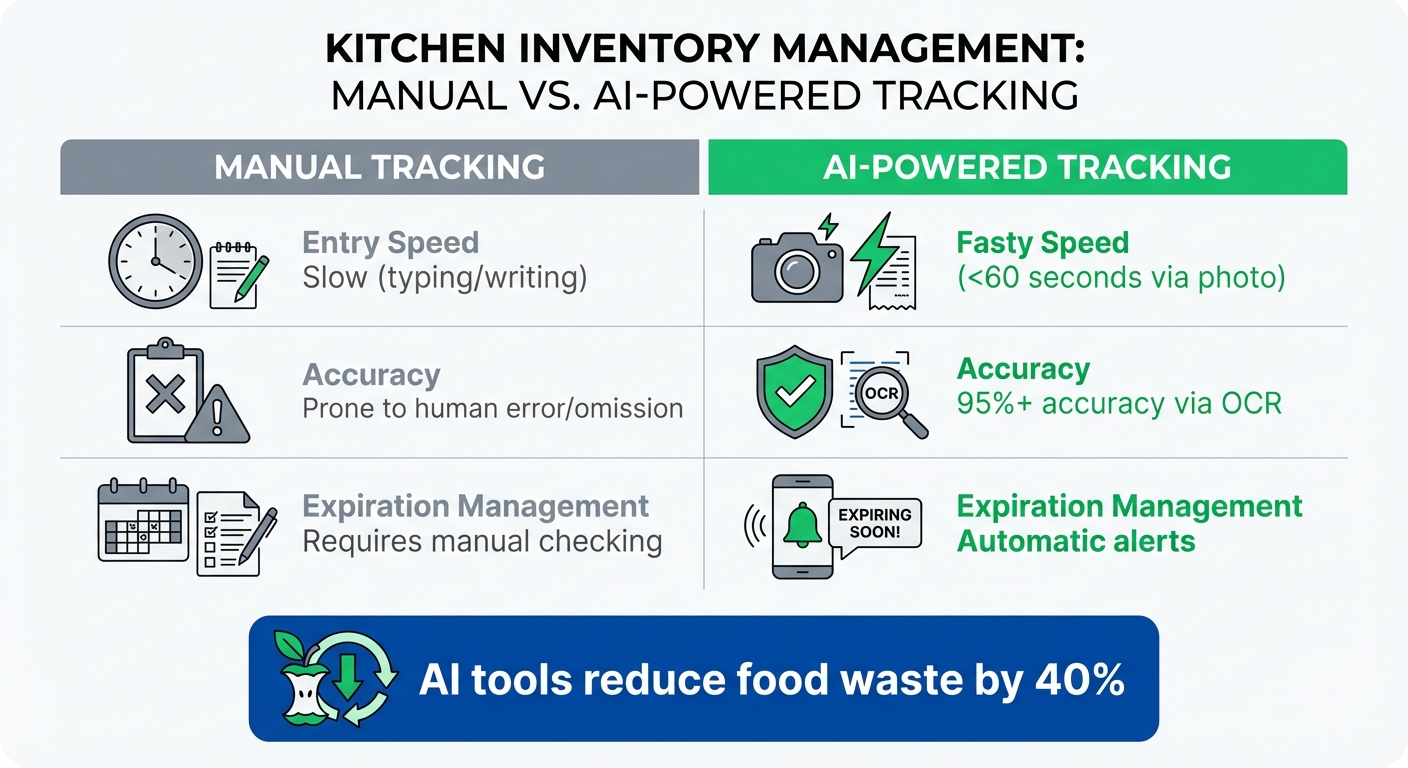
Manual vs AI-Powered Kitchen Inventory Tracking Comparison
Say goodbye to juggling handwritten lists or trying to remember what’s in your fridge. AI-powered tracking takes the hassle out of kitchen inventory management by automating updates and organizing your items intelligently. The result? Faster, more accurate tracking that saves time and effort.
Traditional methods like manually writing down items, checking expiration dates, and updating lists are tedious and prone to mistakes. AI tools simplify this process with technologies like Optical Character Recognition (OCR) and computer vision. These systems can scan grocery receipts or pantry photos to pull details like items, prices, and quantities - with accuracy rates exceeding 95%.
But it doesn’t stop there. Advanced AI systems go a step further by verifying ingredient details and automatically assigning them to storage locations like the freezer, pantry, or snack cabinet. This level of automation not only keeps your kitchen organized but also helps reduce waste and makes shopping a breeze.
| Feature | Manual Tracking | AI-Powered Tracking |
|---|---|---|
| Entry Speed | Slow (typing/writing) | Fast (<60 seconds via photo) |
| Accuracy | Prone to human error/omission | 95%+ accuracy via OCR |
| Expiration Management | Requires manual checking | Automatic alerts |
AI tools don’t just manage your inventory - they can help cut food waste by around 40%. By taking over the tedious task of tracking expiration dates, they free you up to focus on what really matters: cooking and enjoying meals.
Reducing Food Waste with Expiration Tracking
One of the standout benefits of AI-powered tracking is its ability to manage perishable items effectively. For many households, spoiled food is a major contributor to waste, making up about two-thirds of the problem. AI tools tackle this issue by sending expiration alerts directly to your phone, so you know when to use ingredients before they go bad.
These systems often use a digital version of the First-In, First-Out (FIFO) method, prioritizing older items in your inventory to ensure they’re used first. Some platforms even let you track prepared leftovers alongside raw ingredients, so nothing gets overlooked.
Globally, about 30% of food goes to waste, contributing to 8% of greenhouse gas emissions. By adopting AI tracking, households can significantly reduce their food waste - by as much as 40%. The key is to act quickly: scan barcodes or snap photos of receipts as soon as you get home from the store (a process that takes just 30 seconds). Keeping your inventory updated by marking items as "used" ensures your shopping list stays accurate and predictive.
Streamlining Grocery Shopping and Meal Planning
AI inventory tools make grocery shopping and meal planning easier than ever. Instead of staring into a cluttered fridge or accidentally buying duplicates, these tools use your current inventory to create grocery lists and suggest meal plans based on what you already have. They also highlight items nearing expiration, so you can prioritize them in your cooking.
Cloud-based syncing ensures that everyone in the household stays on the same page. For instance, if one person adds milk to the list while another is at the store, the update happens instantly, preventing duplicate purchases. Many platforms also feature extensive product libraries for barcode recognition, automatically removing items you already own from your list.
Real-Time Inventory Updates
AI tools take meal planning a step further with real-time inventory updates. Using computer vision technology, these systems can recognize items just by "seeing" them. Snap a photo of your fridge or pantry, and your inventory updates instantly, complete with alerts for items nearing expiration. No manual input required.
With receipt scanning achieving over 95% accuracy, your inventory remains precise and up-to-date across all devices. Whether you’re updating your list while cooking or a family member is adding items from the store, changes sync instantly. This ensures you’ll never run out of essentials when you need them most.
Step-by-Step Guide: Setting Up AI Kitchen Inventory Tools
Here’s a simple three-step plan to get your AI-powered kitchen inventory system up and running.
Step 1: Evaluate Your Current Inventory Process
Before diving into a new system, take a moment to reflect on what’s not working. Are you constantly running out of essentials like milk? Tossing spoiled produce into the trash? Spending too much time scribbling grocery lists? Pinpointing these issues will clarify what you need from an AI tool.
Start by emptying your storage areas - pantries, fridges, freezers - and take an inventory of everything you’ve got. Record each item’s name, quantity (e.g., 1 lb), and expiration date. This step not only gives you a complete snapshot of your kitchen but also highlights areas where you might be overspending or letting food go to waste.
Get the whole household involved! Assign tasks like sorting items, checking expiration dates, and grouping things into categories that match your cooking habits. For example, keep everyday spices within arm’s reach or create a dedicated section for baking supplies.
Step 2: Pick the Right AI Tool
With your inventory list in hand, it’s time to choose an AI tool that fits your needs. Look for features that will simplify your life, like receipt scanning for quick updates, expiration alerts to reduce waste, and recipe suggestions based on what’s already in your kitchen.
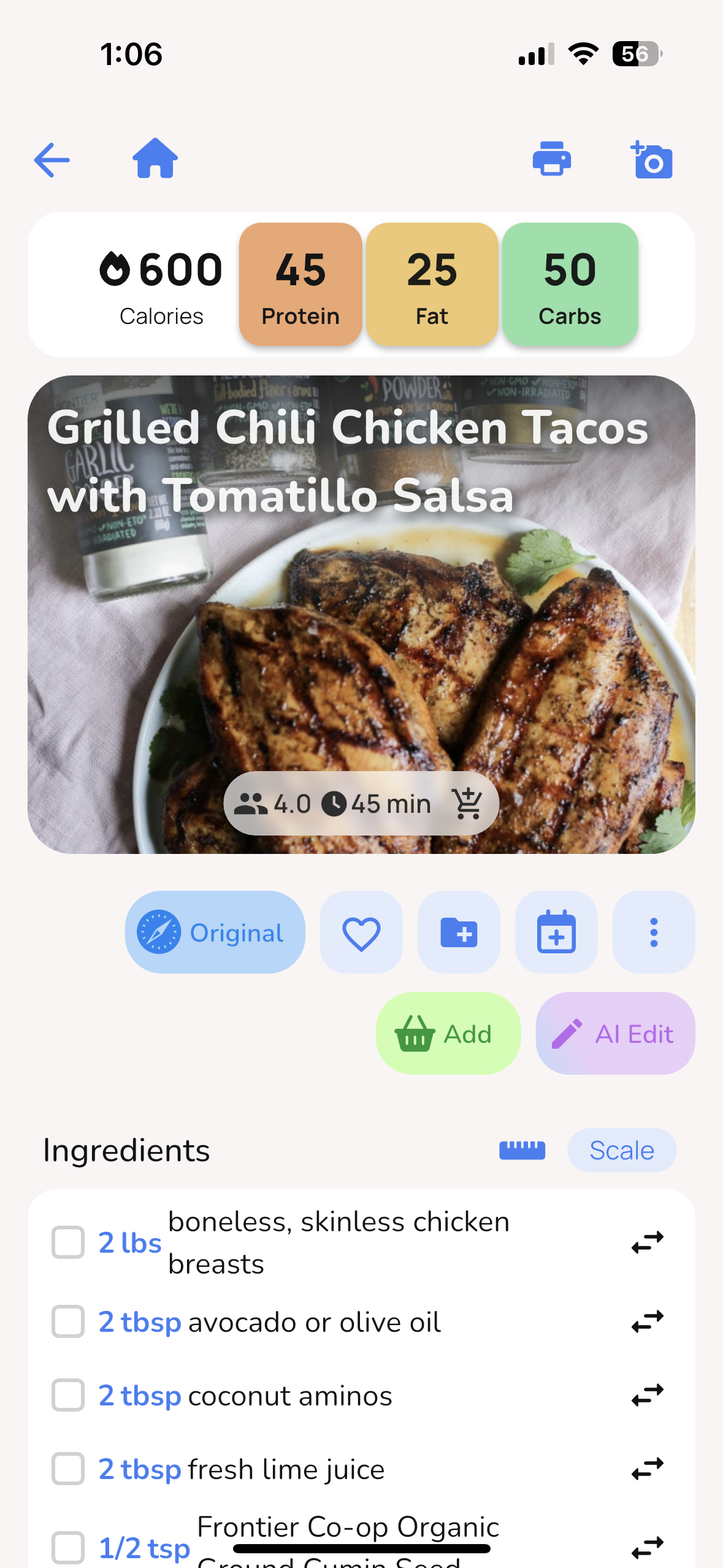
One standout option is Honeydew Recipe Manager. This app combines inventory tracking with meal planning, letting you import recipes from social media, auto-generate grocery lists, and even plan meals for the week. It integrates with Instacart so you can order missing ingredients directly, and it offers tools like ingredient substitutions, nutrition tracking, and AI-powered meal suggestions - all designed to streamline your kitchen management.
When evaluating tools, consider factors like your household size and budget. For context, Honeydew Recipe Manager users save about 270,000 recipes every month, showing just how useful an integrated system can be.
Step 3: Set Up and Customize Your System
Now that you’ve chosen your tool, it’s time to set it up. Start by uploading your baseline inventory - the detailed list you created in Step 1. Many tools let you speed this up with barcode scanning or receipt OCR, but for items without barcodes, you’ll need to manually enter details like name, quantity, and expiration date.
Next, configure key features like low-stock alerts for essentials and notifications for items nearing their expiration date. If you’re using Honeydew Recipe Manager, sync your saved recipes with your inventory so the app can suggest meals based on what you already have.
To maximize efficiency, enable FIFO (First In, First Out) tracking to ensure older items are used before newer ones. If cooking duties are shared in your household, invite family members to update the inventory in real time. This keeps everyone on the same page and ensures seamless kitchen management for the entire household.
Using Honeydew Recipe Manager for Kitchen Inventory Management
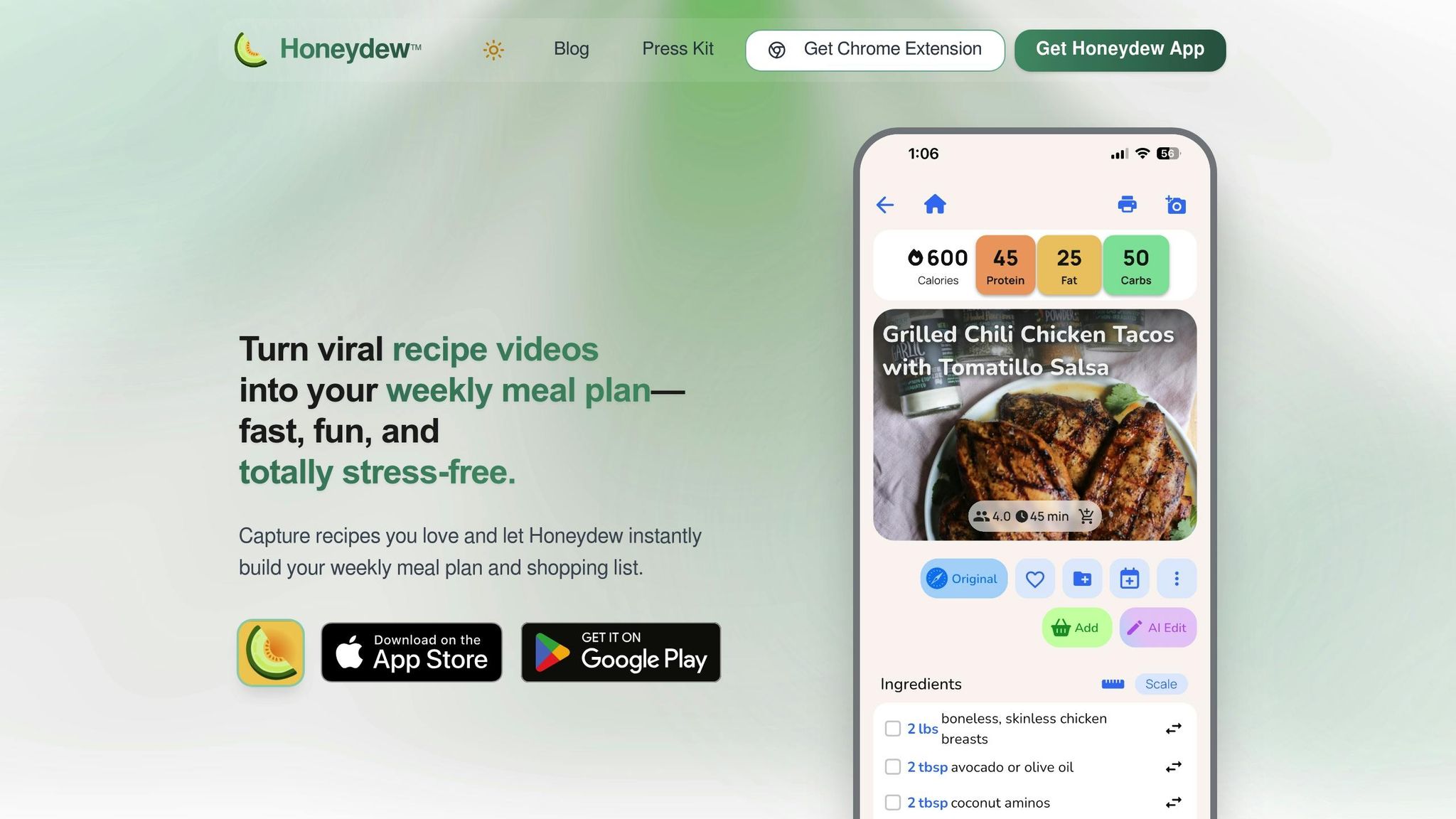
Once your AI setup is ready, Honeydew Recipe Manager becomes your go-to tool for managing kitchen inventory, planning meals, and organizing grocery shopping. With features like visual inventory tracking and smart meal suggestions, it helps you make the most of what’s already in your pantry while cutting down on waste and unnecessary spending. Let’s explore how tools like Pantry Mode, automated meal planning, and more can streamline your kitchen management.
Using Pantry Mode for Inventory Insights
Pantry Mode simplifies inventory tracking by using your smartphone camera to scan and log what’s in your kitchen. Just snap a photo of your fridge or pantry shelves, and the app’s AI identifies the ingredients. It then suggests recipes you can make immediately or highlights what’s missing to complete a dish. No more tedious manual logging - just take a picture and let the app handle the rest.
This feature is powered by an extensive recipe database that connects directly to your inventory. Users have reported saving around $125 per month by optimizing pantry use with this method, which adds up to about $1,500 annually. That’s a lot of savings for simply making better use of what you already have.
Creating Grocery Lists and Meal Plans Automatically
Honeydew Recipe Manager takes the hassle out of grocery shopping by generating lists based on your saved recipes and current inventory. Import a recipe from TikTok, Instagram, or any website, and the app automatically pulls the ingredients, checks them against your pantry, and adds any missing items to a shopping list. Plus, the list is organized by store layout for added convenience.
The AI meal planner steps things up by creating weekly meal plans in seconds. It factors in your preferences and pantry stock to suggest a balanced menu. If you opt for the Honeydew Plus plan ($4.17/month), you unlock advanced features like personalized meal planning and household sharing for up to six family members. And with Instacart integration, you can order any missing ingredients with a single click.
Tracking Nutrition and Substituting Ingredients
Honeydew Recipe Manager isn’t just about inventory - it also helps you stay on top of nutrition and ingredient substitutions. The app includes a real-time macro calculator that tracks calories and nutrients for every meal. When you import recipes, it automatically pulls nutritional information like calories and macronutrients. Adjusting serving sizes? Switching between Imperial and Metric units? The app updates the nutritional values instantly.
The substitution engine is a lifesaver when you’re out of an ingredient. The AI suggests alternatives based on flavor, cooking techniques, and nutritional value. As Emily C. shared:
"The ingredient substitution feature is a game-changer for my dietary restrictions. I can adapt any recipe easily!"
What’s more, the app updates your grocery list with the suggested substitutions, so you always buy the right alternative. This feature can reduce food waste by up to 40%, helping you make better use of what’s on hand while adapting recipes to your needs.
Tips for Improving Kitchen Efficiency with AI Insights
Adjusting Recipes Based on Inventory Trends
AI insights can completely change how you approach meal planning and grocery shopping by identifying patterns in your ingredient usage. For example, it can highlight which items you tend to overbuy and which ones you run out of too quickly. This kind of awareness helps you make smarter decisions in the kitchen.
Start by scanning your receipts after each shopping trip. Optical Character Recognition (OCR) technology logs purchase dates and estimates when perishable items might expire. To avoid waste, follow the "first in, first out" (FIFO) method to use older items first. Some AI tools even send smart alerts when food is nearing its expiration date. You can also ask the AI questions like, "What’s about to expire?" or "What can I make with spinach that expires tomorrow?" to get instant recipe suggestions.
The AI dashboard can reveal trends, like which ingredients you consistently buy but rarely use. This insight helps you adjust your shopping habits to align better with your actual cooking needs. Considering that inefficient food management can lead to losses of up to $1,500 annually, AI-driven grocery planning can make a big difference. In fact, these tools can cut household food waste by up to 40%, and many users report saving over $150 a month by avoiding waste and duplicate purchases.
By using these insights, you can plan smarter grocery trips, ensuring that every item you buy has a purpose in your kitchen.
Using AI for Smarter Grocery Shopping
AI doesn’t just stop at managing your pantry - it takes your grocery shopping to the next level. By analyzing your consumption patterns, it predicts when you’re running low on essentials, helping you avoid last-minute store runs and unnecessary impulse buys.
Want to stick to a budget? You can ask the AI for a grocery list tailored to your needs, like, "Plan meals for a family of four for seven days with a $100 budget". The system will create a list that fits your requirements, suggest affordable ingredient swaps, and even organize items by store aisle to save you time.
AI tools can also calculate the true cost-per-serving based on scanned receipt prices, giving you a clearer picture of how much you’re spending. Some systems even compare prices across stores for your frequently purchased items, turning each shopping trip into a chance to save money and reduce waste.
With these tools, grocery shopping becomes more efficient and cost-effective, helping you make the most of your time and money.
Conclusion
AI-powered tools are transforming how we manage kitchen inventory, helping to cut food waste by up to 40% and saving families over $150 each month. These tools not only save money but also simplify the process of keeping your kitchen organized.
One standout option is the Honeydew Recipe Manager, which combines inventory management with meal planning to make your kitchen run more smoothly. With an impressive 4.8-star rating and users saving around 270,000 recipes every month, it’s clear this app is making a difference.
As one user shared:
"I used to waste so much food. Now with Honeydew's meal planning, I buy exactly what I need and save money!" - Mark T.
FAQs
How can AI tools help reduce food waste at home?
AI tools can play a big role in reducing food waste by keeping tabs on what’s in your pantry and fridge. They can suggest recipes that make use of the ingredients you already have, helping you avoid tossing out unused food. Plus, these tools can track expiration dates and send you reminders about items that need to be used soon, so nothing goes to waste.
On top of that, AI-powered meal planning apps can create grocery lists tailored to your meal plans. This means you’ll avoid overbuying and stick to purchasing only what’s necessary. The result? Less waste, more savings, and a lot less hassle.
What should I look for in an AI tool to manage my kitchen inventory?
When picking an AI-powered kitchen inventory tool, focus on features that make meal planning and grocery management easier. One key feature to look for is real-time inventory tracking, which keeps stock levels updated automatically as you add or use items. Tools with barcode scanning or photo upload options for pantry items and receipts can make these updates faster and more precise.
Other helpful features include expiration date tracking to minimize food waste and recipe suggestions tailored to what’s already in your kitchen. Some tools even offer predictive analytics to anticipate your ingredient needs based on past usage, helping you avoid overstocking or running out of essentials. Integration with grocery delivery services is another handy feature, streamlining your shopping process. Together, these tools can save you time, cut down on waste, and simplify your kitchen management.
How can AI help with grocery shopping and meal planning?
AI has transformed grocery shopping and meal planning into a smoother, more personalized experience. Imagine this: with AI-powered tools, you can get a grocery list tailored to what you already have in your pantry and fridge. These tools analyze your inventory, suggest recipes using those ingredients, and even recommend alternatives for anything you're missing. The result? Less food waste and a cart filled with only the essentials.
But that's not all. These smart tools can track expiration dates, keep your pantry organized, and give you real-time inventory updates, so you avoid buying duplicates or unnecessary items. Many apps even sync with services like Instacart, letting you order groceries with just a few taps. Plus, if you have specific dietary needs or preferences, AI can create meal plans that align with your lifestyle - saving you time, effort, and money in the process.