Ultimate Guide to Couscous and Bulgar Swaps
• Updated
Ever run out of couscous or bulgur mid-recipe? Here's what you need to know: Couscous is a pasta made from semolina, while bulgur is a whole grain made from cracked wheat. Both are staples in Middle Eastern and North African cooking, but they differ in texture, flavor, and nutrition. Couscous is light and fluffy, while bulgur is chewy and nutty. Nutritionally, bulgur is higher in fiber and has a lower glycemic index, whereas couscous contains more selenium.
When swapping these ingredients, or looking for substitutes, consider options like quinoa, rice, or cauliflower rice for couscous, and quinoa, freekeh, or couscous for bulgur. Each alternative brings unique textures and flavors, making them suitable for salads, pilafs, or side dishes.
Quick Tips for Substituting:
- Couscous substitutes: Quinoa (1:1), rice, or cauliflower rice.
- Bulgur substitutes: Quinoa, freekeh, or fine couscous.
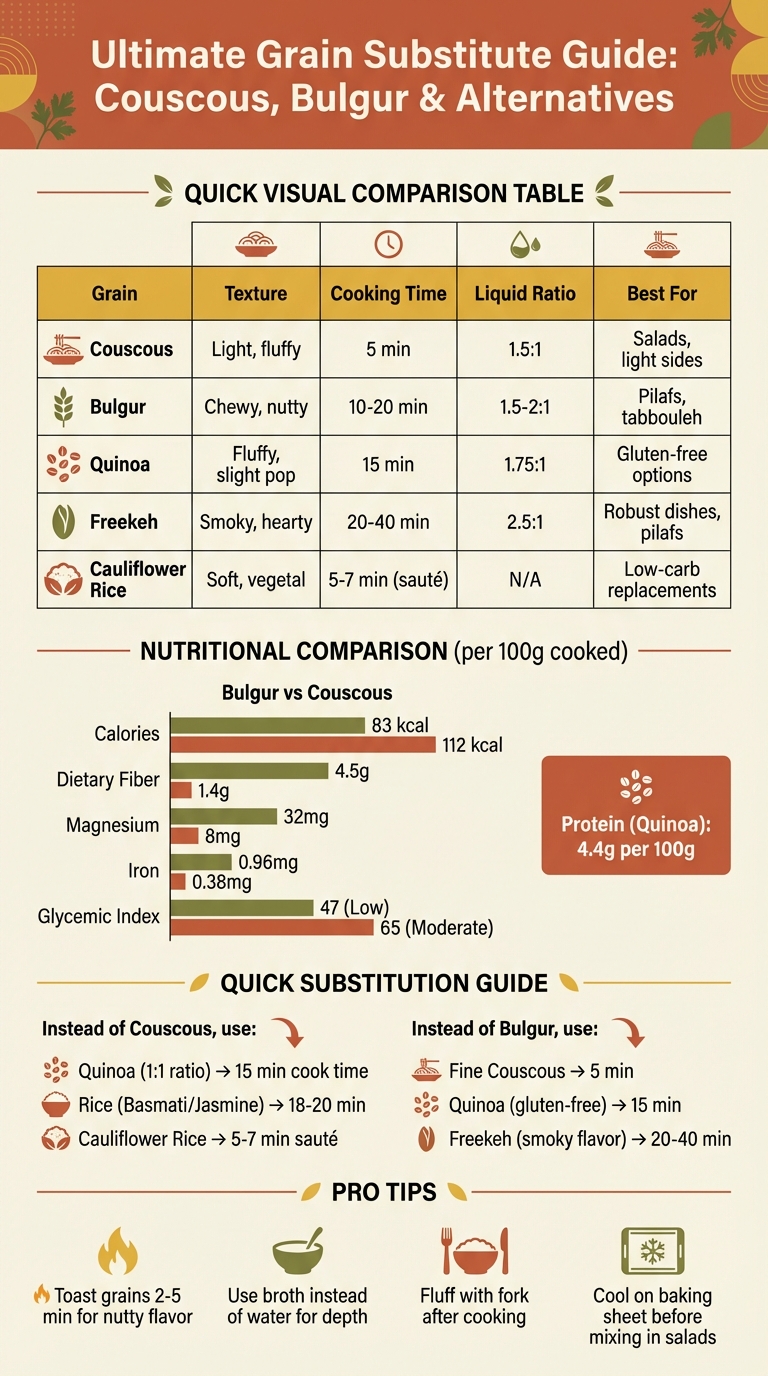
- Cooking times: Couscous (5 min), bulgur (10–20 min), quinoa (15 min), freekeh (20–40 min).
Quick Comparison:
| Substitute | Texture | Cooking Time | Best For |
|---|---|---|---|
| Couscous | Light, fluffy | 5 min | Salads, light sides |
| Bulgur | Chewy, nutty | 10–20 min | Pilafs, tabbouleh |
| Quinoa | Fluffy, slight pop | 15 min | Gluten-free options |
| Freekeh | Smoky, hearty | 20–40 min | Robust dishes, pilafs |
| Cauliflower Rice | Soft, vegetal | 5–7 min (sauté) | Low-carb replacements |
For the best results, match the substitute's texture and cooking method to your dish. Use broth for added flavor, toast grains before cooking, and fluff them after for the perfect finish.
Couscous vs Bulgur vs Quinoa vs Freekeh Cooking Guide and Comparison Chart
PERFECT Couscous Every Time with This Simple Method! Vegan Weight Loss recipes with Couscous
How Couscous and Bulgur Differ
Understanding these differences can help you decide which one fits your recipe or dietary needs better.
Grain Size and Texture
At a glance, couscous and bulgur look quite different. Couscous is made up of smooth, round beads that resemble tiny pasta pearls. On the other hand, bulgur is crafted from parboiled cracked wheat, giving it a more rugged, irregular appearance. Couscous comes in three primary sizes: Moroccan (tiny), Israeli or Pearl (medium, about the size of a pea), and Lebanese (the largest). Bulgur, however, is categorized by four grinds, ranging from fine (#1) to extra coarse (#4).
Texture-wise, couscous is light, airy, and fluffy, making it perfect for soaking up sauces and seasonings. Bulgur, with its chewy and hearty bite, holds up well even after cooking. As Sarah Bond, BS Nutrition, MS Sensory Science, puts it: "Couscous is much smaller and more fine, with a rounder shape. Bulgur would be large and a bit irregular shaped".
Cooking Times and Techniques
The way you prepare couscous and bulgur also highlights their differences. Couscous is pre-steamed and dried, so it only needs a quick soak in boiling water or broth - just 5 to 10 minutes - before fluffing with a fork. The standard liquid ratio is about 1.25 cups of water per 1 cup of couscous. However, Israeli (pearl) couscous is an exception; it must be boiled like traditional pasta.
Bulgur, on the other hand, requires simmering for 10–15 minutes, followed by a 5-minute rest to complete the steaming process. The liquid ratio for bulgur is slightly higher at 1.5 cups per 1 cup of bulgur. While fine-grade bulgur can sometimes be prepared like couscous by soaking in hot water, coarser varieties need full cooking.
Flavor and Nutrition
Couscous has a mild, neutral flavor that easily absorbs the taste of accompanying dishes like tagines, stews, or salads. Bulgur, in contrast, has a nutty, earthy flavor that adds a layer of depth to recipes.
When it comes to nutrition, bulgur has a clear edge in fiber, minerals, and glycemic response. It contains over three times more dietary fiber and has a lower glycemic index (47 compared to couscous's 65), which may help with blood sugar management. Bulgur also delivers higher levels of essential minerals like magnesium and iron. However, couscous stands out with its significantly higher selenium content - 46 times more than bulgur. Calorie-wise, couscous is slightly denser, providing 112 kcal per 100g, compared to bulgur's 83 kcal.
| Nutrient (per 100g cooked) | Bulgur | Couscous |
|---|---|---|
| Calories | 83 kcal | 112 kcal |
| Dietary Fiber | 4.5g | 1.4g |
| Magnesium | 32mg | 8mg |
| Iron | 0.96mg | 0.38mg |
| Glycemic Index | 47 (Low) | 65 (Moderate) |
These distinctions make it easier to choose the right ingredient for your next dish, depending on whether you're prioritizing texture, flavor, or nutritional benefits.
What to Use Instead of Couscous
When couscous is unavailable or doesn’t align with your dietary preferences, there are plenty of alternatives that can seamlessly step in. These substitutes not only mimic couscous's texture but also absorb flavors beautifully, making them perfect for Middle Eastern-inspired dishes. Each option brings its own twist, allowing you to tailor your meal to your taste and nutritional needs.
Quinoa
Quinoa is an excellent 1:1 substitute for couscous. Its bead-like texture closely resembles couscous, but it offers a nuttier, earthier flavor and packs a protein punch with 8 grams per cooked cup.
"Couscous has a light, fluffy texture that absorbs flavors well, making it great for salads and side dishes. Substitutes like quinoa or bulgur wheat bring a similar texture but vary in flavor, so a little adjustment is needed when swapping them."
– Andrew Gray, Food Writer, CooksCrafter
Before cooking quinoa, rinse it thoroughly to remove its natural bitter coating called saponin. For added depth, toast the grains in a dry pan for 2–3 minutes before adding liquid. Use a 1:2 ratio of quinoa to water or broth, then simmer for about 15 minutes. Quinoa works wonderfully in cold salads, tabbouleh, or Mediterranean-style dishes, where its texture and protein content enhance the meal. If quinoa doesn’t suit your recipe, a starchy grain like rice can work just as well.
Rice
Long-grain varieties such as Basmati or Jasmine rice make a neutral, fluffy alternative to couscous, especially in pilafs or as side dishes. These types of rice typically take 18–20 minutes to cook. Rinse them beforehand to remove excess starch, and cook them in broth for added flavor. Avoid short-grain rice in salads, as its stickiness can affect the dish’s texture. For best results, spread the cooked rice on a baking sheet to cool completely before mixing it with other ingredients like vegetables. If you're looking for a low-carb swap, cauliflower rice is a great option.
Cauliflower Rice
For a grain-free, low-carb alternative, cauliflower rice is a fantastic choice. With only 23 calories and 5 grams of carbs per 100 grams compared to couscous’s 112 calories and 23 grams of carbs, it’s a lighter option. To make it, pulse cauliflower florets in a food processor until they resemble grains. Sauté the "rice" in olive oil for 5–7 minutes to remove excess moisture and achieve a slightly crunchy, sweet base. Avoid boiling cauliflower rice, as it can become waterlogged and lose its texture.
These options allow you to maintain the essence of Middle Eastern dishes, even when couscous isn’t on the menu. Each substitute brings its own flavor and texture, ensuring your meal remains delicious and satisfying.
What to Use Instead of Bulgur
When you can't get your hands on bulgur, there are plenty of substitutes that work well in dishes like tabbouleh, kibbeh, and pilafs. Each option brings its own texture and flavor to the table, so you can still enjoy your favorite recipes without compromise. Here are some of the best alternatives.
Couscous
Couscous is a quick and convenient option, especially if you're pressed for time. Fine couscous closely mimics the texture of fine bulgur in salads, while Israeli (pearl) couscous offers a larger, chewier bite for heartier dishes. One of its advantages is speed - it only takes about 5 minutes to soak in boiling water, compared to bulgur's 20 minutes. However, it has less fiber, with just 2 grams per cooked cup, about half of what bulgur provides. For optimal results in salads, use equal parts liquid and couscous, cover the pot tightly, and let it steam off the heat.
"Fine variety [of couscous] is a near-perfect stand-in for bulgur in many dishes." – Savory Suitcase
Quinoa
Quinoa is a fantastic gluten-free option, particularly for dishes like tabbouleh. Its small, seed-like grains are similar in size and shape to bulgur, and it cooks in about 15 minutes. Quinoa is also packed with nutrients, offering 4.4 grams of protein per 100 grams and containing all nine essential amino acids, making it a complete protein. To prepare, rinse the quinoa thoroughly to remove its bitter saponin coating, use a 1:2 ratio of quinoa to water or broth, and toast the grains in a dry pan for 2–3 minutes to enhance their nutty flavor.
"Quinoa is the best alternative for bulgur when making tabouli. The small seeds are very similar in shape, size, and taste to a traditional bulgur tabouli recipe." – Aysegul Sanford, Recipe Developer
Freekeh
Freekeh, a roasted grain made from young green wheat, brings a smoky and earthy flavor to your dishes. It’s often compared to bulgur but requires more time and liquid to cook. For cracked freekeh, use a 1:2.5 liquid-to-grain ratio and simmer for about 20 minutes. Wholegrain freekeh takes up to 40 minutes. This grain is rich in fiber, containing about three times more than brown rice, and it’s ideal for pilafs where a chewy texture shines. Toasting the grains in oil for a few minutes before adding liquid enhances their flavor. Keep in mind, freekeh tends to be pricier than bulgur .
Tips for Middle Eastern Recipes
Matching Texture and Flavor
When adapting Middle Eastern recipes, it's crucial to choose substitutes that maintain both the texture and flavor of traditional grains. For dishes like tabbouleh, look for options that can soak up the dressing while staying light and fluffy - fine bulgur or white quinoa work well here. For more robust dishes like pilafs, grains like medium bulgur, Israeli couscous, or freekeh offer that satisfying chew.
To elevate your grains, toast them for 2–5 minutes until they release a nutty aroma. This simple step adds depth to the flavor of Middle Eastern dishes. Another trick? Cook your grains in chicken or vegetable broth instead of water, especially for milder grains like couscous or white rice - this adds a subtle yet rich layer of taste.
Fresh herbs are a cornerstone of Middle Eastern cooking. Use plenty of parsley and mint, and don’t hold back on lemon juice and olive oil. For tabbouleh, try hydrating fine bulgur with the juice from chopped tomatoes and lemons instead of water. This not only prevents the grains from becoming mushy but also amplifies the flavor.
These techniques ensure your dishes stay true to their roots while accommodating modern substitutions.
Adjusting Cooking Times
Different grains and substitutes require specific cooking times and liquid ratios to achieve the right texture:
- Instant couscous: Ready in just 5 minutes with a 1.5:1 liquid-to-grain ratio.
- Quinoa: Takes about 15 minutes and requires a 1.75:1 liquid ratio.
- Medium bulgur: Needs 15–20 minutes with a 2:1 liquid ratio.
Getting these ratios right is key to avoiding mushy or undercooked grains.
Once cooked, let grains cool on a baking sheet before mixing them into salads. This prevents the herbs from wilting. For pasta-based substitutes like orzo or Israeli couscous, rinse them under cold water after cooking to remove excess starch and keep the texture just right.
Substitute Comparison Table
| Substitute | Texture | Cooking Time | Liquid Ratio | Best Application |
|---|---|---|---|---|
| Couscous (Instant) | Light, fluffy | 5 mins (steam) | 1.5:1 | Salads, light sides |
| Israeli Couscous | Chewy, pearl-like | 10–15 mins | 1.25:1 | Pilafs, hearty salads |
| Fine Bulgur (#1) | Delicate, grainy | 10–12 mins | 1.5:1 (or 1:1 in juice) | Tabbouleh, kibbeh |
| Medium Bulgur (#2) | Hearty, chewy | 15–20 mins | 2:1 | Pilafs, stuffings |
| Quinoa | Fluffy, slight pop | 15 mins | 1.75:1 | Gluten-free tabbouleh |
| Millet | Fluffy, corn-like | 20 mins | 2:1 | Gluten-free pilafs |
| Cauliflower Rice | Soft, vegetal | 5–7 mins (sauté) | N/A | Low-carb "tabbouleh" |
This table offers a quick reference to help you choose the right substitute for any Middle Eastern recipe.
Getting the Right Texture and Flavor
Rinsing and Fluffing
Rinsing grains before cooking is key to avoiding clumping and achieving the right texture. For example, rinsing quinoa under cold water in a fine-mesh sieve removes saponin, a naturally bitter coating. Similarly, rinsing starchy grains like rice or orzo helps wash away excess starch that can lead to gumminess.
Once cooked, fluffing the grains helps separate them and prevents dense, heavy clusters. Chef Nargisse Benkabbou suggests using your hands instead of a fork for this step:
"With fingers we use our senses to touch (and feel) the grains whereas with a fork we need to use our eyes and the result isn't as efficient".
To further ensure light, airy grains, spread them out in a thin layer on a rimmed baking sheet after cooking. This halts the cooking process quickly and prevents the weight of the top layers from compressing the grains underneath. With texture perfected, it’s time to focus on enhancing flavor.
Using Broth and Seasonings
Swapping plain water for broth can instantly add depth to your grains. For even more flavor, add seasonings directly to the boiling liquid before the grains go in. Suzy Karadsheh, Founder and CEO of The Mediterranean Dish, highlights this technique:
"You can add your favorite seasonings and aromatics to flavor your bulgur. To do so, add the seasonings to the cooking water".
Consider incorporating ingredients like bay leaves or cinnamon sticks for subtle, aromatic notes. Turmeric not only imparts a striking golden color but, when paired with black pepper, enhances curcumin absorption. To finish, mix in lemon juice, garlic paste, and a drizzle of high-quality extra virgin olive oil. If raw onion feels too sharp for your dish, chop it and let it sit in lemon juice while you prep other ingredients - this mellows its intensity. These simple yet effective techniques can elevate the flavor of any grain-based dish.
Using Honeydew Recipe Manager

For consistent results when using alternative grains, tools like Honeydew Recipe Manager (https://honeydewcook.com) can be a game-changer. This app adjusts liquid-to-grain ratios and scales recipes precisely, making substitutions like swapping couscous for bulgur a breeze. It even offers smart ingredient substitution suggestions, ensuring the correct cooking ratios are applied automatically.
The app’s real-time AI assistant can answer practical questions, such as whether millet should be rinsed before toasting or how much broth is needed when replacing bulgur with freekeh. For example, since dry couscous expands about 2.5 times its size when cooked, the app recalculates ingredient amounts when scaling recipes. Whether you're cooking for two or ten, Honeydew takes the guesswork out of substitutions, helping you nail the texture and flavor every time.
Sample Recipes with Swaps
Here are some recipes that showcase how to maintain the rich, authentic flavors of Middle Eastern cuisine while using alternatives to couscous.
Couscous Tabbouleh
Couscous makes a quick and easy base for a weeknight tabbouleh. Start by combining 1 cup of dry couscous with 1 cup of boiling water. Cover the bowl, let it sit for 5 minutes, then fluff the couscous with a fork and spread it on a baking sheet to cool.
While the couscous cools, prepare the vegetables. Dice 2 tomatoes and 1 cucumber, slice 3–6 green onions, and finely chop 2 cups of curly parsley along with 1/4 cup of fresh mint leaves. For the dressing, whisk together 1/4 cup extra-virgin olive oil, 1/4 cup fresh lemon juice, 2 minced garlic cloves, 1/2 teaspoon salt, and 1/4 teaspoon black pepper in a small bowl. Toss everything together in a large mixing bowl, then refrigerate for at least an hour to let the flavors develop. This version is bright, refreshing, and requires minimal effort.
For a gluten-free spin, consider swapping couscous for quinoa.
Quinoa Tabbouleh
Quinoa is a great gluten-free substitute for couscous, and it adds a boost of protein. Start by thoroughly rinsing 1 cup of dry quinoa in a fine-mesh strainer. Combine the rinsed quinoa with 1.75–2 cups of water and a pinch of salt in a saucepan. Bring it to a boil, then reduce the heat to low, cover, and simmer for 15 minutes until the water is absorbed. Fluff the quinoa with a fork and spread it on a baking sheet to cool quickly, which helps maintain its texture.
"The best parsley to use in tabbouleh is curly parsley. Curly parsley has more texture. When you chop it, it remains light and fluffy, versus Italian parsley that is flat and can become soggy." - Sonja Overhiser, A Couple Cooks
For the vegetables and dressing, follow the same steps as the couscous version. This quinoa-based tabbouleh not only keeps things gluten-free but also provides about 159 calories and 6 grams of protein per serving - 2 grams more protein than traditional bulgur wheat.
Looking for something heartier? Try the next recipe featuring freekeh.
Vegetable Pilaf with Freekeh
Freekeh, known for its smoky and nutty flavor, makes a fantastic base for a robust vegetable pilaf. Begin by rinsing 1.5 cups of cracked freekeh and soaking it for 5 minutes to remove any burnt chaff. In a large skillet, heat 2 tablespoons of olive oil over medium heat. Sauté 1 diced onion and 2 minced garlic cloves until softened. Add 1 diced eggplant and 1 can (15 oz) of drained chickpeas, cooking for about 5 minutes.
Next, stir in the drained freekeh along with 1 teaspoon of cumin, 1/2 teaspoon of coriander, 1/2 teaspoon of turmeric, 1/4 teaspoon of allspice, and 1/4 teaspoon of cinnamon. Toast the mixture for 1–2 minutes to bring out the freekeh’s nutty aroma. Add 1.5 to 2.25 cups of vegetable broth and 2 diced tomatoes. Bring it all to a boil, then reduce the heat to low, cover, and let it simmer for 20–25 minutes until the liquid is absorbed. Once done, cover the pan with a clean tea towel, replace the lid, and let it rest off the heat for 15 minutes to absorb any remaining steam. Fluff the pilaf with a fork and stir in 1/4 cup of chopped parsley and 2 tablespoons of chopped mint before serving. This dish stores well in the refrigerator for up to 4–5 days, making it perfect for meal prep or leftovers.
Conclusion
Switching out couscous and bulgur can lead to some exciting culinary adventures. Options like quinoa bring a protein-rich, gluten-free twist; bulgur offers a nutty, fiber-packed foundation; and cauliflower rice serves as a light, low-carb alternative. These substitutes let you experiment while staying true to the essence of your dish.
The key to a successful swap lies in understanding the role of each ingredient. For example, toasting grains enhances their flavor, rinsing quinoa removes bitterness, and cooling grains preserves their texture. These simple techniques, discussed throughout this guide, will help you achieve authentic results no matter which substitute you choose.
For an easier way to manage substitutions and meal planning, check out the Honeydew Recipe Manager (https://honeydewcook.com). This tool streamlines the process by adjusting cooking ratios, suggesting smart ingredient swaps, and generating grocery lists. You can even import recipes from social media or websites, scale serving sizes, and search based on ingredients you already have. With features like nutrition tracking and auto-generated grocery lists, you’ll spend less time planning and more time enjoying meals tailored to your preferences.
FAQs
Can I swap couscous and bulgur 1:1 in any recipe?
Yes, you can swap couscous and bulgur in recipes, but keep in mind they have some differences. Bulgur offers a heartier, chewier texture and takes longer to cook, making it a great choice for dishes like salads or pilafs where a more substantial bite works well. Couscous, in contrast, is lighter and cooks much faster, which might suit dishes where a softer texture or quick preparation is key. Consider the dish's texture and cooking time before making the substitution.
How do I keep grain substitutes from turning mushy in salads?
To stop grain substitutes from turning mushy in salads, start by toasting them before cooking. This not only boosts their flavor but also helps them hold their texture. Cook the grains until they're just tender, then let them cool completely before adding them to your salad. Use ingredients that aren't overly watery, or make sure to thoroughly drain and dry items like cucumbers and tomatoes. These simple steps will keep your salad crisp and fresh.
What’s the best gluten-free swap for tabbouleh?
Quinoa is the top gluten-free alternative to bulgur in tabbouleh. Its texture and flavor closely mimic bulgur, making it a natural fit for this dish. Cook quinoa just as you would prepare bulgur, and you'll have a tasty, gluten-free take on this beloved classic.