Ultimate Guide to Hidden Veggie Recipes
• Updated
Getting kids to eat vegetables doesn’t have to be a struggle. This guide shares simple ways to blend vegetables into everyday meals, making them virtually undetectable. From breakfast to dessert, you’ll find ideas to boost nutrition without sacrificing taste.
Key Takeaways:
- Why hide veggies? Many kids don’t meet the recommended daily intake of vegetables (1.5 cups for ages 4–8).
- Top veggies to use: Zucchini, carrots, cauliflower, spinach, sweet potatoes, and pumpkin are great options thanks to their mild flavors and textures.
- Preparation tips: Puree, grate, steam, or roast veggies to blend them seamlessly into dishes.
- Recipe ideas: Think spinach pancakes, veggie-packed mac & cheese, or brownies with hidden beets.
- Tools to help: Apps like Honeydew Recipe Manager can simplify meal planning, substitutions, and tracking nutrition.
By sneaking veggies into familiar meals, you can ensure kids get the nutrients they need while gradually introducing them to visible vegetables.
Hidden Veggie Recipes Kids Will Love!
Best Vegetables to Hide and How to Prepare Them
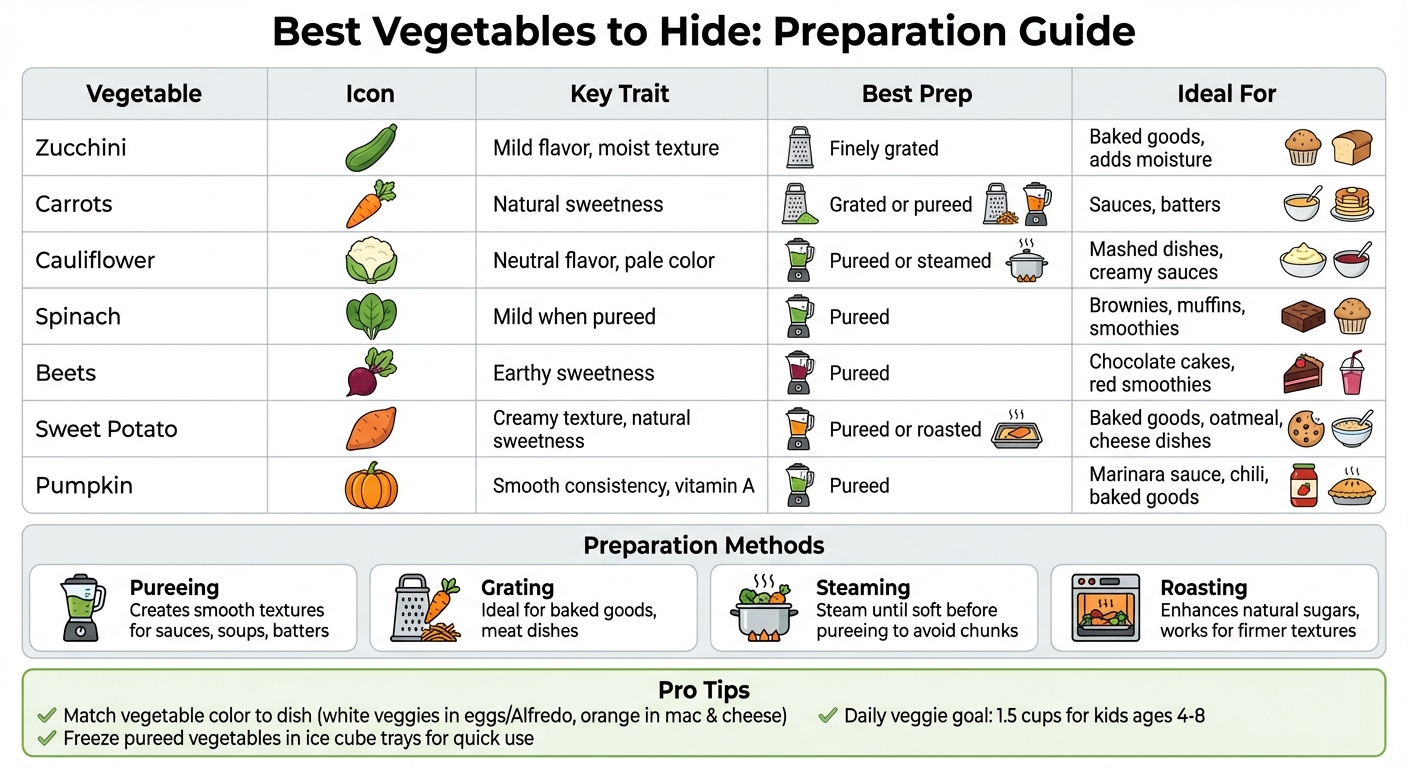
Best Vegetables for Hidden Veggie Recipes: Preparation Methods and Uses
Picking the right vegetables and preparing them properly can make all the difference when sneaking them into meals. The key is to focus on veggies with mild flavors, high moisture content, or natural sweetness that blend seamlessly into familiar dishes, often acting as a nutritious ingredient substitute. Lisa Cooper, RD, a Registered and Licensed Dietitian at Orlando Health, explains:
"Picky eaters no matter what their age tend to particularly dislike the color, texture or taste of vegetables... it may be time to consider a new, albeit sneaky, tactic for incorporating veggies into the menu".
Zucchini is a go-to option thanks to its mild flavor and moist texture. When finely grated, it practically disappears in baked goods, adding moisture without altering the taste. Carrots bring a touch of natural sweetness to sauces and batters, while cauliflower - with its neutral flavor and pale color - works perfectly in mashed dishes and creamy sauces.
For leafy greens, pureed spinach hides well in brownies, muffins, and smoothies, leaving behind little trace of its flavor. Beets offer an earthy sweetness that pairs beautifully with chocolate in cakes or blends into red fruit smoothies for a vibrant boost. Sweet potato and pumpkin are fantastic for their creamy textures and natural sweetness. They work wonders in baked goods, oatmeal, and even cheese-based dishes. Pumpkin, in particular, adds a dose of vitamin A and can enhance marinara sauce or chili with its smooth consistency.
Preparation Tips
- Pureeing: This creates smooth textures for sauces, soups, and batters.
- Grating: Finely grated vegetables are ideal for baked goods or meat dishes.
- Steaming: Steam veggies until soft before pureeing to avoid chunks.
- Roasting: Roasting enhances natural sugars and works well for firmer textures.
A clever trick is to match the vegetable's color to the dish. For example, hide white vegetables in eggs or Alfredo sauce, and orange veggies in mac and cheese or taco meat. To save time, freeze pureed vegetables in ice cube trays for quick use later. These preparation methods open the door to endless hidden veggie meal possibilities!
Hidden Veggie Meal Ideas by Type
These recipes are perfect for sneaking vegetables into every meal of the day - from breakfast to dessert - without sacrificing taste or texture.
Breakfast Recipes with Hidden Vegetables
Start your day with Beet Pancakes with Berry Beet Syrup, a colorful twist on a classic breakfast. Pureed beets give the pancakes their vibrant pink hue, while the syrup - made from beets, mixed berries, and maple syrup - packs a punch of vitamins like A, C, and Folate.
For a green alternative, try Spinach Banana "Turtle" Pancakes. This recipe blends spinach, bananas, and oats into naturally sweet pancakes that kids will love, especially with the playful "turtle" name. If muffins are more your style, consider Hidden Veggie Zucchini Muffins, which combine mashed bananas, a spinach-applesauce puree, and grated zucchini. Each batch can include up to four servings of fruits and vegetables, and they’ve earned rave reviews for their soft, moist texture. A tip? Avoid squeezing the water out of the zucchini - its moisture keeps the muffins light.
For chocolate lovers, Veggie Chocolate Muffins are a hit. Cocoa powder hides the flavor of spinach, carrots, and even beets or sweet potatoes. With a 4.84/5 rating from 25 votes, they prove that chocolate makes everything better. Smoothies are another great option: blend frozen cauliflower and shredded zucchini with spinach, raspberries, and bananas. The cauliflower adds creaminess without altering the fruity flavor.
After fueling up with these veggie-packed breakfast ideas, dive into hearty lunch and dinner recipes that continue the trend.
Lunch and Dinner Recipes with Hidden Vegetables
Hidden Veggie Mac & Cheese is a comforting classic with a twist. As Yumna Jawad of Feel Good Foodie explains:
"My hidden veggie mac and cheese is basically your classic macaroni and cheese recipe but with added vegetables that blended into the sauce!"
The secret lies in using orange or yellow vegetables like carrots, butternut squash, sweet potatoes, or cauliflower, which blend seamlessly with cheese. Steam or boil the veggies until tender, then puree them with milk and cheese for a creamy, velvety sauce. For the best texture, use freshly grated sharp cheddar instead of pre-shredded cheese.
Another hearty option is Hidden Vegetable Lasagna, which packs a surprising amount of vegetables into every layer. Stacey from My Kids Lick The Bowl shares:
"The rich beef and lentil sauce is blended with spinach, mushrooms, carrots, and zucchini, while the creamy béchamel sneaks in cauliflower and cheese."
This lasagna can contain five times more vegetables than meat, earning a 4.53/5 rating from 294 votes. To keep sauces smooth and free of chunks, puree or strain the vegetables. For a flawless presentation, peel zucchini to avoid visible green flecks. These dishes make it easy to meet nutritional goals without compromising on flavor.
Snacks and Desserts with Hidden Vegetables
Dessert can be both delicious and nutritious with recipes like Veggie Brownies. These fudgy treats incorporate finely chopped zucchini and pureed beets, adding fiber and nutrients without changing the texture. Monica Davis from The Hidden Veggies notes:
"These hidden veggie brownies come out perfect with either gluten-free or wheat flour too."
They’ve earned a perfect 5/5 rating from 9 reviews.
For cookies, try Hidden Veggie Cookies, which mix grated zucchini, carrots, and diced spinach into chocolate chip cookie dough. With a 5/5 rating from 40 reviews, these cookies rely on dark chocolate chips and maple syrup to mask the vegetable flavors. You can also create veggie-packed muffins by blending spinach, kale, carrots, or zucchini into the batter and pairing them with chocolate chips or bananas. Carleigh Bodrug from PlantYou explains:
"Cocoa powder masks the greens and brings deep chocolate flavor."
For a cool snack, turn blended vegetables into smoothie pops or frozen treats. Adding fruit juice or yogurt helps hide the veggie taste. Use a blender or food processor to puree vegetables like spinach or cooked beets for a smooth consistency that picky eaters won’t notice.
Most hidden veggie baked goods can be stored in the fridge for up to a week or frozen for up to three months, making them ideal for meal prep. These creative snacks and desserts ensure kids get their veggies while enjoying familiar treats.
To keep track of these recipes and streamline meal planning, try using the Honeydew Recipe Manager.
How Honeydew Recipe Manager Helps with Hidden Veggie Recipes
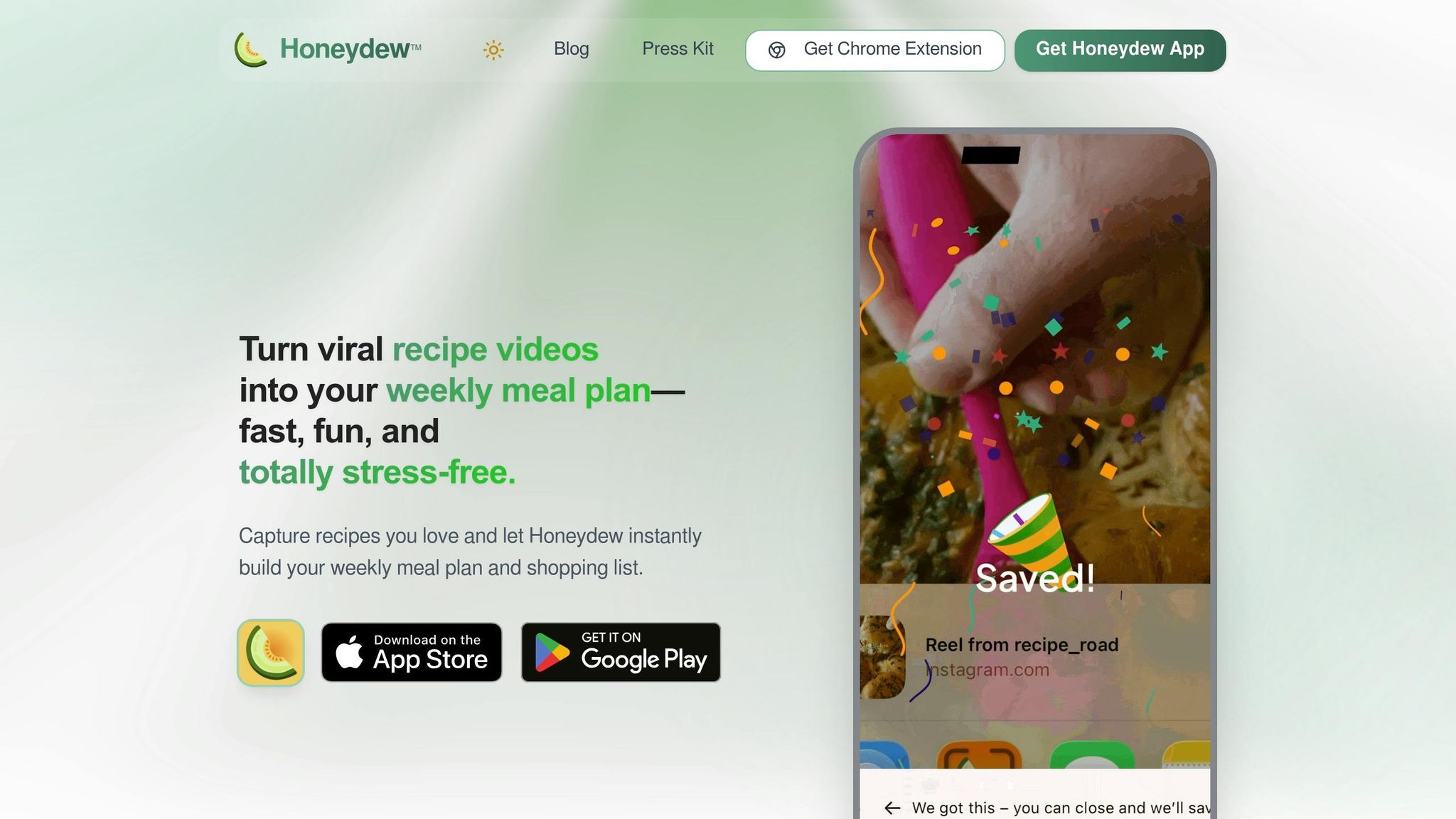
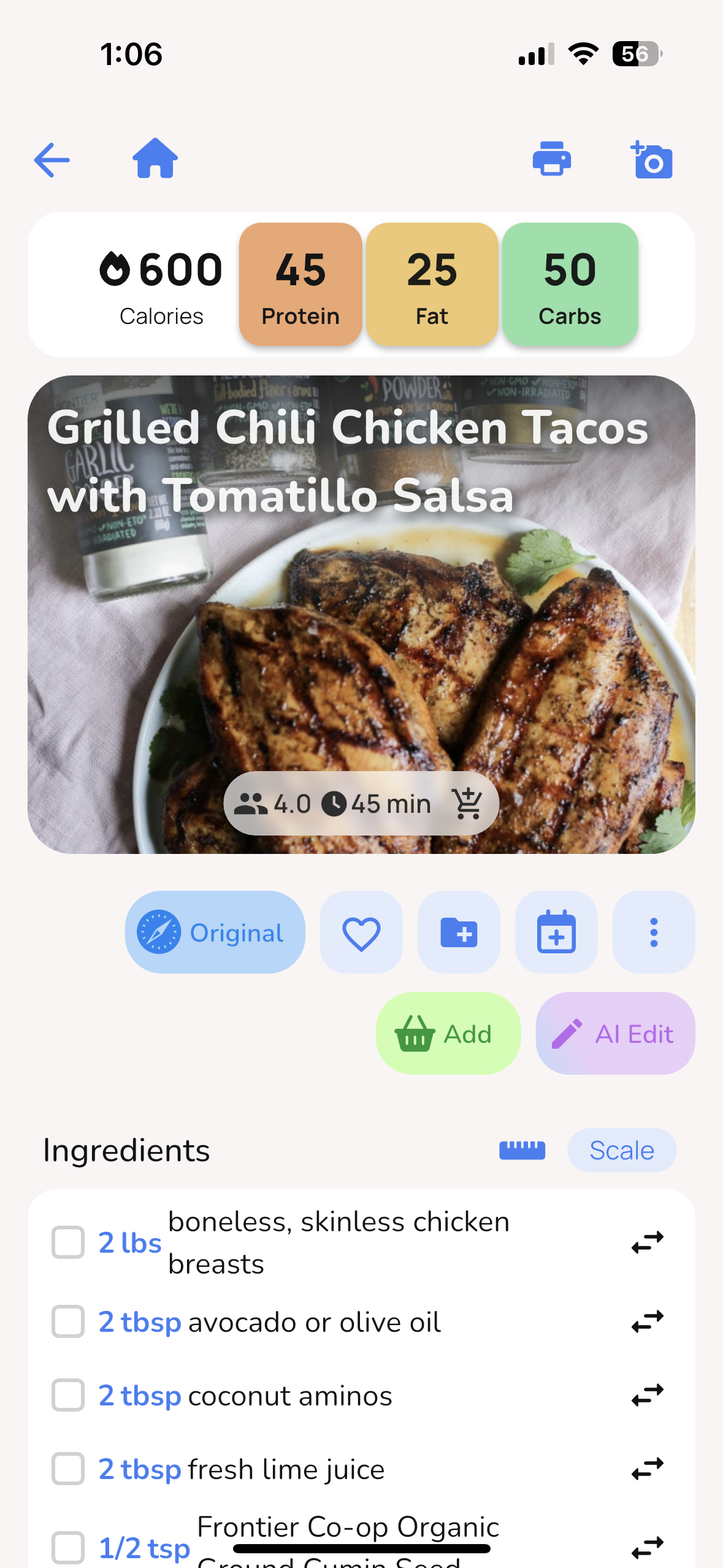
Honeydew Recipe Manager makes it easier than ever to tackle hidden veggie recipes by pulling inspiration straight from social media. Whether it's TikTok, Instagram, YouTube, or a favorite website, the app transforms viral recipe videos into ready-to-use formats. With users saving around 31,000 recipes every month, it’s become a trusted tool for parents looking to sneak more vegetables into their family’s meals.
The "Ask Honey" AI assistant takes recipe customization to the next level. You can tweak recipes with simple voice commands like, "Add avocado to this brownie recipe." On top of that, the ingredient substitution tool helps you find alternatives based on what’s already in your pantry - perfect for swapping in nutrient-packed vegetable purees. One happy user, Emily C., shared, "The ingredient substitution feature is a game-changer for my dietary restrictions. I can adapt any recipe easily!"
Planning your weekly meals is a breeze with the drag-and-drop meal calendar. The app’s AI-powered meal planner can even create full menus tailored to your family’s tastes. Plus, the nutrition tracking calculator helps you see the added fiber, vitamins, and minerals from those hidden veggies, making it easier to hit the recommended 1.5 cups of daily vegetables for kids aged 4–8.
Honeydew also makes family coordination seamless. Up to six members can sync their weekly menus, and the Pantry Mode lets you snap a quick photo of your vegetable stock. The AI then suggests recipes to make the most of what you’ve got on hand. With a 4.8/5-star rating and the budget-friendly Honeydew Plus plan at just $4.17 per month, this app simplifies meal prep while setting the stage for more hidden veggie success.
Tips for Success and Common Mistakes to Avoid
Once you've got some recipe ideas in mind, these tips can help you nail those hidden veggie dishes while keeping the nutritional value high. Here’s how to make it work smoothly and avoid common pitfalls.
Start with mild vegetables like cauliflower, zucchini, or sweet potatoes. These are less likely to overpower a dish compared to stronger choices like Brussels sprouts or Swiss chard, which can bring a bitter taste that kids might reject. Begin with tiny amounts and slowly increase over time.
Texture matters. Puree vegetables until they’re completely smooth, or chop them finely - think about 1/8 inch - so they blend in effortlessly. Big chunks can be off-putting for picky eaters. If you’re using grated zucchini in baked goods, make sure to squeeze out any extra moisture with a clean towel to avoid soggy results.
Match the vegetable color to the dish for a better disguise. For example, use cauliflower or parsnips in white sauces, carrots or sweet potatoes in orange or red dishes, and spinach in darker, heavily flavored meals. If the color changes unexpectedly, turn it into a fun story - like calling it "Monster Mac" - to keep kids curious instead of suspicious.
Get your kids involved in the process. Even toddlers can help with simple tasks like adding veggies to a blender or stirring batter. Derek Le, Founder of Love Great Finds, explains, "Children are significantly more likely to eat something they helped prepare, even at age 3 or 4". This hands-on approach builds trust and familiarity. But be careful - Amy Palanjian, Creator of Yummy Toddler Food, offers an important warning:
"As soon as a child realizes we put something they didn't want or expect into their food, they may never eat it again - and it may decrease their trust in us to be honest at the table".
Pair hidden veggies with visible ones. Hidden vegetables should be a stepping stone, not the whole strategy. Repeated exposure to whole vegetables is key to building real taste preferences. Serve them side by side to encourage kids to appreciate both.
These tips work hand-in-hand with your recipes to help create healthier eating habits without the battles.
Conclusion: Making Hidden Vegetables Part of Your Routine
Getting more vegetables into your kids' meals doesn't have to feel like an uphill battle. The tips shared here - whether it's mixing pureed cauliflower into mac and cheese or sneaking spinach into brownies - are designed to add nutrition without the usual mealtime resistance. As Derek Le, Founder of Love Great Finds, explains:
"Hiding vegetables in food is not about deceiving your child - it is a scientifically supported bridge strategy that increases vegetable intake while repeated exposure builds acceptance over time".
These hidden veggie recipes aren't meant to replace visible vegetables but to work alongside them. By serving both together, kids learn that vegetables are a regular, important part of meals. This combination approach can help develop a lasting appreciation for fresh produce.
To make things even simpler, you might want to try a meal planning tool like Honeydew Recipe Manager. This app can import hidden veggie recipes from social media, organize them, and even use AI to create weekly meal plans, grocery lists, and ingredient swaps - all in one place.
Start small by trying one or two recipes, prepping vegetable purees in advance, and getting your kids involved in the kitchen to make trying new flavors more exciting. A little planning can go a long way in making healthy eating a habit for the whole family.
FAQs
How do I hide veggies without my child noticing?
To sneak vegetables into meals, try blending or pureeing them into sauces, casseroles, or even baked goods. This makes them practically invisible. Another option is to finely grate or dice them into tiny pieces (around 2-3mm) and mix them into dishes like mac and cheese or meatballs. Adding veggies to foods your child already enjoys - like pasta, burgers, or cheesy dishes - can hide their texture and appearance while keeping the meal delicious and familiar.
How much hidden veggie puree can I add before it changes the texture?
You can typically mix in up to 50% pureed vegetables into a dish without noticeably changing its texture. Going beyond this amount could make the dish overly smooth or impact its overall consistency.
What’s the best way to meal plan hidden veggie recipes in Honeydew Recipe Manager?
Honeydew Recipe Manager makes meal planning for hidden veggie recipes a breeze with its handy tools. You can import your favorite recipes, organize them into categories for quick access, and even generate grocery lists automatically with AI.
Planning meals is simple - just add your hidden veggie recipes to the meal calendar, adjust serving sizes as needed, and share your plans with family members. This approach not only saves time but also ensures your meals are packed with healthy veggies, all while keeping meal prep stress-free.