Ultimate Guide to Preserved Lemon Substitutes
• Updated
Preserved lemons add a tangy, salty, and umami-packed flavor to dishes, but they take weeks to prepare and can be hard to find. Whether you're short on time or need an alternative, there are quick and effective substitutes that work in most recipes. Here’s a breakdown:
-
Quick Homemade Options:
- Lemon zest + salt: Mix fresh zest with salt for a fast, 2-minute fix.
- Boiled lemon paste: Simmer lemon slices with juice and salt, then blend for a smooth paste in under 20 minutes.
- Salted lemon rind: Mince lemon peel, massage with salt, and let it sit for an hour for a chewy texture.
-
Store-Bought Alternatives:
- Preserved lemon paste: Convenient and concentrated, perfect for sauces and marinades.
- Lemon-based products: Adjust salt levels for balance when using sweeter options.
For best results, measure substitutes carefully and adjust salt in your dish to avoid overpowering flavors.
Preserving citrus ~~ SALT PRESERVED LEMONS ~~ 02
Homemade Preserved Lemon Substitutes
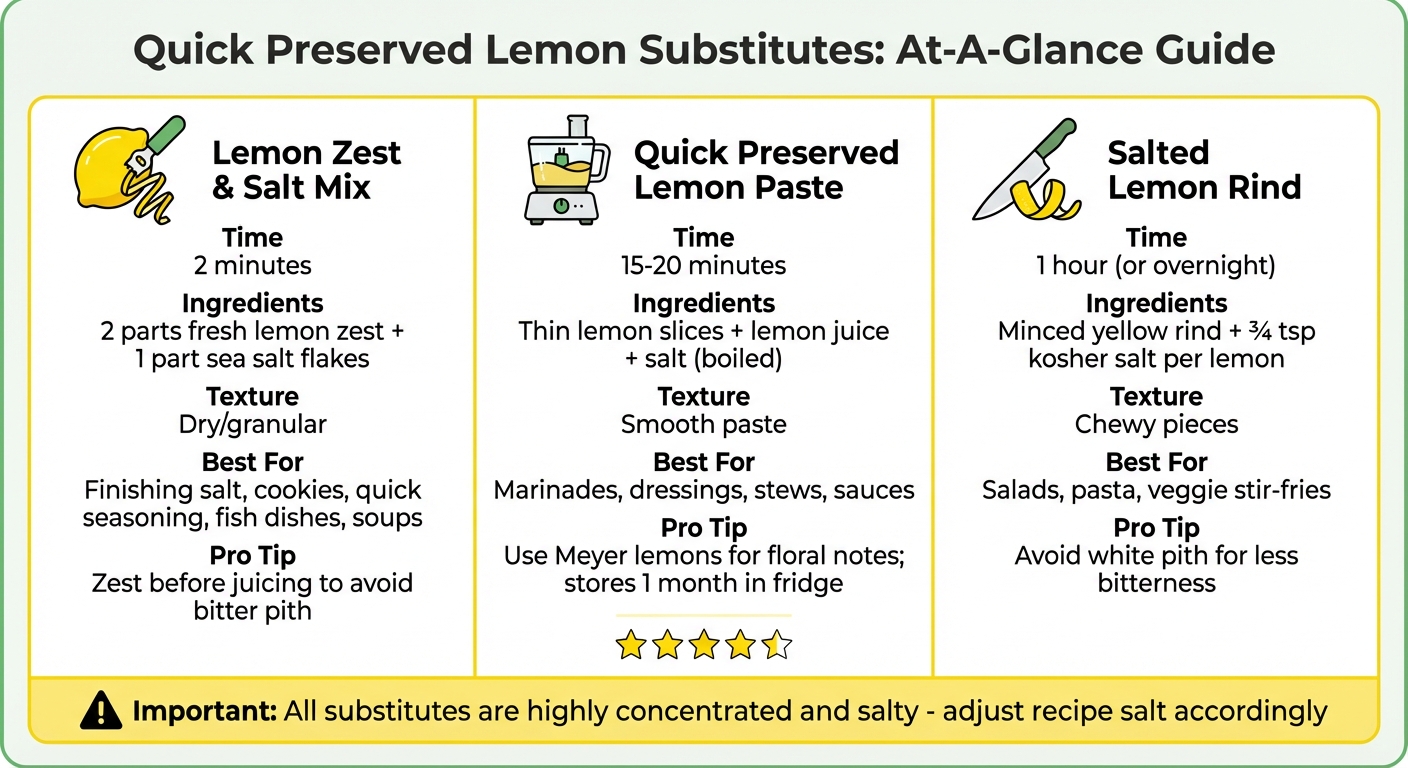
Quick Preserved Lemon Substitute Comparison Guide
If you're craving the flavor of preserved lemons but don't have weeks to wait, quick homemade substitutes can save the day. These methods, ready in as little as 15 minutes to an hour, use fresh lemon components - like zest, juice, or rind - combined with salt to recreate the tangy, briny essence of preserved lemons. While they won't deliver the same fermented depth, they bring enough punch to stand in for the real thing when time or availability is tight.
Lemon Zest and Salt Mix
This is the fastest option, taking just two minutes to prepare. For a dry seasoning, mix two parts fresh lemon zest with one part sea salt flakes. If you're making a dressing, blend 1 tablespoon of lemon zest, 2 tablespoons of lemon juice, and ½ teaspoon of salt, letting it sit for 15–30 minutes to meld the flavors. Remember to zest the lemon before juicing to avoid the bitter pith.
"Mixing lemon zest, fresh lemon juice, and salt is the fastest way to mimic preserved lemons. Let the mixture sit for 15-30 minutes to meld the flavors before using it in recipes".
Food writer Andrew Gray recommends this mix for fish dishes, soups, and quick seasonings.
Quick Preserved Lemon Paste
For a softer texture that blends seamlessly into dishes, try this cooked substitute. Boil thin lemon slices in a mixture of lemon juice and salt for 10–15 minutes. Once cooked, remove any seeds and puree the softened lemons in a blender until smooth. This paste works beautifully in marinades, dressings, and stews.
Tracey Hatch-Rizzi from Rad Foodie explains:
"This method calls for boiling thin lemon slices with lemon juice and salt, then pureeing them in a blender... It won't have the fully developed flavor as properly preserved lemons, but it's pretty good".
Her recipe scored a 4.5 out of 5-star rating from readers. Meyer lemons are a great choice for this method, as their thin skins and floral notes resemble Moroccan Beldi lemons. For added depth, toss in aromatics like bay leaves or peppercorns while simmering. Store the paste in an airtight container in the fridge for up to a month.
Salted Lemon Rind
For recipes that need the chewy texture of preserved lemon peel, this one-hour method is a solid option. Use a paring knife to carefully remove the yellow rind, avoiding the bitter white pith. Finely mince the rind, then massage in about ¾ teaspoon of kosher salt per lemon. Let it rest for at least an hour - or overnight for more flavor - as the salt softens the lemon fibers. This is great for salads, pasta, and stir-fries where you want noticeable lemon pieces.
Renee from The Good Hearted Woman shares:
"While our quick-fake lacked the depth of flavor... it was otherwise a quite satisfying lemony, bright, and mildly briny substitution".
Since these substitutes are highly concentrated and salty, be sure to adjust the salt in your recipe to avoid overpowering the dish.
| Substitute Method | Key Ingredients | Time | Best For |
|---|---|---|---|
| Lemon Zest & Salt | 2 parts zest, 1 part sea salt flakes | 2 minutes | Finishing salt, cookies, quick seasoning |
| Quick Lemon Paste | Lemon slices, lemon juice, salt (boiled) | 15–20 minutes | Marinades, dressings, stews |
| Salted Lemon Rind | Finely minced rind, ¾ tsp kosher salt | 1 hour | Salads, pasta, veggie stir-fries |
Store-Bought Preserved Lemon Alternatives
Homemade substitutes let you tweak flavors to your liking, but sometimes, you just need a shortcut. That’s where store-bought preserved lemons come in. They’re perfect when you want that distinct citrusy, salty flavor without waiting weeks for the preservation process. You can usually find these in the pickle or preserved foods section of larger supermarkets, Middle Eastern specialty stores, or online from brands like New York Shuk and Mina. While they may not capture the full depth of traditionally fermented lemons, they still bring a bright citrus kick and savory saltiness that works well in most recipes.
Lemon Paste with Added Salt
Preserved lemon paste is one of the best store-bought options to mimic traditional preserved lemons. Brands like New York Shuk offer jars priced between $9.00 and $16.00, delivering concentrated citrus flavor with a rich, savory undertone. The paste’s thick, gooey texture blends effortlessly into sauces, marinades, and dressings - no extra chopping or whisking required.
Leetal Arazi, Co-founder of New York Shuk, highlights its convenience:
"Preserved lemon paste is a great pantry secret, when you are out of lemons... it is very potent and a little goes a long way".
Since the paste is highly concentrated, mix one tablespoon of it with ¼ teaspoon of salt to match the flavor profile of preserved lemons, adjusting as needed. If you’re using a sweeter lemon paste from the baking aisle, add about one teaspoon of salt per tablespoon of paste to balance things out. This versatile ingredient shines in dishes like hummus, tahini dressings, tagines, or even creative cocktails like a salted-lemonade spritz.
Tips for Using Preserved Lemon Substitutes
Balancing flavors when using substitutes for preserved lemons is straightforward. The trick lies in knowing how much to use and managing the salt content that often comes with these alternatives.
Substitution Ratios
Here’s a handy guideline: use 1 tablespoon of your substitute for every 1 preserved lemon in the recipe. For more concentrated options, like lemon paste, you can typically use just 1 teaspoon to replace half a preserved lemon. If you're using fresh zest or salt-preserved lemon skins, stick with the 1:1 ratio to maintain the right citrus balance.
Some substitutes pack a stronger punch. For example, with tamarind paste, 1 teaspoon is enough to replace one preserved lemon. If you're opting for a floral alternative like lemongrass, use 2 stalks to match the citrus effect of one preserved lemon. For salt-heavy options, rinse them under cold water before measuring to remove excess brine.
Once you’ve chosen your substitute and measured carefully, adjust the salt levels to ensure the dish tastes just right.
Adjusting Salt Levels
Salt management is key when working with preserved lemon substitutes. Even after rinsing, many substitutes retain a lot of salt. Start by adding only half the recommended amount of salt in your recipe, then taste and adjust as needed. As David McCann, an expert on preserved lemon recipes, explains:
Remember to salt these dishes a bit less, because the lemons will add salt even after rinsing.
Recipe developer Andee Gosnell offers similar advice:
Add preserved lemon pulp to a dish slowly, as you would salt, and taste as you go.
The pulp, in particular, is very salty. If you're using it, mash it directly into slow-cooked dishes like stews. The prolonged cooking time helps mellow its intensity. Always add any extra salt only at the end of cooking, allowing the flavors to fully develop.
How Honeydew Recipe Manager Simplifies Ingredient Substitutions

Swapping out preserved lemons doesn’t have to mean hours spent researching ingredient ratios or manually tweaking your grocery list. Honeydew Recipe Manager takes care of it all, identifying specialty ingredients and offering practical alternatives.
Smart Ingredient Substitutions
When you upload a recipe, Honeydew Recipe Manager scans for preserved lemons and recommends substitutes like lemon zest, salted lemon paste, or a mix of zest, juice, and salt. These suggestions are tailored to match flavor profiles, helping you achieve the dish's intended taste. Leetal Arazi, Co-founder of NY Shuk, shares this advice:
I usually suggest a 1:1 ratio, but to start with less and add more to taste, which I think is great advice.
For those watching their sodium intake, the app flags that preserved lemons can contain about 200 mg of sodium per 15 g serving. It then suggests lower-sodium options like plain lemon zest or lemongrass (1 stalk per ½ lemon). You can also tweak the saltiness by choosing between homemade or store-bought lemon paste.
By offering clear substitution guidelines, the app ensures you can make adjustments without compromising your dish. But it doesn’t stop there - it also simplifies your meal planning and shopping.
Meal Planning and Grocery Integration
Once you select a substitute, Honeydew Recipe Manager takes care of the rest. Your meal plan and grocery list are updated automatically. Preserved lemons are removed, and the replacement ingredients - like fresh lemons and sea salt - are added. The app even syncs with Instacart for delivery, saving you from running to multiple stores.
This streamlined system means you can plan a Moroccan tagine on Monday and have all the substitute ingredients delivered by Tuesday - no need to wait three weeks for traditional preserved lemons to ferment.
Choosing the Best Substitute for Your Needs
When deciding on the right substitute, it's all about matching the cooking method and texture your recipe requires. Whether you're preparing a slow-cooked stew, a salad dressing, or a baked dish, there are plenty of options to achieve the desired flavor and consistency.
For tagines and slow-cooked stews, try boiling thin lemon slices in juice and salt for about 12–14 minutes. This creates a soft, gelatinous texture that's perfect for these dishes. Alternatively, salted lemon rinds work well, though they require at least an hour of preparation time.
If you're making salad dressings, a simple combination of lemon zest, juice, and sea salt adds a bright, tangy flavor without making things overly complicated. For marinades, lemon paste mixed with salt works wonders - its concentrated flavor adheres beautifully to proteins, enhancing the dish.
For baking or finishing touches, dried lemon zest mixed with sea salt flakes is a great choice. It delivers a controlled citrus note without overpowering delicate flavors. As Andrew Gray, a food writer at Cooks Crafter, explains:
The key here is the balance. Too much zest can overwhelm. Just enough brings the dish together.
Other substitutes, like tamarind paste or lemongrass, can introduce interesting flavors but may slightly alter the dish's color or require extra preparation. For instance, one stalk of lemongrass can replace half a preserved lemon in liquid-based recipes.
Texture is just as important as flavor. If your recipe calls for preserved lemon skins, fresh lemon rind massaged with salt and left to sit for at least an hour can mimic the chewy texture. For recipes needing a purée, boiled lemon slices blended into a smooth paste are an excellent substitute.
No matter which substitute you choose, always taste and adjust the salt gradually to achieve the right balance. The key is selecting an option that aligns with your dish's needs while ensuring the flavors remain harmonious.
FAQs
Which substitute tastes closest to real preserved lemons?
If you’re looking for a substitute for real preserved lemons, try combining lemon zest with sea salt flakes. This mix mimics the tangy citrus aroma and salty taste of preserved lemons, though it won’t pack quite the same punch.
How can I keep my dish from getting too salty?
If you've gone heavy-handed with salt, don't worry - there are a few simple tricks to salvage your dish. Adding a splash of acidity, like lemon juice or vinegar, can brighten flavors and make the saltiness less noticeable. Just be sure to add it off the heat and in small increments to avoid overpowering the dish.
For soups or stews, tossing in a few chunks of potato can help. Potatoes absorb some of the salt as they cook, giving you a chance to balance the flavors. Alternatively, diluting the dish with unsalted broth or water can also tone down the saltiness.
To avoid this issue altogether, consider planning your recipes carefully. Tools like Honeydew Recipe Manager are great for keeping measurements in check and preventing over-salting from the start.
Can I prep a substitute ahead and how long will it last?
If you're in need of a substitute, you can prepare a quick salt-preserved lemon skin mixture ahead of time. This mixture can stay fresh for several hours or even a few days when stored in a container and covered with olive oil or salt. However, for a more traditional approach, preserved lemons typically require about 3 weeks of fermentation to develop their full flavor.