How to Use Leftovers for Budget Meal Prep
• Updated
Want to save money and reduce food waste? Leftovers can be transformed into delicious, new meals while cutting down on grocery bills. A family of four wastes an average of $1,500 annually on uneaten food. By following simple storage tips and creative recipes, you can stretch your budget and enjoy flavorful dishes without extra effort.
Key Takeaways:
- Save money: Turn leftovers into new meals instead of tossing them.
- Store safely: Keep your fridge at 36–38°F and freeze food in airtight containers.
- Reheat properly: Heat leftovers to 165°F to ensure safety and quality.
- Get creative: Use leftover chicken for skillet bowls, veggies for tacos, or rice for fried rice.
- Simplify meal prep: Tools like Honeydew Recipe Manager help plan meals, suggest substitutions, and create grocery lists.
Quick Tips:
- Refrigerate leftovers within 2 hours.
- Label containers with dates to track freshness.
- Freeze in small portions to maintain quality.
With a little planning and creativity, leftovers can become a reliable way to save time, money, and effort in the kitchen.
EASY BUDGET Meals using leftovers / HOW TO USE UP LEFTOVERS / Cook with me
How to Check and Store Leftovers
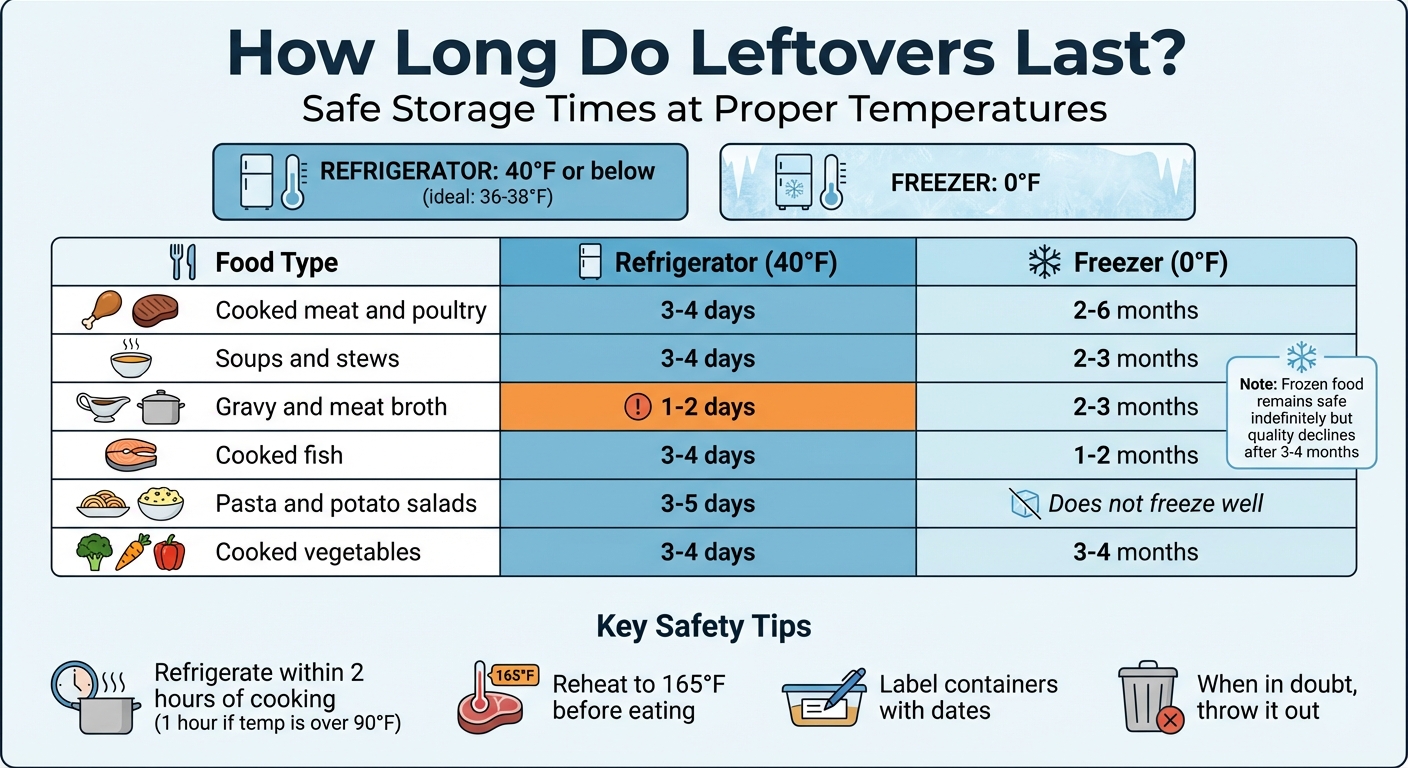
Food Storage Guide: Refrigerator and Freezer Times for Leftovers
Before turning your leftovers into new meals, make sure they’re safe to eat. Studies reveal that about 25% of home refrigerators are kept at temperatures too warm for proper food storage. To keep food safe, set your refrigerator to 40°F or below (ideally between 36–38°F) and your freezer at 0°F. These settings help ensure your leftovers stay safe and ready for reuse.
Safety Guidelines for Leftovers
Cooked leftovers generally last 3 to 4 days in the refrigerator. However, gravy and meat broth have an even shorter shelf life - just 1 to 2 days. The countdown begins as soon as the cooking is done, so labeling containers with the dish name and preparation date is a smart way to keep track.
Trusting your senses alone isn’t enough. Sarah Klemm, RDN, CD, LDN from the Academy of Nutrition and Dietetics, warns:
"Mold and odors aren't the most reliable way to determine if food has gone bad".
Instead, look for clear signs of spoilage, such as mold (especially at the bottom of containers), discoloration, or a glossy sheen on meats. A slimy texture is another red flag indicating bacterial growth. If something smells strange or you can’t remember when it was made, follow the USDA’s golden rule:
"When in doubt, throw it out".
Once you’ve ensured your leftovers are safe, proper storage techniques can help maintain their quality.
Storage Tips for Different Food Types
Refrigerating leftovers promptly is key. Bacteria multiply fastest in temperatures between 40°F and 140°F. To avoid this, refrigerate perishable foods within 2 hours of cooking - or within 1 hour if the temperature around you is over 90°F.
For faster cooling, divide large portions of soups, stews, or roasted meats into shallow containers. If you’re storing a whole roast or turkey, slice it into smaller pieces first. Use airtight containers to prevent contamination, and always reheat leftovers to an internal temperature of 165°F, checking with a food thermometer.
| Food Type | Refrigerator (40°F) | Freezer (0°F) |
|---|---|---|
| Cooked meat and poultry | 3–4 days | 2–6 months |
| Soups and stews | 3–4 days | 2–3 months |
| Gravy and meat broth | 1–2 days | 2–3 months |
| Cooked fish | 3–4 days | 1–2 months |
| Pasta and potato salads | 3–5 days | Does not freeze well |
| Cooked vegetables | 3–4 days | 3–4 months |
Although frozen food remains safe indefinitely at 0°F, its taste and texture often decline after 3 to 4 months. To preserve both quality and safety, store leftovers in meal-sized portions before freezing. This way, you only thaw what you need, avoiding repeated reheating and refreezing, which can affect both flavor and safety. By mastering these storage tips, you can turn leftovers into cost-effective and delicious meals.
Ways to Turn Leftovers into New Meals
Once you've ensured your leftovers are safe and stored correctly, the fun part begins: transforming them into dishes that feel fresh and exciting. These ideas breathe new life into yesterday's meals while keeping things budget-friendly.
Roast Chicken into Southwest Chicken Skillet Bowls
Leftover roast chicken can easily become the star of a hearty Southwest-inspired skillet bowl. Start by shredding the chicken and setting it aside. Heat a skillet over medium-high heat, then toss in black beans, corn, and diced tomatoes. Add a kick of flavor with chili powder, cayenne, and green chiles for seasoning. Stir in the shredded chicken during the last few minutes to warm it up without drying it out. Serve this mixture over rice or quinoa, and finish with your favorite toppings like shredded cheese, sour cream, and fresh cilantro.
Cooked Veggies into Roasted Veggie Tacos
Turn leftover roasted vegetables into flavorful tacos that feel like a brand-new meal. Sauté the veggies in a bit of oil until they’re golden and slightly crispy. To brighten the flavors, add a squeeze of fresh lemon juice or a drizzle of balsamic vinegar. Warm up some corn or flour tortillas, then fill them with the revived vegetables. Top with crumbled queso fresco, creamy avocado slices, and a quick lime crema. The fresh toppings and acidity give the vegetables a whole new life, turning them from a simple side into a satisfying main dish.
Leftover Rice into Egg Fried Rice Bowls
Got leftover rice? It’s perfect for making a quick and delicious egg fried rice bowl. Chilled rice works best for stir-frying. Heat a wok or large skillet over high heat with a tablespoon of oil. Scramble two to three eggs, then set them aside. Add the chilled rice to the hot pan, breaking up any clumps, and stir-fry for 2–3 minutes until the grains get a slight crisp. Toss in frozen peas, diced carrots, or any leftover cooked veggies you have. Return the scrambled eggs to the pan, drizzle with soy sauce, and finish with sliced green onions. In under 10 minutes, you’ll have a flavorful, satisfying meal, with every grain of rice perfectly coated and separate.
Using Honeydew Recipe Manager for Leftover Meal Prep
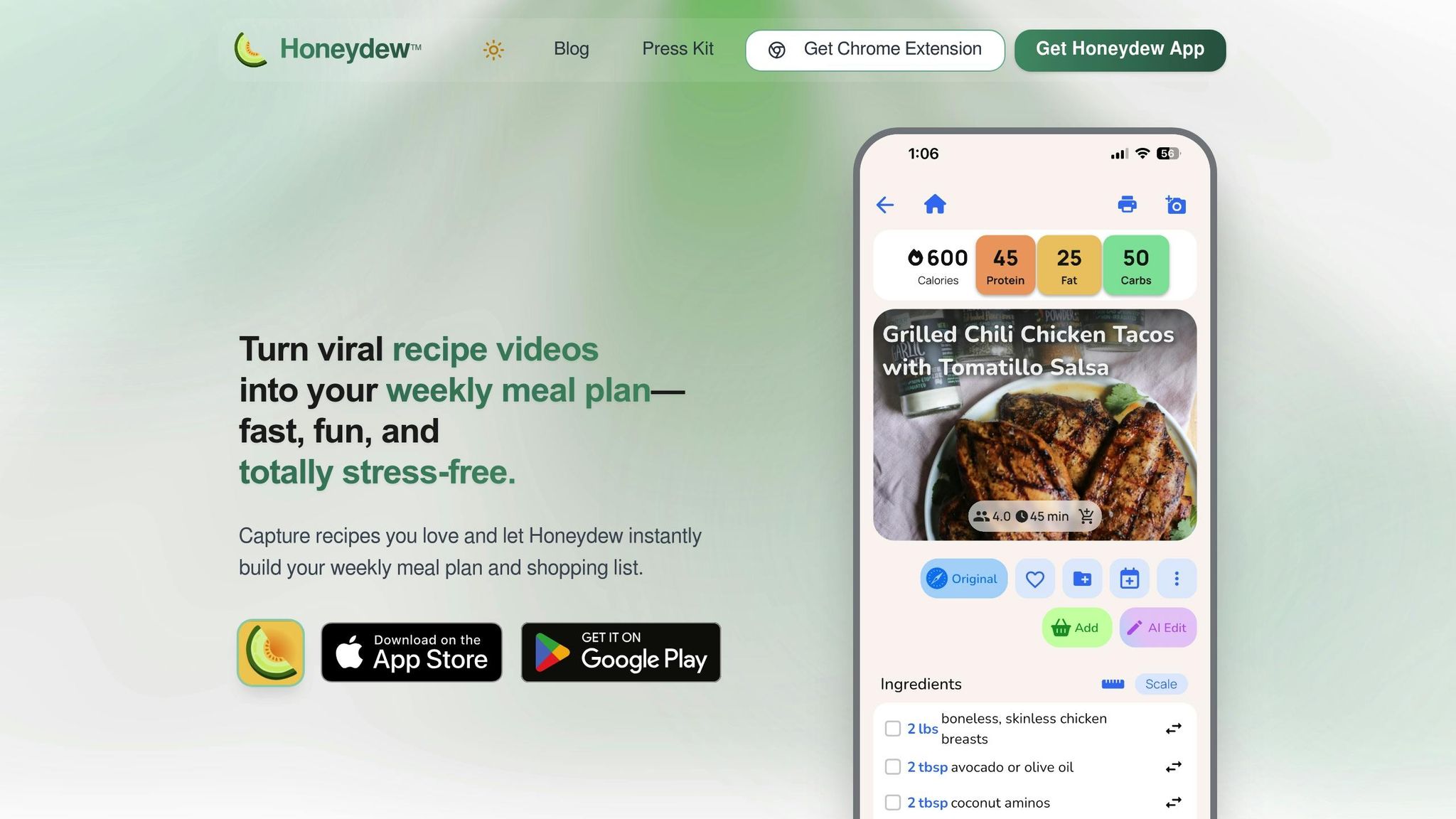
Honeydew Recipe Manager takes the hassle out of dealing with leftovers, helping you turn what’s already in your kitchen into delicious meals. By linking your ingredients to practical recipes, it minimizes unnecessary shopping trips and makes meal prep more efficient and budget-friendly.
Using AI to Plan Meals with Leftovers
Honeydew’s AI assistant, "Honey", is designed to simplify meal planning by making the most of your leftovers. With its Pantry Mode, you can snap a quick photo of your pantry or fridge, and the AI will analyze your inventory to suggest recipes or point out a few missing ingredients. It even factors in dietary preferences, so the suggestions are tailored to your needs. You can also chat directly with Honey to brainstorm meal ideas, asking questions like, “What can I make with chicken and spinach?” With over 270,000 user-saved recipes each month, there’s no shortage of inspiration.
Creating Grocery Lists from Leftover-Based Recipes
Once you’ve picked your recipes, Honeydew takes things a step further by creating a shopping list for you. The list is neatly organized by aisle, making grocery trips quicker and smoother. Prefer delivery? The app’s Instacart integration lets you order any extra ingredients you need with just one click. As James L., a satisfied user, put it:
"The smart grocery lists save me hundreds of dollars a month. I love how it suggests recipes based on what I already have!"
This feature helps you avoid overbuying and ensures you’re only getting what’s essential to complete your meals.
Smart Ingredient Substitutions
What if a recipe calls for something you’re missing? Honeydew’s substitution feature has you covered. It offers alternatives based on nutritional value, flavor, and cooking properties. Plus, it learns from your preferences over time, even suggesting seasonal swaps that match your tastes. Emily C., another user, said:
"The ingredient substitution feature is a game-changer for my dietary restrictions. I can adapt any recipe easily!"
With these tools, Honeydew turns leftover meal prep into a seamless and enjoyable experience.
How to Store and Reheat Leftover Meals
Once you've mastered proper storage, the next step is knowing how to reheat and freeze leftovers effectively. These techniques help keep your meals both safe to eat and tasty. When reheating, always aim for a temperature of 165°F, measured with a food thermometer, to ensure harmful bacteria are eliminated. As Esther Ellis, MS, RDN, LDN from the Academy of Nutrition and Dietetics puts it:
"Reheat leftovers to 165°F. A food thermometer is the only reliable way to ensure safety and determine the doneness of cooked foods."
Proper Reheating Techniques
Different dishes require specific reheating methods to maintain their flavor and texture:
- Soups and stews: Heat them on the stovetop, bringing them to a rolling boil while stirring frequently to ensure even heating.
- Casseroles and roasted meats: Use the oven, preheating it to 250°F to 275°F. Cover the dish with foil to lock in moisture.
- Microwaved foods: While convenient, microwaves can heat unevenly. Cover the food to retain moisture and stir or rotate it halfway through to avoid cold spots.
- Rice and pasta: Add a bit of water, broth, or milk to bring back moisture before reheating.
- Pizza and fried foods: To maintain crispiness, reheat these in the oven at around 275°F or use a covered skillet.
If you’re not eating your leftovers right away, freezing them properly is key to preserving their quality.
Freezing and Thawing Guidelines
Freezing leftovers can extend their shelf life significantly, but it needs to be done carefully. Keep your freezer at 0°F or below, and let hot food cool completely before freezing to avoid raising the freezer's temperature. For even freezing, divide large portions into shallow containers (no more than 3 inches deep) and remove as much air as possible from freezer bags to prevent freezer burn. While frozen leftovers are safe to eat indefinitely, they taste best when consumed within 2 to 6 months.
When it’s time to thaw, stick to these safe methods:
- Refrigerator: This method is the safest, though it takes the longest.
- Cold water: Submerge the food in cold water, changing the water every 30 minutes to keep it cold.
- Microwave: This is the quickest method, but you should cook the food immediately after thawing.
Avoid thawing food on the counter, as bacteria can grow rapidly between 40°F and 140°F. If you thaw food in the refrigerator, you can refreeze it within 3 to 4 days without cooking. However, if you use the cold water or microwave methods, be sure to cook the food before refreezing.
Conclusion
Using leftovers is more than just tidying up your fridge - it’s a smart way to save money, minimize food waste, and make cooking less of a hassle. Did you know that a family of four typically throws away $1,500 worth of food every year? That’s a lot of wasted potential! Nutritionist Sarah Garone sums it up perfectly:
"Leftovers are a secret weapon for extending your grocery budget and cutting down on meal prep time."
FAQs
What are some creative ways to use leftover vegetables in meals?
Leftover vegetables don’t have to go to waste; with a little imagination, they can transform into delicious, budget-conscious meals. For something quick and easy, whip up a stir-fry. Just toss together a mix of veggies like bell peppers, broccoli, or spinach in a hot pan with your favorite sauce, and you’ve got dinner on the table in under 15 minutes. Craving something cozy? Roast or use slightly wilted vegetables like squash or cauliflower, then blend them with broth and herbs for a hearty soup or a creamy pasta sauce.
Raw veggies work wonderfully in a frittata or omelet too. Simply whisk some eggs, stir in the veggies, and cook on the stovetop or bake until set. For a snack or side dish, chop up vegetables, toss them with olive oil, salt, and pepper, and roast at 425°F until they’re beautifully caramelized. Want to stretch your ingredients even further? Save veggie scraps like onion ends or carrot peels and simmer them into a homemade stock. It’s perfect for soups, risottos, or grain bowls.
To keep your kitchen organized and get the most out of your leftovers, try using the Honeydew Recipe Manager. This handy tool helps you track what’s in your fridge, suggests recipes based on your ingredients, and makes meal planning easier - all while cutting down on food waste!
What’s the best way to store and reheat leftovers safely?
To ensure leftovers stay safe to eat, start by cooling them down quickly. Divide the food into small, shallow containers to speed up the cooling process. Seal each portion in a clean, airtight container and refrigerate it within 2 hours - or within 1 hour if the temperature is above 90°F. Your refrigerator should be set at 40°F or below, and your freezer at 0°F or colder. For easy tracking, label each container with the name of the dish and the date it was stored. Use refrigerated leftovers within 3–4 days, while frozen leftovers can last up to 6 months without compromising safety.
When it’s time to reheat, make sure leftovers reach an internal temperature of 165°F. Use a food thermometer to double-check, and stir or rotate the food during heating to eliminate cold spots. Reheat leftovers only once to minimize the risk of bacteria. If you’re ever in doubt about whether a leftover is safe to eat, it’s better to throw it out than take the risk. For added convenience, tools like Honeydew Recipe Manager can help you organize leftovers, set reminders, and plan meals - saving both money and reducing food waste.
How can Honeydew Recipe Manager help me plan meals with leftovers?
Honeydew Recipe Manager takes the hassle out of figuring out what to do with leftovers. Using AI, it scans the ingredients you already have - whether it's cooked chicken, roasted veggies, or pantry basics - and comes up with creative recipe ideas. The result? Less food waste and more affordable, home-cooked meals.
The app also includes handy features like ingredient substitutions and portion scaling, making it simple to stretch what you’ve got into multiple meals without running to the store. You can easily organize recipes based on leftovers, tweak serving sizes, and even share your meal plans with family for smoother prep. Need an ingredient you’re missing? Honeydew connects with Instacart so you can order it in just a few clicks, saving you both time and energy.