Why Viral Recipes Dominate Grocery Lists
• Updated
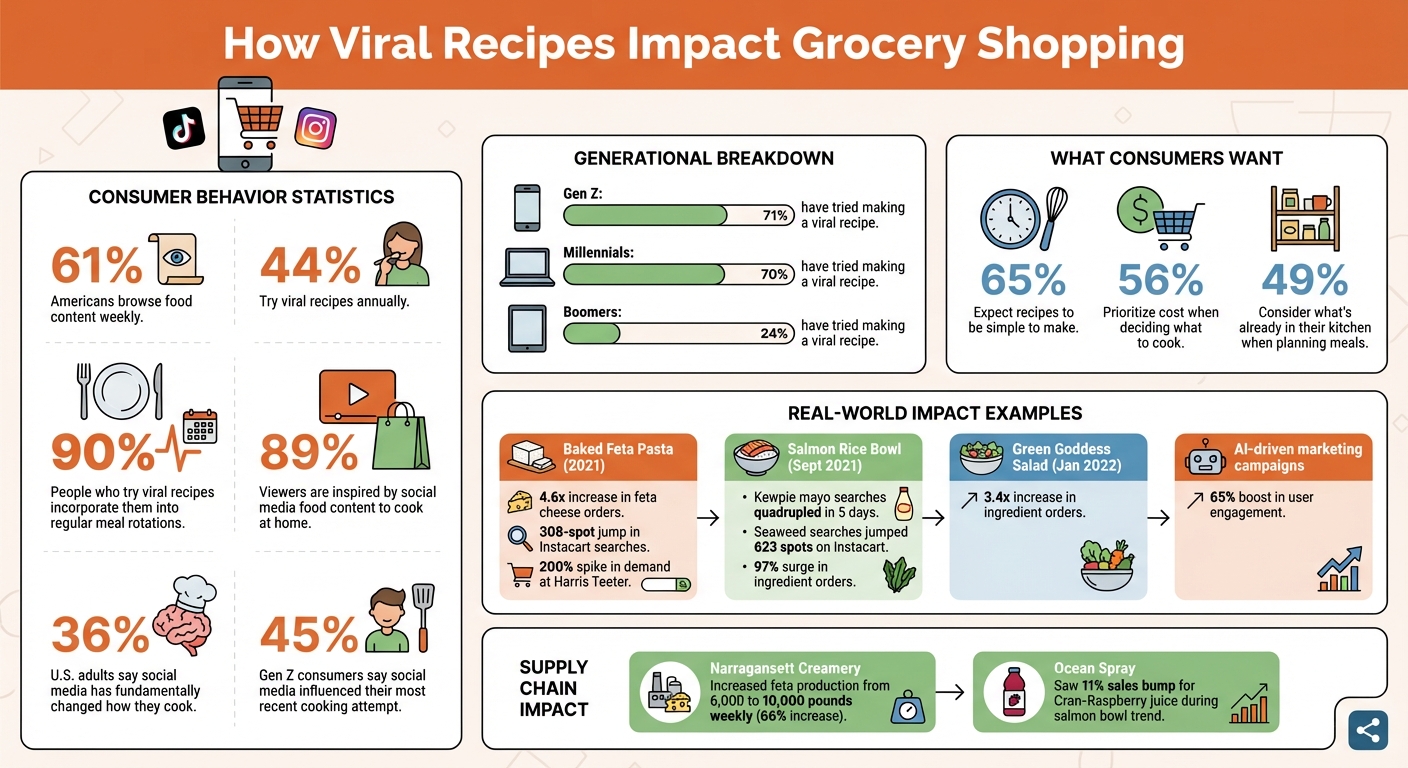
Viral recipes are reshaping grocery shopping habits. Social media platforms like TikTok and Instagram are driving sudden spikes in demand for specific ingredients, often leading to shortages. For example, the viral baked feta pasta recipe in 2021 caused a 4.6x increase in feta cheese orders, while Emily Mariko’s salmon rice bowl quadrupled searches for Kewpie mayo in just five days.
Key Highlights:
- 61% of Americans browse food content weekly, and 44% try viral recipes annually.
- Viral recipes often feature simple, low-cost ingredients, making them appealing and practical.
- These trends disrupt supply chains, with ingredient shortages becoming a common issue.
- 90% of people who try viral recipes incorporate them into regular meal rotations.
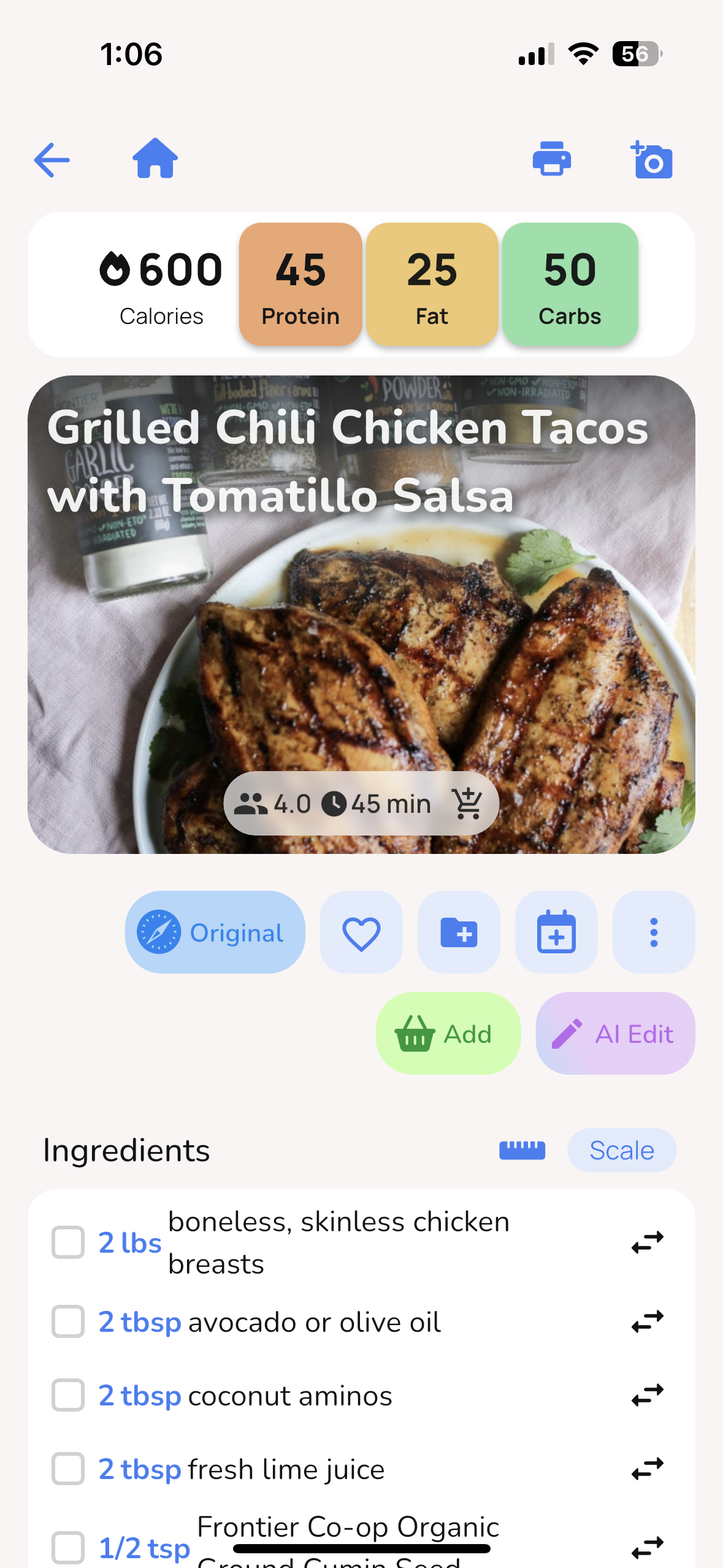
Apps like Honeydew Recipe Manager simplify the process by importing recipes from social media, suggesting substitutions for out-of-stock items, and generating shopping lists. Viral recipes are not just a passing trend - they’re influencing how we cook and shop.
How Viral Recipes Impact Grocery Shopping: Key Statistics and Trends
How Social Media Creates Recipe Trends
How Algorithms Make Recipes Go Viral
Social media algorithms play a powerful role in turning recipes into viral sensations. These platforms rely on AI to analyze billions of posts in real time, scanning hashtags like #ViralRecipe and #TikTokFood while tracking user engagement to identify recipes with viral potential.
Using natural language processing (NLP), captions are scanned for ingredients and cooking methods, while image recognition software identifies food items in photos and videos. This allows platforms to detect emerging trends within hours of a recipe gaining traction.
Advanced analytics tools, such as Quid, focus on spotting "peripheral clusters" - small, emerging trends on the fringes of social networks that haven't yet hit the mainstream. By picking up on these early signals, platforms can predict which recipes are likely to explode in popularity. Marketing campaigns that tap into these AI-driven insights have reported up to a 65% boost in user engagement.
But it's not just about spotting quick spikes in interest. These algorithms prioritize recipes that sustain engagement over time, filtering out fleeting trends in favor of those that keep users returning for more. This precision helps ensure that trending recipes remain accessible and engaging for a wider audience.
Why People Want to Make Viral Recipes
The appeal of viral recipes goes beyond just food - they’re tied to cultural relevance. In fact, 45% of Gen Z consumers say social media influenced their most recent attempt at cooking a recipe.
"When an influencer makes a recipe, others want to emulate them for cultural relevance." - Rebecca Firkser, Recipe Developer
A major driver here is fear of missing out (FOMO). When millions of people are recreating and sharing the same dish, not joining in can make someone feel left out. Platforms like TikTok and Instagram amplify this effect with their visually-driven content. Seeing perfectly styled, seemingly easy-to-make recipes can create an instant urge to try them yourself.
Simplicity is another key factor. Viral recipes often use basic ingredients and require minimal cooking skills. As Sarah Rahman from Michigan Daily puts it, "even someone with very limited cooking experience can watch a short video and think, 'I can do that!'". This combination of simplicity and accessibility encourages more people to participate.
The data supports this trend: a majority of Gen Z and Millennials have attempted viral recipes, with 65% of consumers seeking easy-to-make dishes and 56% prioritizing cost when deciding what to cook. These factors make viral recipes not only appealing but also practical for a wide audience.
Real Examples: Viral Recipes That Caused Ingredient Shortages
The Feta Pasta Shortage
In early 2021, TikTok users couldn’t get enough of the Baked Feta Pasta recipe. This simple dish - featuring a block of feta cheese baked with cherry tomatoes and pasta - became so popular that it caused feta shortages across the United States.
Within just two weeks of the recipe going viral, searches for "feta" on Instacart skyrocketed, climbing 308 spots in ranking. By the following month, Instacart saw a 4.6x increase in orders for feta, cherry tomatoes, and pasta. Grocery chains like Harris Teeter reported a 200% spike in feta demand at the height of the trend.
Small-scale producers struggled to keep up. Narragansett Creamery, a Rhode Island-based dairy, had to ramp up its weekly feta production from 6,000 to 10,000 pounds - a 66% increase - just to meet demand. Even so, specialty distributors like Saxelby Cheesemongers in New York City completely ran out of stock.
"This is the largest and most geographically broad interest and sales increase in a product that I have personally ever seen." – Walshe Birney, Manager of Specialty Cheese Counters, Kroger
The shortage was especially intense for block feta, the recipe’s key ingredient for its creamy texture. Many consumers had to settle for crumbled feta or even goat cheese as substitutes.
The Salmon Rice Bowl Trend
Another viral sensation hit TikTok in September 2021 when Emily Mariko shared her salmon rice bowl recipe. The impact was immediate. Within just five days, Google searches for Kewpie mayo quadrupled, while searches for "seaweed" on Instacart jumped 623 spots in early October. Retailers like Walmart struggled to keep these ingredients in stock.
By October 3, 2021, the trend had reached its peak, with orders for salmon rice bowl ingredients surging by 97%. The ripple effect extended beyond core components. For example, Ocean Spray reported an 11% sales bump for its Cran-Raspberry juice, alongside a 3–4% increase across its entire product line.
"A big spike from TikTok can be a problem to begin with, but in the current situations where buffers don't exist and where ramping up the supply chain is basically impossible, don't expect to see that mayonnaise any time soon." – James R. Bradley, Professor of Operations Management, College of William & Mary
This wasn’t an isolated phenomenon. In January 2022, the "Green Goddess Salad" trend caused ingredient orders to jump 3.4x their usual volume. Even a simple TikTok video showcasing "Nature's Cereal" led to a 157-spot climb in coconut water searches on Instacart. These viral moments often overwhelmed supply chains, depleting safety stocks and causing weeks of delays.
Viral Food Trends Are Making Retail History
Why Viral Recipes Control Grocery Shopping
Viral recipes are reshaping what we see on grocery store shelves, and understanding their appeal and how technology supports them is key to seeing the bigger picture. According to recent data, 89% of viewers are inspired by social media food content to cook at home. Additionally, 61% of Americans check out food and recipe content at least once a week, and 44% of shoppers try at least one social media food trend every year. These trends don’t just lead to one-off experiments - 90% of people who try a viral recipe end up adding at least one dish to their regular meal rotation. In fact, for 36% of U.S. adults, social media has fundamentally changed how they cook at home. This seamless connection between viral videos and grocery shopping habits highlights why simple, approachable recipes are driving consumer choices.
Simple and Easy to Make
The recipes that dominate social media and influence grocery lists often share one standout feature: they’re easy for anyone to follow. A whopping 65% of consumers expect recipes from social media to be simple to make. Sarah Rahman, an author, puts it perfectly:
"The most viral food trends usually use simple, accessible ingredients and don't require much skill to master. Part of the allure is that even someone with very limited cooking experience can watch a minute-long video and think, 'I can do that!'"
Affordability is another key factor. 56% of consumers prioritize recipes that use budget-friendly ingredients. Viral recipes often rely on pantry staples or everyday items, making them not only easy to prepare but also practical enough to earn a permanent spot on shopping lists.
How Apps Help You Find and Use Viral Recipes
Recipe apps are the bridge between scrolling through social media and filling your grocery cart. Take Honeydew Recipe Manager, for example. This app lets you instantly import recipes from TikTok, Instagram, YouTube, or any website. It even creates a well-organized shopping list for you and suggests recipes using ingredients you already have, helping to cut down on food waste - a feature appreciated by 49% of users who consider what’s already in their kitchen when planning meals.
When viral recipes lead to ingredient shortages, smart apps step in with solutions. AI-powered tools can suggest alternative ingredients that deliver similar results, while Instacart integration lets you order everything you need with a single click. This way, technology not only connects social media inspiration to your dinner table but also makes the entire shopping and cooking process smoother and more efficient.
Viral Recipes vs. Classic Cooking Trends
When comparing viral recipes to classic cooking trends, the differences are striking. Classic trends - like those popularized by celebrity chefs or iconic cookbooks - tend to gain traction slowly, building over months or even years. Viral recipes, on the other hand, can take off almost instantly. Take the "Baked Feta Pasta" craze from January 2021, for example. It led to a 117% increase in block feta cheese sales and a 4.6x surge in orders practically overnight. This kind of rapid demand spike is something traditional trends rarely achieve.
Viral recipes have also reshaped how people shop for groceries. Instead of starting with a list, many now shop based on inspiration. They see a recipe on TikTok or Instagram and immediately adjust their grocery plans to try it. Meanwhile, classic trends rely on gradual adoption, with consumers slowly adding new dishes to their repertoire based on recommendations from trusted chefs or cookbooks.
The generational divide is just as revealing. 71% of Gen Z and 70% of Millennials have tried making a viral recipe, compared to just 24% of Boomers. Younger generations are drawn to these recipes because they’re often simple, use fewer than 10 ingredients, and take less than 30 minutes to prepare. In contrast, classic trends often require more advanced skills and longer cooking times, leading to slower shifts in grocery habits.
The Numbers: Viral vs. Classic Recipe Impact
The data highlights the vastly different ways these trends influence the grocery industry:
| Metric | Viral Recipes | Classic Cooking Trends |
|---|---|---|
| Discovery Source | Social media platforms like TikTok and Pinterest | Cookbooks, chefs, and traditional media |
| Sales Impact | Sudden, dramatic spikes (e.g., 117% increase in sales) | Gradual, steady growth |
| Shortage Frequency | High; often leads to ingredient shortages nationwide | Low; manageable with standard inventory planning |
| Trend Duration | Short-lived (weeks to months) | Long-lasting (years) |
| Commercialization Speed | Fast; new products hit shelves within weeks | Slow; follows traditional R&D timelines |
These rapid viral trends can wreak havoc on supply chains. As James R. Bradley, a Professor of Operations Management at the College of William & Mary, notes:
"A big spike from TikTok can be a problem to begin with, but in the current situations where buffers don't exist and where ramping up the supply chain is basically impossible, don't expect to see that mayonnaise any time soon."
Classic cooking trends, by comparison, unfold in a more predictable way, allowing retailers to plan inventory and logistics more effectively. The real distinction lies in how these trends move from discovery to the grocery store. Viral recipes can go from a social media post to empty shelves in mere days, while classic trends follow a much slower, steadier path. This shift in speed and structure highlights the challenges - and opportunities - of managing viral food trends, which will be explored further in the next section.
Using Apps to Handle Viral Recipe Trends
When viral recipes take over the internet, they can lead to empty shelves and ingredient shortages, making meal planning a real challenge. This is where digital meal planning tools come to the rescue. Apps like Honeydew help home cooks manage these sudden food crazes, turning chaos into convenience. Let’s dive into how Honeydew’s features make navigating these trends a breeze.
Features That Help with Viral Recipes
Honeydew Recipe Manager has a standout feature called "Import From Social." Using AI-powered natural language processing and image recognition, this tool can pull ingredients and instructions directly from TikTok, Instagram, and YouTube videos in just seconds. No more pausing and rewinding to jot down recipes!
When viral trends lead to ingredient shortages - like the feta cheese frenzy in February 2021 or the Kewpie mayo sellout in September 2021 - Honeydew's AI steps in with smart substitutions. It suggests alternatives based on dietary needs and what’s already in your pantry. For instance, if feta is unavailable, the app might recommend goat cheese or ricotta as substitutes.
"The ingredient substitution feature is a game-changer for my dietary restrictions. I can adapt any recipe easily!"
Once you’ve saved a recipe, Honeydew takes it a step further by generating a smart grocery list. It organizes items by store aisle and syncs with Instacart, so you can order everything you need with just one click. With approximately 238,000 recipes saved by users each month, it’s clear that this app is becoming a go-to for meal planning.
Making Grocery Shopping Easier
Honeydew doesn’t just stop at recipes - it transforms grocery shopping too. The premium Honeydew Plus tier offers advanced features, like capturing recipes from screenshots or photos. This is perfect for when creators don’t provide written recipe links. Plus, the app allows household sharing for up to six family members, so everyone can sync meal plans and shopping lists in real-time. No more duplicate grocery trips!
Another handy feature is the app’s ability to suggest recipes based on the ingredients you already have. By optimizing what’s in your kitchen, users can cut grocery costs by up to 25%.
"The smart grocery lists save me hundreds of dollars a month. I love how it suggests recipes based on what I already have!"
For anyone inspired by the latest social media food trends, Honeydew turns the frenzy into a smooth, budget-friendly process. From managing ingredient shortages to saving money, it’s a powerful tool for turning viral recipe chaos into mealtime success.
Conclusion
Viral recipes are reshaping how Americans shop for groceries, creating ripple effects that are hard to ignore. Take the baked feta pasta craze from February 2021, which catapulted feta searches on Instacart by 308 spots. Or consider Emily Mariko's salmon rice bowl, which caused Google searches for Kewpie mayo to quadruple in just five days in September 2021. These trends don't just live online - they drive real-world buying habits.
The impact is undeniable. Viral recipes can empty store shelves almost instantly, with orders for trending ingredients spiking by 4.6 times during peak popularity. Even more striking, 90% of people who try these recipes end up incorporating them into their regular meal rotation, shifting how they approach everyday cooking.
To navigate the frenzy of these trends, tools like Honeydew Recipe Manager have become essential. Honeydew simplifies the chaos with features like instant recipe imports from social media, AI-powered ingredient swaps for out-of-stock items, and seamless Instacart integration for quick ordering. It turns the whirlwind of viral trends into a manageable, organized process.
Laurentia Romaniuk, Trends Expert at Instacart, captures this shift perfectly:
"With viral food trends making a noticeable impact on Instacart grocery carts this past year, we expect consumers to look for more connection points between social media inspiration and how they cook at home".
The future of grocery shopping isn’t about resisting viral trends - it’s about embracing them with tools that make the process efficient and budget-friendly. Viral recipes are here to stay, and the right approach ensures they enhance, rather than disrupt, our kitchens.
FAQs
How do viral recipes affect grocery store supplies?
When a recipe goes viral, it can spark a sudden rush for specific ingredients, sometimes causing temporary shortages. Take the baked feta pasta craze on TikTok as an example - grocery stores experienced a surge in demand for feta cheese, cherry tomatoes, and pasta, leaving shelves emptier than usual.
This trend showcases how social media can rapidly influence shopping behaviors, changing what people prioritize on their grocery lists in a matter of days.
How do social media algorithms make recipes go viral?
Social media algorithms are a driving force behind the recipes that take the internet by storm. Platforms like TikTok, Instagram, and YouTube use these algorithms to spotlight content that sparks high engagement - think posts with lots of likes, shares, comments, or even longer watch times. Once a recipe starts gaining traction, these platforms push it to more users' feeds, creating a snowball effect. Before you know it, a single recipe can explode in popularity, inspiring millions to give it a try.
These algorithms also keep an eye on trending hashtags, keywords, and user behavior, helping them identify and boost emerging trends. That’s how a once-obscure recipe can go from being a hidden gem to a nationwide sensation. Sometimes, these trends even impact what we see at the grocery store - causing ingredient shortages when demand skyrockets. Features like trending sections and personalized recommendations only speed up this process, making viral recipes a major influence on what and how we cook.
How do apps help address ingredient shortages from viral recipes?
Apps like Honeydew Recipe Manager are a game-changer when it comes to dealing with ingredient shortages sparked by viral recipes. These apps can analyze trending recipes and suggest substitutions or alternative ingredients, making it easier to tweak your grocery list while still enjoying your favorite meals. So, even if the shelves are empty of that trending spice or vegetable, you’ve got options.
On top of that, tools like automatic grocery list generation and integration with delivery services simplify the shopping experience. Honeydew Recipe Manager also steps it up with personalized meal suggestions and ingredient swaps, helping you plan efficiently and avoid the frustration of missing ingredients. These features not only save time but also take the stress out of cooking during viral recipe crazes, making your kitchen time a whole lot smoother.