Grocery List for One Person: A Five-Dinner Shopping Plan
A small shop with a job for each ingredient, plus a package-by-package account of what's left.
 By Chris HabibUpdated 7 min read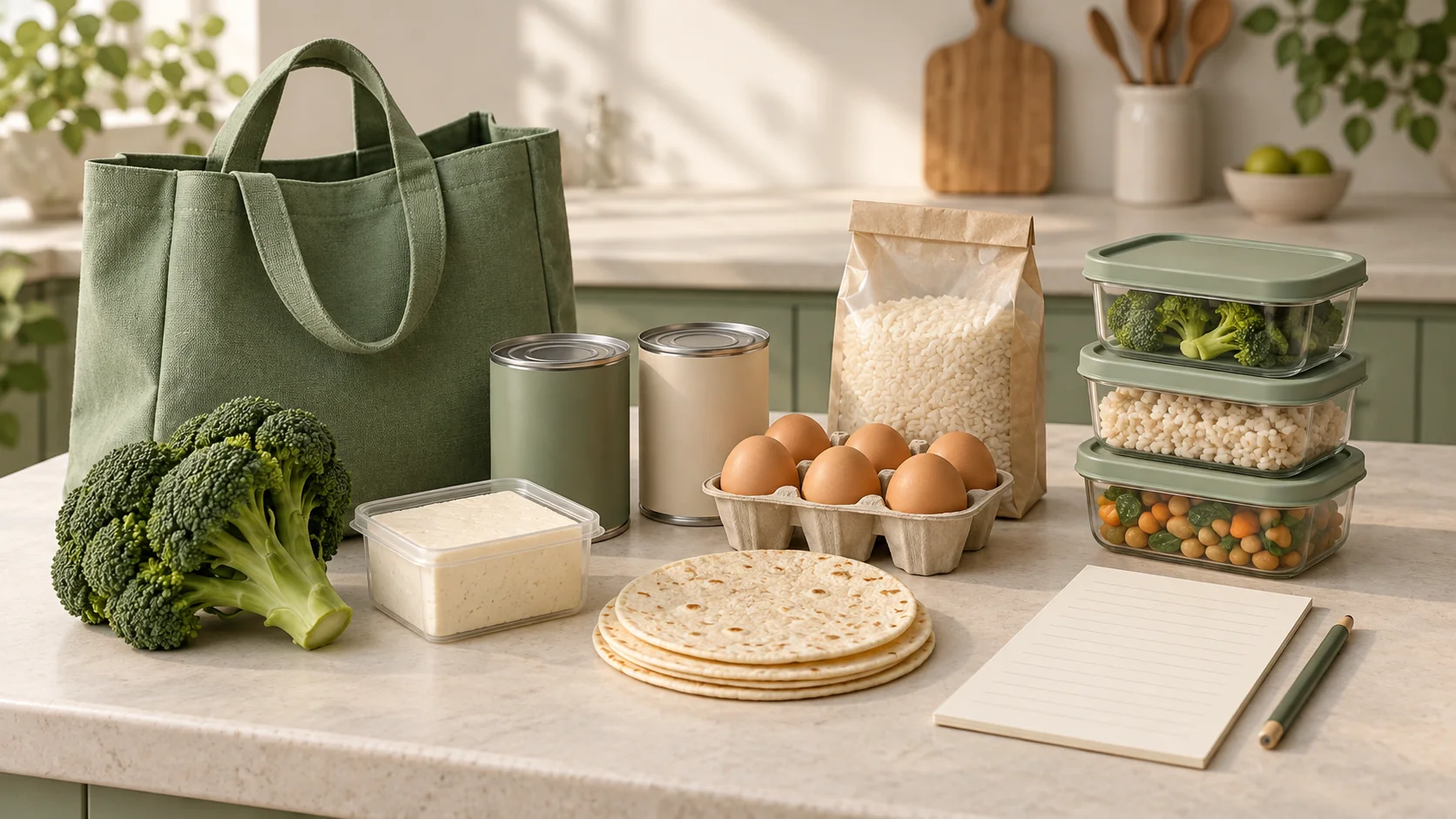
The bottom line
Buy for the meals you'll eat at home, then give the rest of each package a use or a storage plan. The five-dinner example below shows the quantities.
For one person cooking five dinners, a useful starting grocery list is tofu, eggs, canned chickpeas, rice, tortillas, canned tomatoes, frozen broccoli, and frozen spinach, plus the seasonings your recipes need. The example below shows exactly where those purchases go, including what remains in each package.
This is a dinner shopping plan, not a complete week's food. Add your breakfasts, lunches, snacks, drinks, and weekend meals before heading out.
Disclosure and scope
Honeydew publishes this guide and makes the Honeydew app. The quantities below are original shopping examples, not kitchen-tested recipes or prescribed portions. Use your chosen recipes and appetite to set the final amounts.
A grocery list for one person: five dinners
Start here if your kitchen has none of these ingredients. If it does, subtract the usable amounts first. Package sizes are illustrative, not a claim about what every store sells.
- Refrigerated: 400 g firm tofu and a six-pack of eggs.
- Canned goods: two cans of chickpeas yielding 240 g drained each, and one 400 g can of chopped tomatoes.
- Dry goods: one 500 g bag of rice and one eight-pack of tortillas.
- Frozen: one 500 g bag of broccoli and one 300 g bag of spinach.
- Check at home: oil, soy sauce or another sauce you use, and the herbs or spices required by your recipes. Add missing amounts to the list.
Don't use the can's total weight as its drained weight. This example needs 480 g of drained chickpeas across two meals. Check the label or product information and buy enough for the recipes you choose. Rice quantities here are dry; vegetable quantities refer to the frozen product before cooking.
The six-pack of eggs is a purchase size, not six eggs required for dinner. Only two are allocated below. The other four need a separate breakfast plan or should come off your purchase if you already have two eggs.
For a broader list that includes cleaning supplies and toiletries, use our grocery list ideas by aisle.
Where each purchase goes
Choose recipes that fit these meal ideas, then adjust this example to their ingredients. The table allocates groceries; it isn't a set of cooking instructions. Sauces and seasonings aren't quantified because they depend on your actual recipes.
Scroll the tables sideways if a column is off screen.
| Dinner | Ingredients allocated for one person |
|---|---|
| Monday: tofu and broccoli rice bowl | 200 g tofu, 200 g broccoli, 75 g dry rice |
| Tuesday: tofu and spinach wraps | 200 g tofu, 50 g spinach, 2 tortillas |
| Wednesday: chickpea and tomato rice bowl | 240 g drained chickpeas, 200 g tomatoes, 75 g dry rice |
| Thursday: chickpea and spinach wraps | 240 g drained chickpeas, 200 g tomatoes, 50 g spinach, 2 tortillas |
| Friday: egg and broccoli rice bowl | 2 eggs, 200 g broccoli, 75 g dry rice |
The repetition is deliberate: tofu has two consecutive uses, as does the opened tomato can. Keep the second portion refrigerated according to its package instructions. Take only the frozen vegetables needed for each meal and keep the rest frozen. Follow the frozen vegetables' cooking instructions, including when adding spinach to wraps. Cook the rice for each dinner rather than assuming Monday's cooked rice should sit in the fridge until Friday.
The package balance
This is the part a list of ingredients usually leaves out. Each row must account for the whole purchase.
| Ingredient | Bought | Used in five dinners | Still to account for |
|---|---|---|---|
| Tofu | 400 g | 400 g | None |
| Eggs | 6 | 2 | 4 eggs, refrigerated |
| Chickpeas | 480 g drained | 480 g | None at the stated yield |
| Chopped tomatoes | 400 g | 400 g | None |
| Dry rice | 500 g | 225 g | 275 g in the pantry |
| Tortillas | 8 | 4 | 4; follow storage label |
| Frozen broccoli | 500 g | 400 g | 100 g kept frozen |
| Frozen spinach | 300 g | 100 g | 200 g kept frozen |
Those remaining groceries aren't automatically waste. They're the start of the next list. Write their amounts down before adding another bag of rice or vegetables to the cart.
Download the plain-text shopping and package-balance checklist to keep the example and blank planning fields in your notes. No email or account required.
Make the list fit your actual week
Count meals, not calendar days
If you eat three dinners at home, choose three recipes. If you want dinner plus tomorrow's lunch, plan two portions for that cooking session. Neither choice requires buying a family-sized assortment of fresh ingredients.
Breakfast and lunch deserve their own count. For example, three yogurt breakfasts need three of your usual portions, not a default large tub. Add fruit, bread, drinks, and other foods you normally eat in quantities you expect to use. The dinner list above makes no claim to meet your daily nutritional needs.
Scale the recipe before choosing a package
A four-serving recipe calling for 300 g dry rice needs 75 g for one serving: 300 × 1 ÷ 4. But if you want two servings, dinner and a future meal, it needs 150 g. Scale ingredients, not oven temperatures or cooking times. Our recipe scaler can help with ingredient quantities.
Then check the pantry. If you already have 100 g of dry rice and need 225 g across the plan, your remaining requirement is 125 g. A 500 g purchase would leave 375 g after those dinners. An intact bag isn't necessarily the right quantity to put on the list just because it's the familiar package.
What if Tuesday's dinner gets cancelled?
Cross out its allocation: 200 g tofu, 50 g spinach, and two tortillas. Before shopping, you might switch to a smaller tofu pack for Monday. After shopping, you need a timely second use for the tofu or an appropriate storage plan based on its label. The unused frozen spinach can stay frozen; the tortillas follow their package's storage directions.
The important change is specific: "200 g tofu no longer assigned," not just "Tuesday cancelled." If you replace that dinner with something else, recalculate the list instead of leaving both sets of ingredients on it.
The general grocery-list method explains the full sequence. Our printable grocery list template gives you a paper version.
Keep a storage plan beside the shopping plan
The FDA recommends a refrigerator at 40°F (4°C) or below and a freezer at 0°F (-18°C). Refrigerate perishables promptly, within two hours, or within one hour when the temperature is above 90°F. Follow package storage directions; food can be unsafe even when it looks and smells normal. See the FDA's food-storage guidance.
Don't treat a five-dinner shopping plan as permission to store every cooked meal in the refrigerator for five days. Storage limits depend on the food and how it was handled. Follow food-specific storage instructions; the dates on this meal plan do not establish a safe shelf life.
If your freezer is tiny, choose smaller packages or fewer frozen items. If your plans change often, buy for a shorter run of meals. The list should fit the storage you actually have.
Use Honeydew to handle the recipe quantities
Honeydew can automatically generate your grocery list from the recipes on your meal plan, scaled to the servings you select. Save the recipes you want to cook, schedule them, and set one serving when you're cooking only for yourself. Set two when you deliberately want an extra meal.
The app organizes the list by aisle and supports pantry checks, so the rice already at home can be part of the planning. Add non-recipe items manually, such as coffee or breakfast fruit. The grocery-list instructions cover those options, and the meal-planning instructions explain serving sizes.
For substitutions, Honeydew's AI Edit lets you describe a change in plain language, then save the adapted recipe. "Replace chicken with tofu" is one of its documented examples. Duplicate the recipe first if you want to keep both versions. Choose the version you want before building the plan, so its ingredients are the ones you're shopping for. See how to use AI Edit.
The package balance above is your shopping worksheet. After choosing the products at your store, use it to decide where the extra tortillas or remaining rice will go.
Common questions
What should be on a grocery list for one person?
Include ingredients for the meals you will actually eat at home, plus breakfasts, lunches, snacks, drinks, and household supplies you need. Set quantities from your recipes, subtract what you already have, and make a plan for the part of each package you will not use immediately.
Should I buy smaller packages when shopping for one?
Sometimes. Compare the amount you will use with the amount you must buy, the price, and the storage you have. A larger package can make sense when its remainder has a realistic use; it is not automatically the better purchase.
Does this grocery list cover a full week of meals?
No. The example allocates ingredients for five dinners for one person. It does not include a complete breakfast, lunch, snack, or weekend plan, and it does not prescribe calories or nutritional targets. Add those meals separately using your own recipes and preferences.
Sources and review
The dinner allocations, package balance, and cancellation example were created for this guide. They have not been kitchen-tested and are not a priced shopping basket. Actual packages, portions, and recipe ingredients will differ.
- FDA: Are You Storing Food Safely?: refrigeration, freezing, prompt storage, and label directions.
- Honeydew's meal-planning, grocery-list, and AI Edit documentation linked above: product capabilities, checked against the published instructions, not a new hands-on app test.
Sources checked September 19, 2026. Send corrections to support@honeydewcook.com.
One person's meals. One organized grocery list.
Save your recipes, choose the servings, and let Honeydew generate the grocery list from your meal plan.
 High Protein Grocery List
 Pantry Inventory Template
 Grocery List Ideas
 Grocery List Template