High Protein Grocery List: What to Buy and How Much
A practical list of protein foods, a three-dinner shopping worksheet, and a way to buy quantities that match your actual recipes.
 By Chris HabibUpdated 7 min read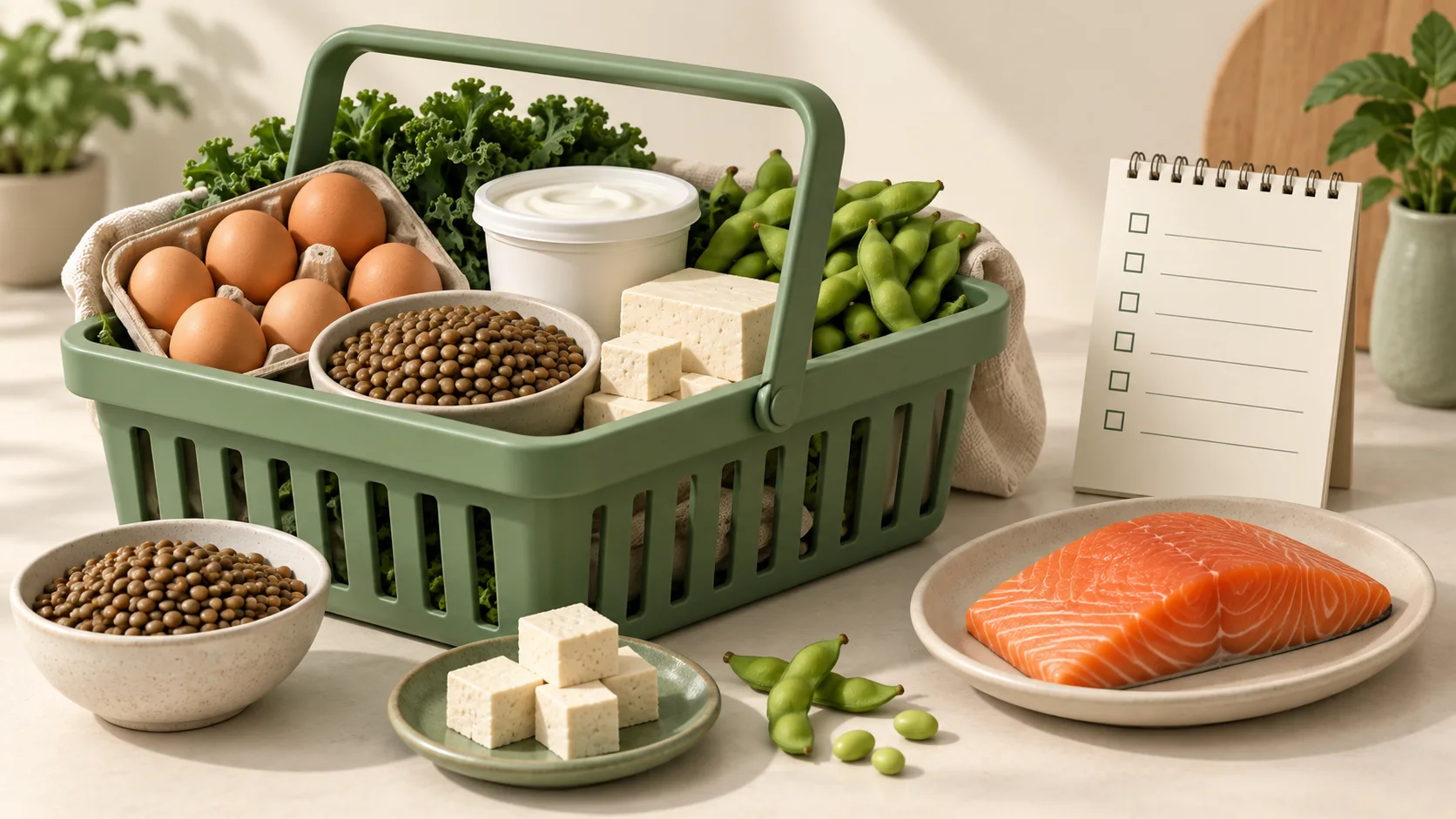
The bottom line
Pick protein foods for meals you already want to cook, calculate the recipe quantities, subtract what you have, and shop the remaining list by aisle.
Start your high protein grocery list with eggs, plain Greek yogurt, cottage cheese, chicken, fish, tofu, tempeh, beans, lentils, and frozen edamame. Choose the foods you'll actually cook, then add vegetables, fruit, grains, and flavorings to make them into meals. You don't need every item below.
Disclosure and scope
Honeydew publishes this guide and makes the Honeydew app. This is a shopping reference, not a prescribed diet or a daily protein target. Portions and nutrition needs vary.
High protein grocery list by store section
Use the first two columns to shop. The last column gives each purchase a job so you don't get home with five proteins and nothing planned for dinner. Scroll wide tables sideways to see every column.
| Store section | Foods to choose from | Put them to work |
|---|---|---|
| Eggs and dairy | Eggs, plain Greek yogurt, cottage cheese, milk | Eggs on toast; yogurt with oats; cottage cheese on a baked potato |
| Refrigerated plant foods | Firm tofu, tempeh, unsweetened soy milk | Tofu rice bowls; tempeh sandwiches; soy milk in porridge |
| Meat and seafood | Chicken, turkey, salmon, shrimp | Chicken fajitas; turkey chili; salmon with potatoes; shrimp noodles |
| Canned and dry goods | Canned salmon or tuna, chickpeas, black beans, lentils | Salmon sandwiches; chickpea salad; bean tacos; lentil soup |
| Frozen | Shelled edamame, fish portions, plain chicken portions | Edamame bowls; a fish dinner; chicken for a recipe already on the plan |
| Nuts and seeds | Peanuts, pumpkin seeds, peanut butter | A topping for oats, a bowl garnish, or a sandwich filling |
These foods don't provide identical amounts of protein. Nuts and seeds can be useful additions, for example, without replacing the main ingredient in a meal. Compare the labels on the products you buy rather than treating every row as an equal serving.
The FDA's ingredient reference (PDF) includes poultry, seafood, beans, lentils, and tofu among protein sources. This list helps you choose ingredients, not rank every food by protein density.
Add the foods that finish the meal
Keep these on the same list, with quantities taken from your recipes:
- Produce: peppers, onions, broccoli, spinach, tomatoes, fruit, and lemons.
- Grains and starches: rice, oats, bread, tortillas, pasta, or potatoes.
- Flavor: oil, vinegar, herbs, spices, salsa, mustard, or a sauce you like.
Choose around the meals, not around an imaginary perfect cart. If you're cooking tacos and rice bowls, cabbage might serve both; a second bag of salad doesn't need to come home just because it's on a master list.
For a broader list that includes household supplies, use our grocery list ideas. For general food-group variety, see the healthy grocery list.
How much should you buy? A three-dinner worksheet
Here's a small example for two people cooking three dinners. These are illustrative ingredient allocations for shopping arithmetic, not tested recipes, complete cooking instructions, or a nutritionally complete meal plan. Use your chosen recipes to set the final amounts.
| Dinner | Protein ingredient allocated | Other ingredients allocated |
|---|---|---|
| Chicken fajitas | 400 g raw chicken | 2 peppers, 1 onion, 4 tortillas, salsa |
| Tofu and broccoli bowls | 400 g tofu | 300 g broccoli, 150 g dry rice, soy sauce |
| Black bean and egg tacos | 1 can black beans, drained; 4 eggs | 1 pepper, 1 onion, 4 tortillas, salsa |
All quantities above are for two people together. The chicken weight is raw; the rice weight is dry. The beans are one purchased can, drained for use. Check the can's drained yield against your recipe.
Copy the combined list
- Produce: 3 peppers, 2 onions, 300 g broccoli.
- Refrigerated: 400 g raw chicken, 400 g tofu, 4 eggs.
- Pantry: 1 can black beans, 150 g dry rice, 8 tortillas.
- Check at home: salsa, soy sauce, oil, and the seasonings your recipes require.
Now subtract what you already have. If the kitchen has one pepper and four tortillas, the remaining requirement is two peppers and four tortillas. Buy the package size that covers that gap, then give any extra a destination. Extra tortillas could become tomorrow's lunch; remaining tofu should have another planned use that follows its storage directions.
The list covers those three dinners only. Add breakfast, lunch, snacks, and the other days separately. Our grocery list method covers the full planning sequence, and the free grocery list template gives you a paper version.
Use the worksheet with your own meals
Copy these columns into a note. Combine amounts only when they describe the same ingredient in the same state: dry rice and cooked rice need separate treatment.
| Ingredient | Total your recipes need | Already at home | Remaining to buy | Package size and plan for extra |
|---|---|---|---|---|
| Peppers, example | 3 | 1 | 2 | Buy 2 loose peppers |
| Tortillas, example | 8 | 4 | 4 | If buying an 8-pack, reserve the other 4 for lunch |
| Your ingredient | ___ | ___ | ___ | ___ |
For a four-serving recipe you're cooking for two, multiply each ingredient quantity by 2 ÷ 4. A recipe calling for 800 g of chicken becomes 400 g. Do that before combining the recipes, then subtract what's at home. Scaling ingredient amounts doesn't mean halving cooking temperatures or times.
Compare protein on the portion you'll use
Check the Nutrition Facts panel for protein grams, serving size, and servings per container. A serving on a package describes the label's calculation basis; it isn't a recommendation for how much you should eat. The FDA explains serving sizes here.
Suppose a product label lists 12 g of protein per 100 g, and your recipe uses 150 g for your portion:
12 × 150 ÷ 100 = 18 g of protein
Those numbers are an arithmetic example, not the nutrition values of a named food. Use the actual label. This is especially helpful when comparing two yogurt tubs or tofu packages with different serving sizes.
For budget comparisons, look at package price, usable quantity, and how much you'll finish. A bigger pack only helps when you have a use for it. We haven't priced a shopping basket here, so this guide doesn't promise a dollar total or rank foods as universally cheapest.
Easy swaps when the plan changes
Choose a substitution by what it needs to do in the recipe:
| Planned meal | Alternative to consider | What to adjust |
|---|---|---|
| Chicken rice bowl | Firm tofu or tempeh | Use a recipe suited to that ingredient's preparation and cooking time |
| Salmon sandwich | Mashed chickpea filling | Change the seasoning and texture; compare nutrition separately |
| Yogurt breakfast | A soy-based yogurt you enjoy | Compare protein on the specific product label |
| Meat chili | Beans and lentils | Follow a bean-based recipe for the liquid and cooking time |
These are cooking alternatives, not equal-protein or allergy-safe exchanges. Choose products that fit your household and check their labels. A changed ingredient can mean a changed quantity, so update the shopping list after choosing the recipe version.
Let Honeydew turn the recipes into the list
Once you've chosen the meals, Honeydew can do the recipe-to-list work automatically. Put your saved recipes on the meal plan, set the serving count, and generate a grocery list with the ingredients scaled to those servings. Honeydew organizes groceries by aisle, supports pantry checks, and shares the list with your household.
For the three-dinner example, you'd schedule your fajita, tofu bowl, and taco recipes for two servings each. Add breakfast groceries as manual items if they aren't part of a saved recipe. Everyone shopping from the household list can add items and check them off.
If you want a different version of a recipe, Honeydew's AI Edit accepts requests such as "Replace chicken with tofu." You can save the adapted version and use that recipe in your plan. The AI Edit instructions explain the workflow; the meal-planning guide shows how servings carry into the grocery list.
Common questions
What should I put on a high protein grocery list?
Choose from eggs, Greek yogurt, cottage cheese, chicken, fish, tofu, tempeh, beans, lentils, and edamame. Add the produce, grains, and flavorings needed for your meals. Use actual product labels and recipe quantities to decide what and how much to buy.
Can I make this grocery list vegetarian?
Yes. Build meals around tofu, tempeh, beans, lentils, and edamame, with eggs and dairy if you eat them. Use recipes written for those ingredients and compare labels; a substitution is not automatically an equal-protein exchange.
How do I calculate protein for the amount I eat?
Multiply protein grams per labeled serving by the number of those servings you eat. If a label gives values per 100 g, multiply its protein grams by your portion weight and divide by 100. Match the food and preparation state described on the label.
Sources and review notes
The shopping worksheet and meal allocations are original examples created for this guide. They haven't been kitchen-tested and do not prescribe daily protein intake.
- FDA Cooking with Nutritious Ingredients, April 2018 (PDF): examples of plant and animal protein ingredients. Used for food-source identification, not individual intake recommendations.
- FDA serving-size guidance: interpreting portions and label values.
- Honeydew's published meal-planning instructions, grocery-list instructions, and AI Edit instructions: documented product capabilities.
References checked September 17, 2026. Product coverage is based on documentation, not a new hands-on app test.
Plan the meals. Let Honeydew build the grocery list.
Set recipe servings, make substitutions, and generate an aisle-organized list you can share with your household.
 Grocery List for One Person
 Pantry Inventory Template
 Grocery List Ideas
 Grocery List Template