Healthy Grocery List: A Flexible List for a Week of Meals
A healthy list should become meals you enjoy, not a cart of virtuous ingredients with no plan. Start with this flexible list and shape it around your week.
 By Chris HabibUpdated 10 min read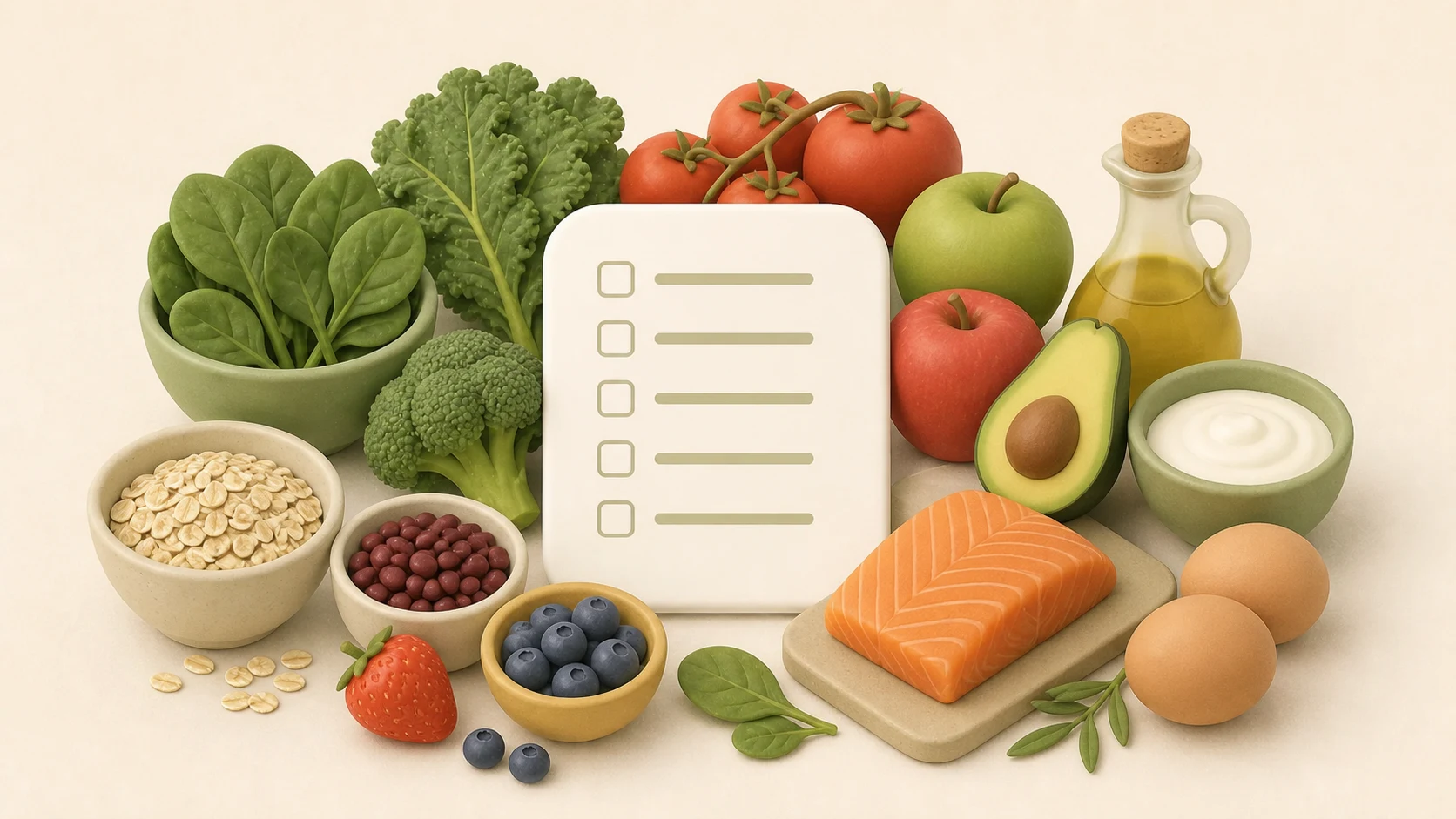
The bottom line
Build around vegetables and fruit, whole grains or other useful starches, varied protein foods, and dairy or fortified alternatives. Then add flavors and convenient backups that make those foods realistic to cook.
Use this as a set of choices, not a command to buy everything. Pick foods that match the meals you enjoy, your household's needs, your budget, and any guidance from your clinician.
Disclosure and scope
Honeydew publishes this guide and makes the Honeydew app. This is general food-planning information, not individual medical or nutrition advice.
The healthy grocery list
Vegetables
- Leafy: spinach, kale, romaine, cabbage, collards
- Cruciferous: broccoli, cauliflower, Brussels sprouts
- Colorful: tomatoes, carrots, bell peppers, beets, squash
- Meal builders: onions, garlic, mushrooms, celery
- Frozen: peas, corn, spinach, broccoli, mixed vegetables
Choose fresh, frozen, or canned forms that fit the meal. Frozen vegetables are useful because the unused portion can wait for another week. When buying canned vegetables, compare sodium on the label if that matters for your needs.
Fruit
- Apples, oranges, pears, bananas, grapes
- Berries, peaches, mango, or pineapple
- Frozen fruit for oatmeal, yogurt, and smoothies
- Unsweetened canned fruit when fresh fruit is not practical
Whole grains and useful starches
- Oats
- Brown rice, wild rice, barley, farro, or quinoa
- Whole-grain bread, pita, or tortillas
- Whole-wheat pasta
- Potatoes, sweet potatoes, and corn
“Whole grain” near the front of the ingredient list is more informative than package color. Choose the grain or starch that fits the recipe and the people eating it.
Protein foods
- Beans, lentils, and chickpeas
- Eggs
- Fish and seafood
- Chicken, turkey, or lean cuts of meat
- Tofu, tempeh, and edamame
- Nuts, seeds, and nut or seed butter
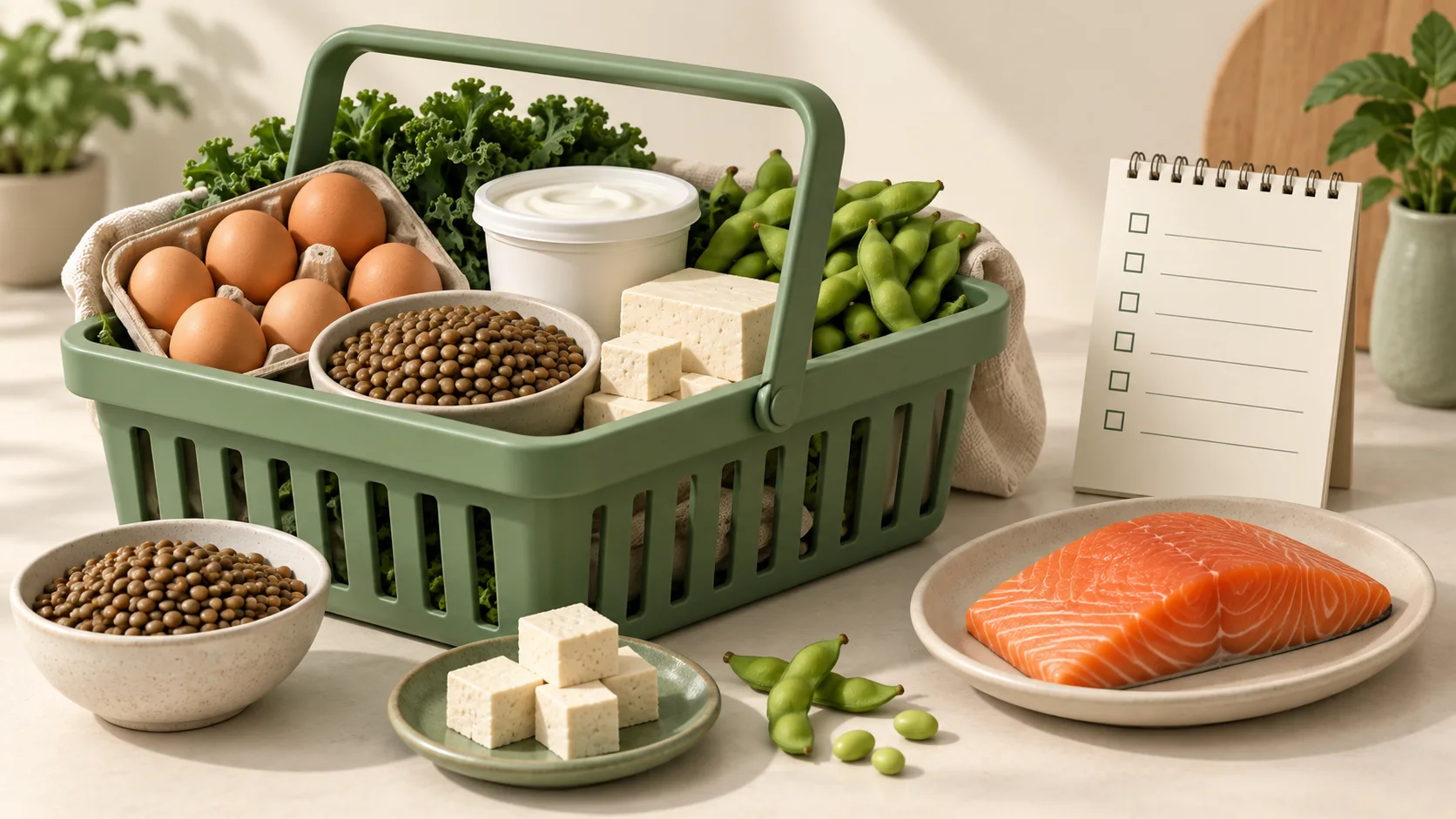
Variety is useful here. A week might include beans in tacos, eggs at breakfast, fish for one dinner, and tofu or chicken in a stir-fry.
For a focused shopping reference with a three-dinner quantity worksheet, use our high protein grocery list.
Dairy or fortified alternatives
- Milk or a fortified soy or other plant-based drink
- Plain yogurt
- Cottage cheese
- Cheese used as part of meals
Check the Nutrition Facts and ingredient list when comparing alternatives. Protein, calcium, vitamin D, and added sugar can differ across products.
Fats, flavor, and meal helpers
- Olive oil or another cooking oil
- Avocados
- Nuts and seeds
- Vinegar, mustard, salsa, and hot sauce
- Garlic, ginger, herbs, and spices
- Low-sodium broth or stock when useful
- Hummus, pesto, or another sauce that gives vegetables and grains a destination
Practical backups
- Canned beans and tomatoes
- Frozen vegetables and fruit
- Canned tuna or salmon
- Whole-grain bread or tortillas kept in the freezer
- One simple meal you can make when the original plan changes
A backup is part of a healthy plan when it prevents the week from depending on perfect timing.
Turn the list into meals
An ingredient is only useful if it has somewhere to go. Pair the categories into meals before choosing quantities.
| Meal shape | Example |
|---|---|
| Grain bowl | Brown rice + roasted broccoli + chickpeas + tahini sauce |
| Sheet-pan dinner | Salmon or tofu + sweet potato + green beans |
| Pasta night | Whole-wheat pasta + tomato sauce + mushrooms + spinach |
| Taco night | Black beans + cabbage + tomato + avocado + tortillas |
| Fast breakfast | Oats + yogurt or fortified alternative + berries + walnuts |
| Backup lunch | Whole-grain toast + eggs + fruit |
Pick three or four dinner shapes, repeat ingredients on purpose, and leave room for leftovers. Broccoli can serve the grain bowl and the sheet-pan dinner. Spinach can go into pasta and eggs. Planned repetition is easier to shop and easier to finish.
If you want a neutral master list with household supplies included, use these grocery list ideas organized by aisle. For the full workflow from meals to quantities, follow how to make a grocery list.
Read the label for the comparison you need
The Nutrition Facts label is most useful when you compare similar products at the serving size you will actually use.
The FDA's general guide says 5% Daily Value or less is considered low and 20% or more is considered high. That can help when comparing nutrients such as fiber, added sugars, saturated fat, and sodium. The right choice still depends on the rest of the meal and your individual needs.
Also read the ingredient list. Ingredients appear in descending order by weight, so the first few tell you most about what the product contains.
Keep the list attached to the plan
Honeydew lets you save the recipes you want to cook, place them on a weekly meal plan, adjust the servings, and add the ingredients to one grocery list. The list combines repeated items, sorts them by aisle, and can account for pantry items already at home.
You can share the list with your household, add extras manually, and keep checking items even without a connection. That makes the healthy list less abstract: each bag of spinach or can of beans belongs to a meal on the week.
The free printable grocery list template is there when you want the same structure on paper.
Common questions
What are the 20 most healthy foods?
There is no official top-20 ranking. A varied set might include spinach, broccoli, tomatoes, carrots, sweet potatoes, apples, berries, oranges, oats, brown rice, whole-grain bread, beans, lentils, eggs, salmon, tofu, plain yogurt, walnuts, avocado, and olive oil. The useful choices are the ones that fit your needs and become actual meals.
Can you live on $200 a month for food?
It may be possible for some one-person households, but location, household size, dietary needs, store access, and food prices change the answer. Plan the month before shopping, compare local unit prices, use low-cost staples across several meals, and keep enough flexibility for the prices you actually find.
Sources and scope
Food-group structure comes from USDA MyPlate and the current Dietary Guidelines for Americans, 2025-2030. Label-reading guidance comes from the FDA's Nutrition Facts label guide and Daily Value explanation.
This page does not rank foods medically or prescribe calories, portions, or a condition-specific diet. Sources and page reviewed September 1, 2026.
Turn healthy recipes into one practical list.
Honeydew connects saved recipes, serving sizes, pantry items, and a shared aisle-sorted grocery list.
 Grocery List for One Person
 High Protein Grocery List
 Pantry Inventory Template
 Grocery List Ideas